

Oil Updates – crude extends losses on weak China data, prospect of higher OPEC+ supply

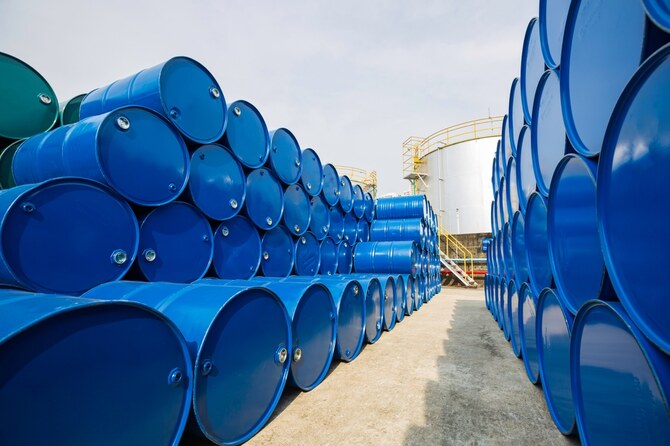
Both Brent and WTI have posted losses for two consecutive months as the US and Chinese demand concerns have outweighed recent disruptions in Libyan oil supply. Shutterstock
Short Url
Updated 01 October 2024
Follow

Oil Updates – crude extends losses on weak China data, prospect of higher OPEC+ supply

  • Brent crude futures fell 56 cents, or 0.7%, to $76.37 a barrel
  • US West Texas Intermediate crude slipped 45 cents, or 0.6%, to $73.10 a barrel

SINGAPORE: Oil prices extended losses on Monday on expectations for higher OPEC+ production starting in October and as signs of sluggish demand in China and the US, the world’s two largest oil consumers, raised concerns about future consumption growth.

Brent crude futures fell 56 cents, or 0.7 percent, to $76.37 a barrel by 9:46 a.m. Saudi time while US West Texas Intermediate crude slipped 45 cents, or 0.6 percent, to $73.10 a barrel.

The losses followed a 0.3 percent decline for Brent last week and a 1.7 percent drop for WTI.

OPEC and its allies, a group known as OPEC+, is set to proceed with a planned oil output hike from October, six sources from the producer group told Reuters.

Eight OPEC+ members are scheduled to boost output by 180,000 barrels per day in October, as part of a plan to begin unwinding their most recent layer of output cuts of 2.2 million bpd while keeping other cuts in place until end-2025.

“There are concerns that OPEC will go ahead and increase output from October,” IG market analyst Tony Sycamore said.

“However, I think that outcome is price dependent in that it happens if the WTI price is closer to $80 than $70.”

Both Brent and WTI have posted losses for two consecutive months as the US and Chinese demand concerns have outweighed recent disruptions in Libyan oil supply amid a dispute between government factions there and the tensions in the key Middle East producing region related to the Israel-Gaza conflict.

While Libyan exports remain halted, the Arabian Gulf Oil Company has resumed output at up to 120,000 bpd to meet domestic needs, engineers said on Sunday, after the standoff between the factions shut most of the country’s oilfields.

More pessimism about Chinese demand growth surfaced after an official survey showed on Saturday that manufacturing activity there sank to a six-month low in August as factory gate prices tumbled and owners struggled for orders, although a private survey on Monday which covers smaller, export-oriented companies showed signs of a tentative recovery in August.

“The softer-than-expected China PMI released over the weekend heightens concerns that the Chinese economy will miss growth targets,” Sycamore said.

In the US, oil consumption slowed in June to the lowest seasonal levels since the coronavirus pandemic of 2020, data from the Energy Information Administration showed on Friday.

“We see downside in growth in 2025, driven by economic headwinds in China and the US,” ANZ analysts said in a note.

“We believe OPEC will have no choice but to delay the phase out of voluntary production cuts if it wants higher prices.”

The number of operating US oil rigs were unchanged at 483 last week, Baker Hughes said in its weekly report.


Saudi Arabia, Japan trade rises 38% between 2016 and 2024, minister says

Updated 11 January 2026
Follow

Saudi Arabia, Japan trade rises 38% between 2016 and 2024, minister says

RIYADH: Trade between Saudi Arabia and Japan has increased by 38 percent between 2016 and 2024 to reach SR138 billion ($36 billion), the Kingdom’s investment minister revealed.

Speaking at the Saudi-Japanese Ministerial Investment Forum 2026, Khalid Al-Falih explained that this makes the Asian country the Kingdom’s third-largest trading partner, according to Asharq Bloomberg.

This falls in line with the fact that Saudi Arabia has been a very important country for Japan from the viewpoint of its energy security, having been a stable supplier of crude oil for many years.

It also aligns well with how Japan is fully committed to supporting Vision 2030 by sharing its knowledge and advanced technologies.

“This trade is dominated by the Kingdom's exports of energy products, specifically oil, gas, and their derivatives. We certainly look forward to the Saudi private sector increasing trade with Japan, particularly in high-tech Japanese products,” Al-Falih said.

He added: “As for investment, Japanese investment in the Kingdom is good and strong, but we look forward to raising the level of Japanese investments in the Kingdom. Today, the Kingdom offers promising opportunities for Japanese companies in several fields, including the traditional sector that links the two economies: energy.”

The minister went on to note that additional sectors that both countries can also collaborate in include green and blue hydrogen, investments in advanced industries, health, food security, innovation, entrepreneurship, among others.

During his speech, Al-Falih shed light on how the Kingdom’s pavilion at Expo 2025 in Osaka achieved remarkable success, with the exhibition receiving more than 3 million visitors, reflecting the Japanese public’s interest in Saudi Arabia.

“The pavilion also organized approximately 700 new business events, several each day, including 88 major investment events led by the Ministry of Investment. Today, as we prepare for the upcoming Expo 2030, we look forward to building upon Japan’s achievements,” he said.

The minister added: “During our visit to Japan, we agreed to establish a partnership to transfer the remarkable Japanese experience from Expo Osaka 2025 to Expo Riyadh 2030. I am certain that the Japanese pavilion at Expo Riyadh will rival the Saudi pavilion at Expo Osaka in terms of organization, innovation, and visitor turnout.”

Al-Falih also shed light on how Saudi-Japanese relations celebrated their 70th anniversary last year, and today marks the 71st year of these relations as well as how they have flourished over the decades, moving from one strategic level to an even higher one.