

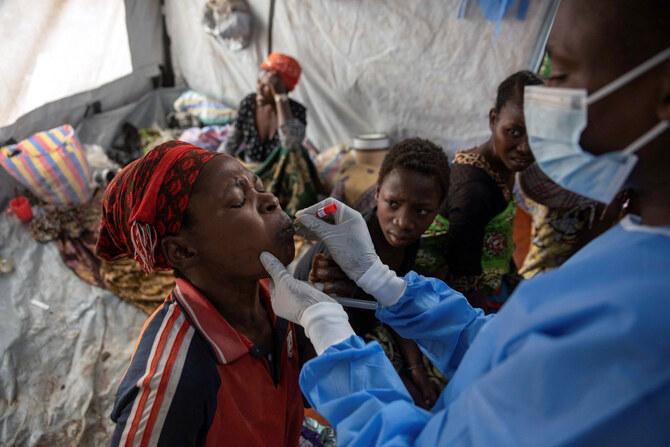

KAVUMU, Democratic Republic of Congo: Dozens of feverish patients lay on thin mattresses on the floor of a makeshift mpox isolation ward in east Democratic Republic of Congo, as overstretched hospital workers grappled with drug shortages and lack of space to accommodate the influx.
Congo is the epicenter of an mpox outbreak that the World Health Organization declared to be a global public health emergency last month.
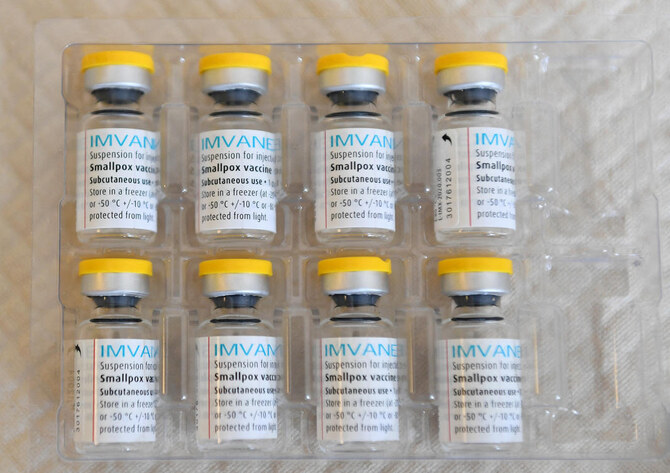
Vaccines are set to arrive within days to fight the new strain of the virus, while Congo’s President Felix Tshisekedi has allowed a first $10 million disbursement to fight the outbreak.
But at the hospital complex in the town of Kavumu, where 900 symptomatic patients have been taken in over the past three months, health workers are desperate for support.
“We run out of medicine every day,” said head doctor Musole Mulamba Muva.
“There are many challenges we struggle to overcome with our local means,” he said, noting that donations from international organizations rapidly dwindled.
Last week there were 135 patients in the mpox ward, children and adults combined, crammed between three large plastic tents pitched into damp earth without a floor cover.
Relatives that usually provide the bulk of meals in underfunded public facilities such as the Kavumu hospital were banned from visiting the mpox ward to avoid contamination. “We do not have anything to eat,” said Nzigire Lukangira, the 32-year-old mother of a hospitalized toddler.
“When we ask for something to lower our children’s temperature, they do not give us anything,” she said, coaxing honey into her daughter’s mouth.
The head of Congo’s mpox response team, Cris Kacita, acknowledged that parts of the vast central African country lacked medicine and that dispatching donations, including 115 tons of medicine from the World Bank, was a priority.
TRADITIONAL REMEDIES
Mpox causes flu-like symptoms and pus-filled lesions and, while usually mild, it can kill. Children, pregnant women and people with weakened immune systems are all at higher risk of complications.
Like other mothers in the Kavumu mpox ward, Lukangira had started improvising with traditional remedies to ease her baby’s pain. They dipped their fingers in potassium bicarbonate or salty lemon juice and popped their children’s blisters. Adult patients did the same to themselves.
Most cases came from the town itself and surrounding villages. Two other makeshift mpox wards have been set up in the area.
Local health ministry representative, doctor Serge Munyau Cikuru, called on the government to continue pushing for vaccines.
Kacita said high-risk contacts and nine priority areas had already been identified for the first vaccination stage.
There were 19,710 suspected cases of mpox reported since the start of the year in Congo by Aug. 31, according to the health ministry. Of those, 5,041 were confirmed and 655 were fatal.


