

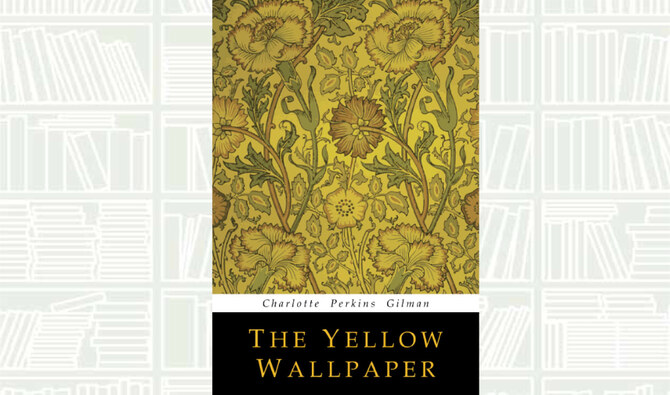

Author: Charlotte Perkins Gilman
“The Yellow Wallpaper” is a short story written by Charlotte Perkins Gilman, published in 1892 and often included in Gilman’s collected works.
The story is a classic piece of feminist literature that explores themes of mental illness, gender roles, and the oppression of women in the late 19th century.
The story is told through the first-person narrative of a woman suffering from what was then called “nervous depression.”
She is confined to a room with ugly yellow wallpaper by her husband, who believes rest is the best cure for her condition.
The narrator becomes obsessed with the wallpaper, which she sees as a representation of her own imprisonment and suppression.
The story culminates in the narrator’s mental breakdown as she becomes convinced that a woman is trapped behind the wallpaper.
“The Yellow Wallpaper” was groundbreaking in its frank depiction of a woman’s descent into mental illness.
Gilman used the story to criticize the common medical belief of the time that women’s mental issues were rooted in their biology and reproductive functions.
The story remains an important work that highlights how patriarchal structures and gender norms can contribute to women’s mental anguish.
It is widely regarded as an important work that reflects the historical context of women’s rights and gender roles in the late 19th century.
From women’s limited access to education and professional opportunities to domestic confinement and lack of autonomy, Gilman provides a searing critique of social, medical, and gender norms.


