

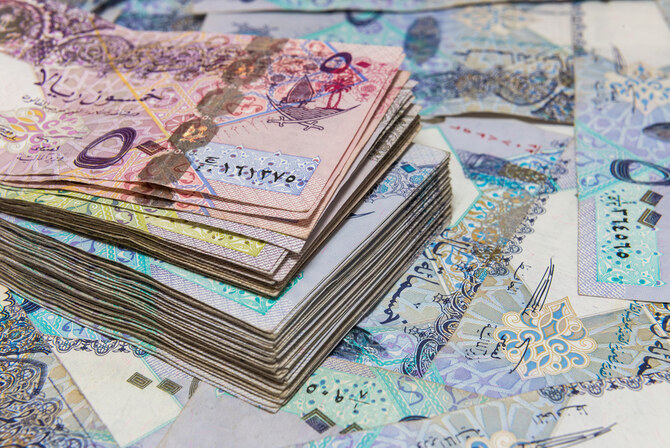

JEDDAH: Qatar-based Estithmar Holding has issued a 500 million Qatari riyal ($137 million) sukuk, marking the first corporate issuance denominated in local currency under its 3.4 billion-riyal program.
The issuance marks a significant milestone for the company, demonstrating its ability to diversify funding sources to support its long-term strategic growth plans and objectives, the company said in an announcement on the Qatar Stock Exchange.
Mohamad bin Badr Al-Sadah, the group CEO of the company, said: “The issuance of the first corporate Qatari-riyal-denominated sukuk is a historic milestone for Estithmar Holding.”
On being listed on the London Stock Exchange’s International Securities Market, he said this issuance has garnered significant interest from diverse investors.
Operating with 28,000 employees from 91 nationalities, Estithmar Holding, one of the leading industrial pillars of Qatar’s economy, is a publicly listed Qatari company with a diverse portfolio of 66 businesses across four strategic sectors.
The three-year sukuk offers an 8.75 percent coupon and has drawn interest from institutional, governmental, and nongovernmental investors, including banks, insurance firms, and asset managers, with settlement expected in five days.
The sukuk program is rated qaBBB (stable) on the Qatar National Scale by credit analysis and ratings company Capital Intelligence.
Al-Rayan Investment LLC, The First Investor QSCC, and Lesha Bank LLC served as joint lead managers for the issuance.
Al-Sadah said the strong investor interest reflects confidence in their strategic growth across four key divisions, including healthcare, services, ventures, and specialized contracting.
The CEO added that his company’s healthcare sector has witnessed “remarkable” growth, highlighted by the affiliation of the Doha-based The View Hospital with Cedars Sinai Medical Center in California, and the opening of the Korean Medical Center in Lusail.
He further said Estithmar Holding is committed to “providing world-class health care services to Qatar and the region and contributing to medical tourism with regional expansion, through operating two hospitals in Iraq and the upcoming completion of the Algerian-Qatari-German Hospital in Algeria.”
Al-Sadah said that Estithmar Holding owns and operates facilities with a total capacity of over 2,000 beds, and growth in the services sector included facilities management, catering, and resource supply, both in Qatar and internationally.
“Our ventures sector is poised for significant success with major projects such as the Rosewood Resort in the Maldives and Rixos in Baghdad, both of which are expected to open in the near future, in addition to the continuous development of our current touristic ventures in Qatar; Al-Maha Island, Katara Hills, Maysan Doha, and others,” he added.
The senior executive said their specialized contracting sector is seeing significant growth, especially in Saudi Arabia, where they have notably increased market share through key strategic projects in the Kingdom.
Al-Sadah concluded that the sukuk program’s success reflected the culmination of their broader growth strategy, aimed at boosting investment value for shareholders and strengthening the firm’s leadership across all operating sectors.


