PARIS: Russian-born tech entrepreneur Pavel Durov has founded wildly popular social networks as well as a cryptocurrency, amassed a multi-billion-dollar fortune and locked horns with authorities not just in Russia but around the world.
Still a few months shy of his 40th birthday, the man once dubbed the “Russian Zuckerberg” after Facebook founder Mark Zuckerberg now finds himself under arrest in France after being sensationally detained at a Paris airport this weekend.
While still in his 20s, the Saint Petersburg native shot to fame in Russia after founding the VKontakte (VK) social network which catered to the needs of Russian-language users and outgunned Facebook throughout the former USSR.
After disputes with the Russian authorities and ownership battles, he sold out of VKontakte and founded a new messaging service called Telegram which rapidly gained traction but has also proved controversial with critics condemning an alleged lack of control on extreme content.
As these dramas raged, Durov remained a mercurial and at times mysterious figure, rarely giving interviews and restricting himself to sometimes enigmatic declarations made on Telegram.
A self-avowed libertarian, Durov has championed confidentiality on the Internet and encryption in messaging.
He has defiantly refused to allow the moderation of messages on Telegram, which allows users to post video, pictures and comments on “channels” that can be followed by anyone.
Durov, 39, was targeted in France by a warrant over offenses alleged to have been conducted on Telegram, ranging from fraud to drug trafficking, cyberbullying and organized crime, including promoting terrorism and fraud.
Investigations have been entrusted to the cyber unit of the French gendarmerie and the national anti-fraud office. He was still in police custody on Sunday, according to two sources close to the case.
In 2006, having just graduated from the University of Saint Petersburg, Durov launched VKontakte (VK), attracting users even while its founder remained a shadowy figure.
In a stunt typical of his unpredictable behavior, Durov in 2012 showered high-denomination notes on pedestrians from VK’s headquarters on top of a historic bookstore on Saint Petersburg’s Nevsky Prospekt.
But after running into trouble with the Kremlin for refusing to hand over the personal data of users to the Russian security services (FSB), he sold out of the company and left Russia in 2014.
Durov resigned from VK with a typical flourish, posting a picture of dolphins and the slogan “So Long and Thanks for All the Fish,” a title in the famous “Hitchhiker’s Guide to the Galaxy” science fiction series.
He developed the Telegram messaging service with his brother Nikolai while traveling from country to country and launched the service in 2013.
He settled in Dubai and obtained citizenship of the Caribbean island archipelago of Saint Kitts and Nevis, then, in August 2021, won French nationality following a low-profile procedure about which Paris remains highly discreet.
Meanwhile, Telegram enjoyed stratospheric success, presenting itself as a champion of individual freedoms, refusing “censorship” and protecting the confidentiality of its users.
This rankled with authorities, especially in his home country and in 2018, a Moscow court ordered the blocking of the application. But the imposition of the measure was shambolic and three days later, protesters ironically bombarded the FSB headquarters with paper planes, the symbol of Telegram.
Since then, Russia has abandoned its efforts to block Telegram and the messaging service is used by both the Russian government and the opposition, with some channels boasting several hundred thousand subscribers.
Telegram also plays a key role in Russia’s war against Ukraine, documented by bloggers from both sides who post their analyzes and videos of the fighting.
Pro-Moscow channels run by so-called “Z-bloggers” who back the war have proved hugely influential and are sometimes critical of Russian military strategy.
Durov eschews traditional media interviews but in April sat down with ultra-conservative US journalist Tucker Carlson for an extensive discussion.
People “love the independence. They also love the privacy, the freedom, (there are) a lot of reasons why somebody would switch to Telegram,” Durov told Carlson.
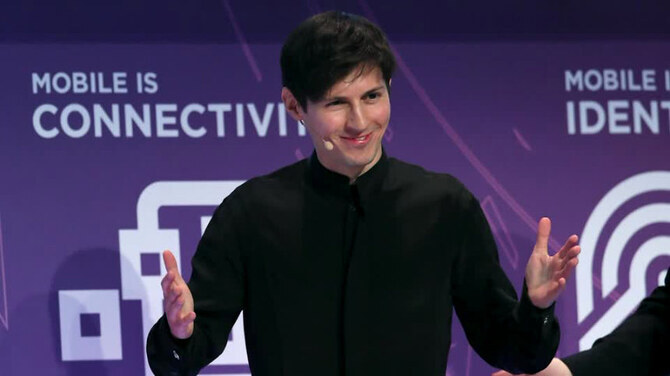
He is also not shy of posting messages on his own Telegram channel, claiming to lead a solitary life, abstaining from meat, alcohol and even coffee. Always dressed in black, he cultivates a resemblance to the actor Keanu Reeves in the film “Matrix.”
In July, he boasted of being the biological father of more than 100 children thanks to his sperm donations in a dozen countries, describing this as a “civic duty” in an attitude to parenting that echoes that of a fellow tech mogul, the X and Tesla chief Elon Musk.
According to Forbes magazine’s latest estimate, Durov’s fortune is $15.5 billion. But toncoin, the cryptocurrency he created, has plummeted by more than 15 percent since the announcement of his arrest.
Telegram has long been in the sights of European judicial authorities over allegations it spreads conspiracy theories, shared calls for murder and hosts drug sales platforms. Durov, however, insists that he responds to every request to remove content calling for violence or murder.


![]()

Durov: Mysterious and controversial Telegram founder
Short Url
https://arab.news/yek88
Durov: Mysterious and controversial Telegram founder
- Self-avowed libertarian, 39-year-old Telegram CEO has championed confidentiality on the Internet and encryption in messaging
- Durov faces charges ranging from use of Telegram for fraud, drug trafficking, cyberbullying and organized crime
Latest updates


© 2026 SAUDI RESEARCH & PUBLISHING COMPANY, All Rights Reserved And subject to Terms of Use Agreement.