



ISLAMABAD: Pakistan on Thursday implemented a project to link its Raast instant payment system with Buna, a cross-border payment system of the Arab Monetary Fund (AMF), to facilitate remittances in real-time between Pakistan and the Arab world, Prime Minister Shehbaz Sharif said.
The AMF and the State Bank of Pakistan (SBP) signed a memorandum of understanding in Abu Dhabi last November to establish a framework of cooperation between Rasst and Buna, which is operated by the Arab Regional Payments Clearing and Settlement Organization (ARPCSO) and supported by all central banks in the Arab region. The development enables the inclusion of the Pakistani Rupee (PKR) as a settlement currency in Buna, in addition to existing international and Arab currencies.
Cross border retail payments and remittances between the Arab region and Pakistan amount to over $20 billion annually, according to government data.
“Under the project, the digital payment system of Pakistan is being directly linked to Buna established under the Arab Monetary Fund,” the prime minister’s office (PMO) said in a statement after Sharif launched the project. “The implementation of a fast, effective and low-cost plan to send money to overseas Pakistanis has started.”
The PMO said the Buna-Raast system would increase remittance transfers and enable millions of Pakistanis living in Arab countries to send money home “quickly, effectively and at a low cost.”
“This landmark initiative aims to facilitate our fellow Pakistanis living abroad and ensure that their efforts translate seamlessly as well as timely to support for their families back home in Pakistan,” Sharif said as he addressed the launch ceremony.
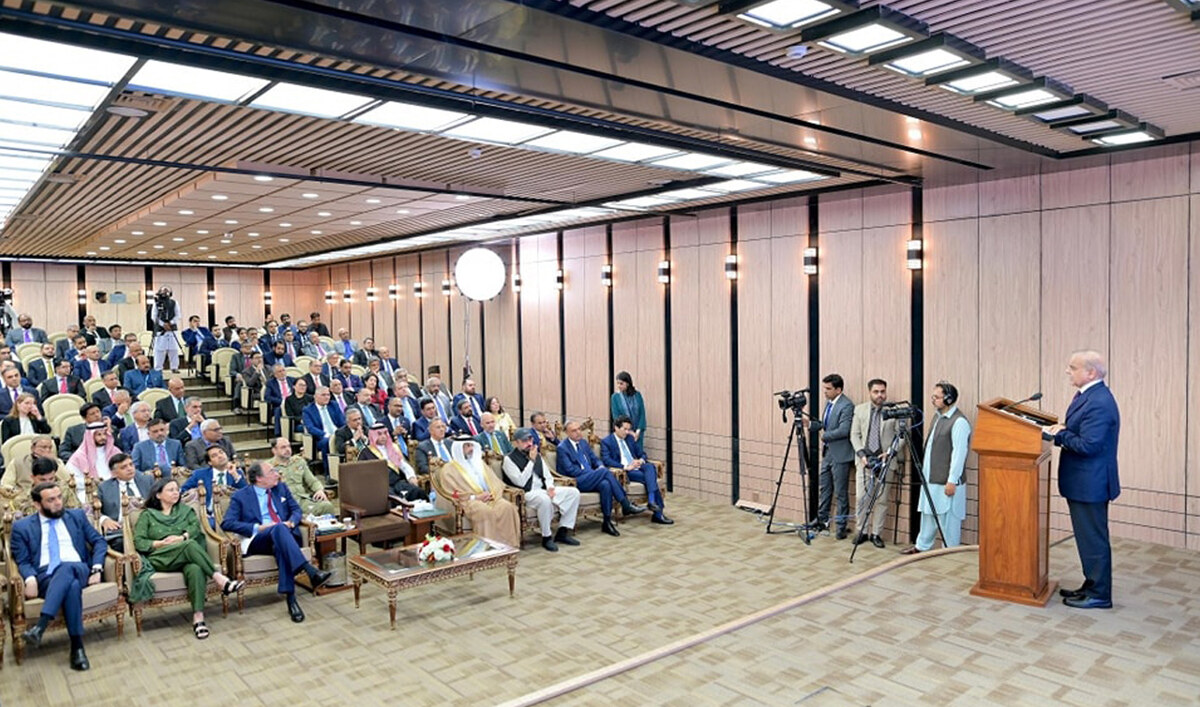
In this handout photograph, taken and released by Pakistan’s Press Information Department, Pakistan Prime Minister Shehbaz Sharif speaks during the inaugural ceremony of Buna-Raast Connectivity Project Implementation Phase in Islamabad on August 22, 2024. (PID)
“It is Pakistan’s first cross border real time payment systems linkage that will make remittances more affordable and accessible. Additionally, it also holds the potential to accelerate our connectivity into a future model of vital payment connectivity where transactions will take place region to region.”
Pakistan receives its highest contribution of remittances every month from Saudi Arabia and the UAE, with the two Gulf countries being the most preferred destinations for Pakistani laborers.
The Buna-Raast project envisions bringing more flows to the formal channels by addressing the critical challenges faced in cross-border remittances which are often affected by inefficiencies and high costs, according to officials on both the Pakistani and AMF sides.
“By leveraging the strengths of Buna and Raast, remittances will reach their intended recipients swiftly and securely. Our joint efforts are a testament to our shared vision of advancing financial inclusion and creating lasting values for our economies,” Fahad M. Alturki, Director General Chairman of the AMF Board and Chairman of the Board of ARPCSO, had said in a statement in July about the Buna-Raast collaboration.
“Raast and Buna integration and addition of the Pakistani rupee in Buna as a settlement currency is a strategic milestone aimed at increasing the speed, safety, and cost-effectiveness of remittances and other cross border payments between Pakistan and Arab countries,” Jameel Ahmad, Governor State Bank of Pakistan, had said.
“The collaboration will increase remittances to Pakistan through formal channels, with enhanced customer convenience and efficiency.”
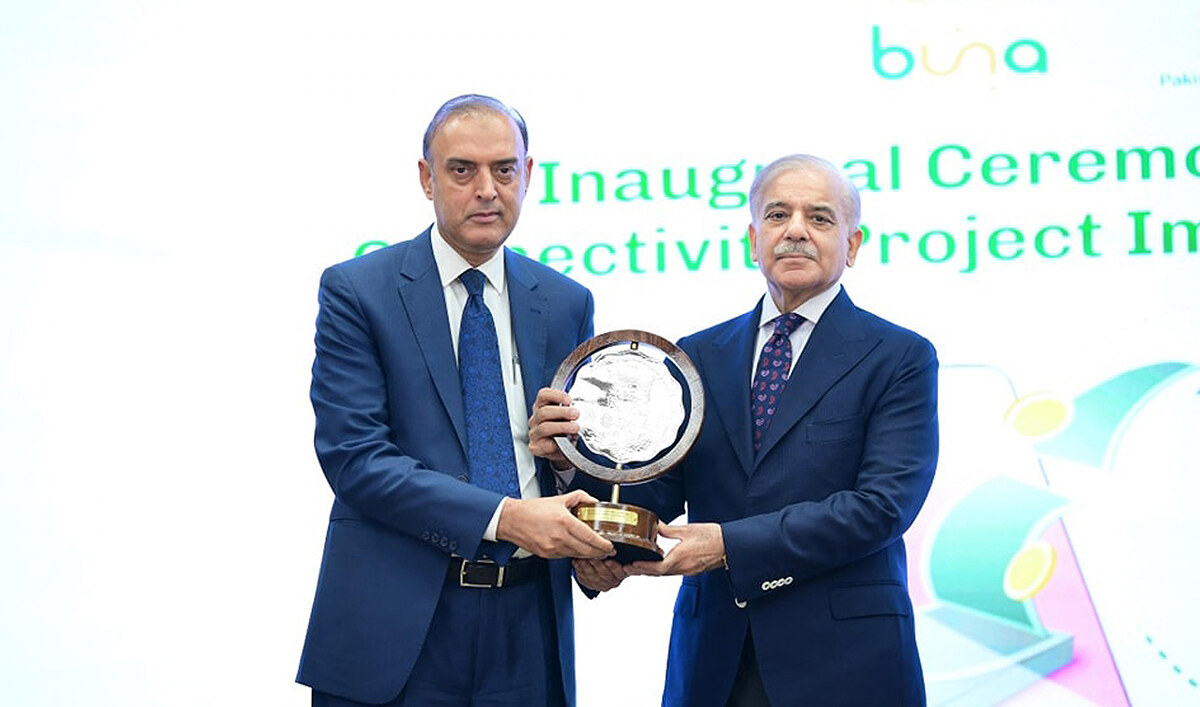
In this handout photograph, taken and released by Pakistan’s Press Information Department, Pakistan Prime Minister Shehbaz Sharif (right) presents a souvenir to the State Bank of Pakistan Governor Jameel Ahmed during the inaugural ceremony of Buna-Raast Connectivity Project Implementation Phase in Islamabad on August 22, 2024. (PID)


