KYIV: Ukraine’s parliament voted Tuesday to ban the Russian-linked Ukrainian Orthodox Church, a move Kyiv says strengthens its independence as the country cuts ties with institutions it considers aligned with Moscow.
Kyiv has been trying to curb spiritual links with Russia for years — a process accelerated by Moscow’s 2022 invasion, which the powerful Russian Orthodox Church endorsed.
A majority of Ukrainian lawmakers approved the bill outlawing religious organizations linked with Russia, which will mostly affect the Moscow-linked Ukrainian Orthodox Church (UOC).
Zelensky said the ban would boost his country’s “spiritual independence” and MPs hailed the bill as historic.
Russia condemned the move that its church called “illegal.”
The Russian church has been furious over a 2019 schism that resulted in the creation of an independent Ukrainian Orthodox Church, spiritually loyal to Moscow’s Istanbul-based rival Patriarch Bartholomew.
Zelensky, who still needs to sign the bill for it to come into force, said he will be talking to Bartholomew’s representatives in the coming days.
It may take years to implement the ban, causing some dismay among followers of the Ukrainian Orthodox Church.
The Moscow-backed church in Ukraine officially broke ties with its Russian counterpart in 2022, but some lawmakers have accused its clerics of collaborating with Russia.
Russian Orthodox Church spokesman Vladimir Legoida condemned the vote as “an unlawful act that is the grossest violation of the basic principles of freedom of conscience and human rights.”
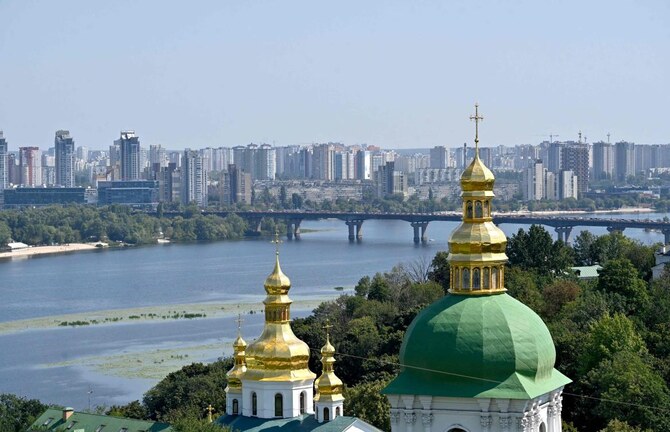
In Kyiv, believers were praying outside the Russian-affiliated part of the historic Kyiv Pechersk Lavra monastery, a regular practice since that area was closed to the public last year.
“There’s no politics here. We just come and pray for our children and our loved ones... I’ve never seen any KGB agents,” said 56-year-old Svetlana, who declined to give her name due to the sensitivity of the question.
In a lilac dress and matching headscarf, Svetlana said she had been baptised and married in the church and worried about its potential full closure.
“If they close, people will still pray in the streets, maybe we’ll put up tents, there will be prayers anyway,” Svetlana said.
The schism between Ukrainian and Russian-linked Churches was triggered by Russia’s annexation of Crimea in 2014 and the war between Kyiv and Moscow-backed separatists in the east.
The Istanbul-based head of the Eastern Orthodox Church granted a breakaway wing, called the Orthodox Church of Ukraine (OCU), autocephaly — religious independence — from the Moscow Patriarchate in 2019.
The split has impacted church going in Ukraine.
In the Ukrainian-affiliated part of the Lavra monastery, which remains open, 21-year-old Igor said:
“Everything is political. There can be no such thing as art, sports, or even religion outside politics.”
“I actually totally support this ban,” he said, accusing the Russian Orthodox Church of being a Kremlin agent that “has metastasized so much that we will be fighting it for decades.”
The bill was hailed by many Ukrainian politicians.
“There will be no Moscow Church in Ukraine,” Andriy Yermak, Zelensky’s chief of staff, said on Telegram.


![]()

Ukraine MPs vote to ban Russia-linked Orthodox Church
Short Url
https://arab.news/y3z4d
Ukraine MPs vote to ban Russia-linked Orthodox Church
- Kyiv has been trying to curb spiritual links with Russia for years — a process accelerated by Moscow’s 2022 invasion, which Russian Orthodox Church endorsed


Latest updates


Recommended


© 2026 SAUDI RESEARCH & PUBLISHING COMPANY, All Rights Reserved And subject to Terms of Use Agreement.