CAIRO: A senior Hamas official on Saturday dismissed optimistic talk by US President Joe Biden that a Gaza truce is nearer after negotiations in the Gulf emirate of Qatar.
“To say that we are getting close to a deal is an illusion,” Hamas political bureau member Sami Abu Zuhri told AFP. “We are not facing a deal or real negotiations, but rather the imposing of American diktats.”
He was responding to Biden’s comment on Friday that, “We are closer than we have ever been.”
Biden spoke after two days of talks in Qatar where Washington tried to bridge differences between Israel and Palestinian Hamas militants. The two sides have been at war for more than 10 months in the Gaza Strip.
Previous optimism during months of on-off truce talks has so far proven futile.
But the stakes have significantly risen since the killings in quick succession in late July of Fuad Shukr, a top operations chief of Lebanon’s Iran-backed Hezbollah movement, and Hamas political chief Ismail Haniyeh.
Their deaths led to vows of vengeance from Hezbollah, Iran and other Tehran-backed groups in the region which blamed Israel.
In an effort to avert a broader conflict, Western and Arab diplomats have been shuttling around the Middle East to push for a Gaza deal which they say could help avert a wider regional conflagration.
Biden’s secretary of state, Antony Blinken, was to head on Saturday to Israel in a bid to finalize an agreement.
As efforts toward a truce continued, so did the killing on Saturday in Gaza and Lebanon.
Lebanon’s health ministry said an Israeli air strike in southern Lebanon killed 10 people including a Syrian woman and her two children.
The strike was among the deadliest in southern Lebanon since the onset of near-daily exchanges of fire between Israel and Hezbollah following the start of the Gaza war in October.
Israel’s military said it struck a Hezbollah weapons storage facility.
In Hamas-run Gaza, civil defense rescuers said an Israeli air strike killed 15 people from a single Palestinian family. The fatalities in Al-Zawaida helped push the Gaza health ministry’s war death toll to 40,074.
“We are in the morgue seeing indescribable scenes of limbs and severed heads and children who are dismembered,” said Omar Al-Dreemli, a relative.
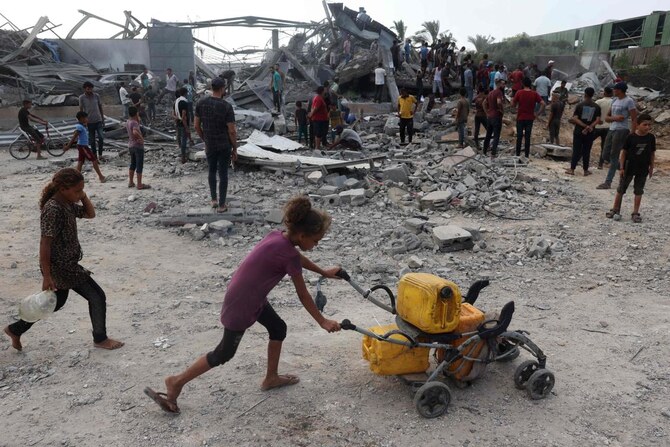
The Gaza war has displaced most of the territory’s population, destroyed much of the housing and other infrastructure, and left diseases spreading.
The United Nations on Friday appealed for seven-day pauses in the fighting so it could vaccinate children against polio, after the Palestinian health ministry reported Gaza’s first polio case in 25 years.
Israel claimed the killing of Shukr, in a strike on south Beirut, but has not commented directly on the killing of Haniyeh while he visited Tehran.
On Friday Hezbollah released a polished video appearing to show its fighters trucking large missiles through tunnels at an underground facility.
Hamas’s unprecedented October 7 attack on Israel that triggered the war resulted in the deaths of 1,198 people, mostly civilians, according to an AFP tally of Israeli official figures.
Militants also seized 251 hostages, 111 of whom are still held in Gaza, including 39 the military says are dead. More than 100 were freed during a one-week truce in November.
On his visit to Israel, Blinken will seek to “conclude the agreement for a ceasefire and release of hostages and detainees,” the State Department said.
Egyptian, Qatari and US mediators are working to finalize details of a framework agreement initially outlined by Biden in May. He said Israel had proposed it.
In a joint statement after two days of talks in Qatar, the mediators said they presented both sides with a proposal that “bridges remaining gaps.”
Talks aiming to secure a deal are to resume in Cairo “before the end of next week,” they said.
Hamas did not attend the Doha talks. An official of the Islamist movement, Osama Hamdan, had told AFP the group would join if the meeting set a timetable for implementing what Hamas had already agreed to.
On Friday, officials told AFP that Hamas will not accept “new conditions” from Israel.
A prospective cessation of hostilities has centered around a phased deal beginning with an initial truce.
Israeli Prime Minister Benjamin Netanyahu’s office on Tuesday had detailed its conditions for a truce, including “a veto on certain prisoners” being released from its jails.
Egyptian President Abdel Fattah El-Sisi, who met French Foreign Minister Stephane Sejourne in Cairo on Saturday, emphasized the need “to seize the opportunity” offered by the ongoing talks and “spare the region from the consequences of further escalation,” Egypt’s presidency said.
Foreign Minister Ayman Safadi of Jordan blamed Netanyahu for “impeding attempts to finalize” a deal and urged pressure on him.
Netanyahu has denied being the obstacle to a deal, blaming Hamas.
As truce talks took place, thousands of civilians were on the move again after the Israeli military issued fresh evacuation orders ahead of imminent military action in central-southern Gaza.
“During each round of negotiations, they exert pressure by forcing evacuations and committing massacres,” said Issa Murad, a Palestinian displaced to Deir el-Balah.
Over the past day troops expanded their operations in the Khan Yunis area of Gaza’s south, including by “eliminating” militants who had fired munitions toward Nirim, just outside Gaza, Israel’s military said on Saturday.


![]()

Hamas official dismisses ‘illusion’ that Gaza truce nearer
Short Url
https://arab.news/vxj26
Hamas official dismisses ‘illusion’ that Gaza truce nearer
- “To say that we are getting close to a deal is an illusion,” Hamas political bureau member Sami Abu Zuhri told AFP
- “We are not facing a deal or real negotiations, but rather the imposing of American diktats“


Latest updates


© 2026 SAUDI RESEARCH & PUBLISHING COMPANY, All Rights Reserved And subject to Terms of Use Agreement.