

Saudi Arabia’s reserves grow 6% to $452.8bn in July

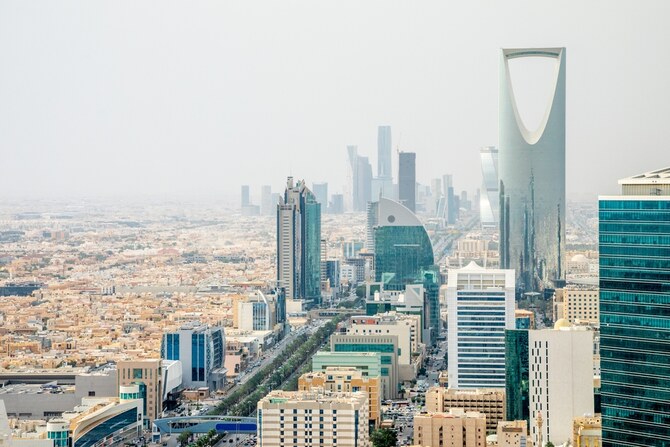
Saudi Arabia boasts one of the highest reserve coverage ratios among Fitch-rated sovereigns. Shutterstock
Short Url
Updated 15 August 2024
Follow

Saudi Arabia’s reserves grow 6% to $452.8bn in July

  • International currency holdings accounted for 94.53% of the total, amounting to SR1.61 trillion in July
  • SDRs, making up 4.6% of the total at SR78.03 billion, decreased by 0.44%

RIYADH: Saudi Arabia’s official reserve assets increased to SR1.7 trillion ($452.8 billion) in July, marking a 6.06 percent year-on-year rise, according to recent data. 

Data from the Saudi Central Bank, known as SAMA, revealed that international currency holdings — comprising currency and deposits abroad and investments in foreign securities— accounted for 94.53 percent of the total, amounting to SR1.61 trillion in July. This category saw a 6.54 percent increase during the period. 

Official reserve assets also include monetary gold, special drawing rights, the International Monetary Fund’s reserve position, and foreign reserves. 

July data showed that SDRs, making up 4.6 percent of the total at SR78.03 billion, decreased by 0.44 percent. 

Created by the IMF to supplement member countries’ official reserves, SDRs derive their value from a basket of major currencies, including the US dollar, euro, Chinese yuan, Japanese yen, and British pound sterling. They can be exchanged among governments for freely usable currencies when needed. 

SDRs provide additional liquidity, stabilize exchange rates, act as a unit of account, and facilitate international trade and financial stability. 

The IMF reserve position totaled SR13.21 billion but decreased by 8.44 percent during this period. This category represents the amount a country can draw from the IMF without conditions. 

Saudi Arabia boasts one of the highest reserve coverage ratios among Fitch-rated sovereigns, standing at 16.5 months of current external payments, according to a February agency report. 

This ratio underscores the country’s strong capacity to meet its external financial obligations over an extended period, highlighting its economic stability and prudent management of foreign exchange reserves. 

Since its inception in 1952, SAMA has been managing foreign exchange reserves, with significant scale management beginning in the 1970s. 

According to the Swiss-based Bank for International Settlements, SAMA’s reserves management has evolved as it accumulated holdings and gained expertise over time. 

It has also developed internal models to validate reserve adequacy and assess reserve requirements, taking into consideration global practices and incorporating specific macroeconomic factors relevant to Saudi Arabia. 

These models are regularly back-tested to ensure their reliability. 

According to BIS, SAMA has three primary investment objectives, including preserving capital, maintaining liquidity, and achieving returns compatible with its risk appetite. 


Acwa signs key terms to develop 5GW of renewable energy capacity in Turkiye

Updated 23 February 2026
Follow

Acwa signs key terms to develop 5GW of renewable energy capacity in Turkiye

JEDDAH: Saudi utility giant Acwa has signed key investment agreements with Turkiye’s Ministry of Energy and Natural Resources to develop up to 5 gigawatts of renewable energy capacity, starting with 2GW of solar power across two plants in Sivas and Taseli.

Under the investment agreement, Acwa will develop, finance, and construct, as well as commission and operate both facilities, according to a press release.

The program builds on the company’s first investment in Turkiye, the 927-megawatt Kirikkale Independent Power Plant, valued at $930 million, which offsets approximately 1.8 million tonnes of carbon dioxide annually, the statement added.

A separate power purchase agreement has been concluded with Elektrik Uretim Anonim Sirketi for the sale of electricity generated by each facility.

Turkiye aims to boost solar and wind capacity to 120GW by 2035, supported by around $80 billion in investment, while recent projects have already helped prevent 12.5 million tonnes of CO2 emissions and reduced reliance on imported natural gas.

Turkiye’s energy sector has undergone a rapid transformation in recent years, with renewable power emerging as a central pillar of its strategy.

Raad Al-Saady, vice chairman and managing director of ACWA, said: “The signing of the IA (implementation agreement) and PPA key terms marks a pivotal moment in Acwa’s partnership with Turkiye, reflecting the country’s strong potential as a clean energy leader and manufacturing powerhouse.”

He added: “Building on our long-standing presence, including the 927MW Kirikkale Power Plant commissioned in 2017, this step elevates our partnership to a new level,” Al-Saady said.

In its statement, Acwa said the 5GW renewable energy program will deliver electricity at fixed prices, enhancing predictability for grid planning and supporting long-term industrial investment.

By replacing imported fossil fuels with domestically generated clean energy, the initiative is expected to reduce Turkiye’s exposure to global energy market volatility, strengthening energy security and lowering long-term power costs.

The company added that the economic impact will extend beyond the anticipated investment of up to $5 billion in foreign direct investment, with thousands of jobs expected during the construction phase and hundreds of high-skilled roles created during operations.

The energy firm concluded that its existing progress in Turkiye reflects a strong appreciation for Turkish engineering, construction, and manufacturing capacity, adding that localization has been a strategic priority, and it has already achieved 100 percent local employment at its developments in the country.