

Saudi Arabia’s reserves grow 6% to $452.8bn in July

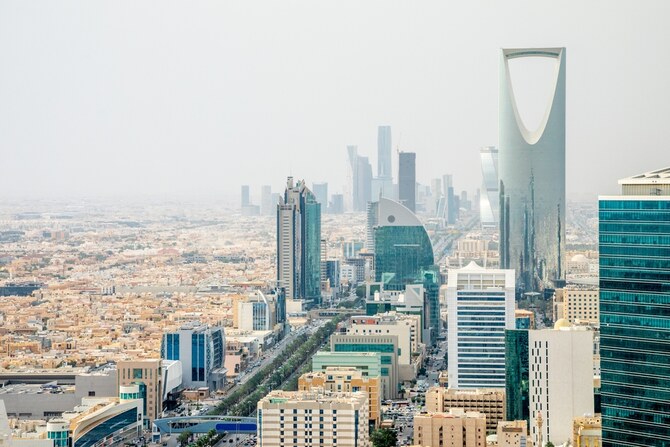
Saudi Arabia boasts one of the highest reserve coverage ratios among Fitch-rated sovereigns. Shutterstock
Short Url
Updated 15 August 2024
Follow

Saudi Arabia’s reserves grow 6% to $452.8bn in July

  • International currency holdings accounted for 94.53% of the total, amounting to SR1.61 trillion in July
  • SDRs, making up 4.6% of the total at SR78.03 billion, decreased by 0.44%

RIYADH: Saudi Arabia’s official reserve assets increased to SR1.7 trillion ($452.8 billion) in July, marking a 6.06 percent year-on-year rise, according to recent data. 

Data from the Saudi Central Bank, known as SAMA, revealed that international currency holdings — comprising currency and deposits abroad and investments in foreign securities— accounted for 94.53 percent of the total, amounting to SR1.61 trillion in July. This category saw a 6.54 percent increase during the period. 

Official reserve assets also include monetary gold, special drawing rights, the International Monetary Fund’s reserve position, and foreign reserves. 

July data showed that SDRs, making up 4.6 percent of the total at SR78.03 billion, decreased by 0.44 percent. 

Created by the IMF to supplement member countries’ official reserves, SDRs derive their value from a basket of major currencies, including the US dollar, euro, Chinese yuan, Japanese yen, and British pound sterling. They can be exchanged among governments for freely usable currencies when needed. 

SDRs provide additional liquidity, stabilize exchange rates, act as a unit of account, and facilitate international trade and financial stability. 

The IMF reserve position totaled SR13.21 billion but decreased by 8.44 percent during this period. This category represents the amount a country can draw from the IMF without conditions. 

Saudi Arabia boasts one of the highest reserve coverage ratios among Fitch-rated sovereigns, standing at 16.5 months of current external payments, according to a February agency report. 

This ratio underscores the country’s strong capacity to meet its external financial obligations over an extended period, highlighting its economic stability and prudent management of foreign exchange reserves. 

Since its inception in 1952, SAMA has been managing foreign exchange reserves, with significant scale management beginning in the 1970s. 

According to the Swiss-based Bank for International Settlements, SAMA’s reserves management has evolved as it accumulated holdings and gained expertise over time. 

It has also developed internal models to validate reserve adequacy and assess reserve requirements, taking into consideration global practices and incorporating specific macroeconomic factors relevant to Saudi Arabia. 

These models are regularly back-tested to ensure their reliability. 

According to BIS, SAMA has three primary investment objectives, including preserving capital, maintaining liquidity, and achieving returns compatible with its risk appetite. 


Closing Bell: Saudi main index rises to 10,894

Updated 13 January 2026
Follow

Closing Bell: Saudi main index rises to 10,894

RIYADH: Saudi Arabia’s Tadawul All Share Index extended its upward trend for a third consecutive day this week, gaining 148.18 points, or 1.38 percent, to close at 10,893.63 on Tuesday. 

The total trading turnover of the benchmark index stood at SR6.05 billion ($1.61 billion), with 144 listed stocks advancing and 107 declining. 

The Kingdom’s parallel market Nomu also rose by 81.35 points to close at 23,668.29. 

The MSCI Tadawul Index edged up 1.71 percent to 1,460.89. 

The best-performing stock on the main market was Zahrat Al Waha for Trading Co., with its share price advancing 10 percent to SR2.75. 

Shares of CHUBB Arabia Cooperative Insurance Co. increased 8.27 percent to SR23.04, while Abdullah Saad Mohammed Abo Moati for Bookstores Co. saw its stock climb 6.17 percent to SR50.60. 

Conversely, the share price of Naseej International Trading Co. declined 9.90 percent to SR31.48. 

On the announcements front, Arabian Drilling Co. said it secured three contract extensions for land rigs with energy giant Saudi Aramco, totaling SR1.4 billion and adding 25 active rig years to its backlog. 

In a Tadawul statement, the company said one rig is currently operational, the second will begin operations by the end of January, and the third — currently suspended — is expected to resume operations in 2026. 

Since November 2025, Arabian Drilling has secured seven contract extensions amounting to SR3.4 billion, representing 55 committed rig years. 

The three contracts have durations of 10 years, 10 years, and five years, respectively.

“Securing a total of SR1.4 billion in new contracts and expanding our backlog by 25 rig-years demonstrates both the trust our clients place in us and our ability to consistently deliver quality and reliability,” said Ghassan Mirdad, CEO of Arabian Drilling, in a statement. 

Shares of Arabian Drilling Co. rose 3.15 percent to SR104.70. 

Separately, Alkhorayef Water and Power Technologies Co. said it signed a 36-month contract valued at SR43.35 million with National Water Co. to operate and maintain water networks, pumping stations, wells, reservoirs, and related facilities in Tabuk. 

In October, Alkhorayef Water and Power Technologies Co. announced it had been awarded the contract by NWC. 

In a Tadawul statement, the company said the financial impact of the deal began in the fourth quarter of 2025. 

The share price of Alkhorayef Water and Power Technologies Co. declined 0.49 percent to SR120.70.