

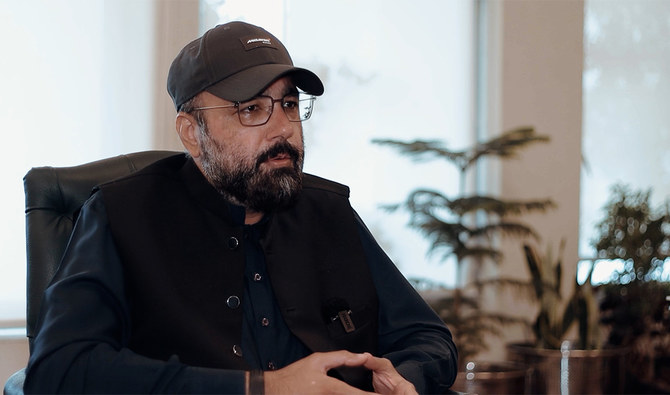

ISLAMABAD: The Pakistan government is working with Iraqi officials on options to better monitor and regularize the movement of pilgrims, the Pakistani minister of religious affairs said this week, including issuing special passports that could only be used for the purpose of pilgrimage.
Some of the holiest Muslim sites, particularly for Shi’te Islam, are in Iraq, including the shrine cities of Najaf and Karbala, where thousands of devotees arrive daily from Iraq and around the world. These include the Imam Ali Shrine in Najaf, which contains the tomb of Ali, the son-in-law of Prophet Muhammad (pbuh) and one of the four caliphs of the Rashidun Caliphate. Another is the shrine of Imam Husain, the prophet’s grandson, in Karbala, the second holiest site for Shi’te Muslims. The annual Arbaeen pilgrimage to the shrine of Husain is considered the world’s largest public gathering, with millions flocking to Karbala.
Last month, Pakistani pilgrims to Iraq made headlines when Federal Minister for Religious Affairs Chaudhry Salik Hussain was widely reported as saying during a briefing to a Senate committee that there were at least 50,000 cases of Pakistani pilgrims who had traveled to Iraq and gone “missing.”
In an interview to Arab News this week, Hussain clarified that he had not used the word “missing” in the briefing.
“I never use the word missing [about pilgrims]. They’re not missing,” he said. “They are basically unauthorized people who go for ziaraat [pilgrimage] and then overstay.”
Many people, the minister explained, went on a pilgrimage visa and remained in Iraq in the hopes of finding jobs there or after being misled by travel agents who promised them employment in Europe or other countries:
“Probably up to 30,000 Pakistani might be still there [in Iraq] over five to seven years as a lot of them came back.”
The government was now working on a policy to streamline and monitor the visits of Pakistani pilgrims including through special passports, Hussain said.
“We are already devising a plan with the Iraqi government to regularize and give them legal status who are already there working in different farms, shops, factories, different areas,” the minister said.
“We’ll be signing an MOU very soon, which would regulate all of these migrations, people who go for the Ziaraat [pilgrimages] so we can better monitor them. There are a few options under consideration. We are thinking of issuing special passports, which would just be just for this journey, for ziarat, and then that passport cannot be used anywhere else.”
HAJJ 2025
Speaking about next year’s Hajj preparations, Hussain said Saudi Arabia had approved a quota for Pakistan of around 180,000 pilgrims for 2025.
“Saudi government side has really upgraded the system of Hajj and Umrah, especially for Hajj, they have made a simple formula that [there is a] first come, first serve basis [policy]: this is the space we have, if you come earlier, you get a good space, if you come late, these are the options we have,” the minister explained.
To ensure a hassle-free Hajj for next year, all preparations were being made in advance, Chaudhry added.
“We have told all our private Hajj organizations that they should be prepared themselves well in advance in terms of the accommodation, the transport, the food. All these things should be prepared well in advance so that we can get a good allocation from the Saudi side,” the minister said.
“We together [with Saudi Hajj ministry and embassy] are re-reorganizing the [religious affairs] ministry when it comes to Hajj.”


