ISLAMABAD: Hafiz Naeem-ur-Rehman, the chief of the Jamaat-e-Islami party which has been holding a sit-in in the garrison city of Rawalpindi against inflation and high electricity costs, on Wednesday threatened to launch a civil disobedience movement if the government did not meet its demands.
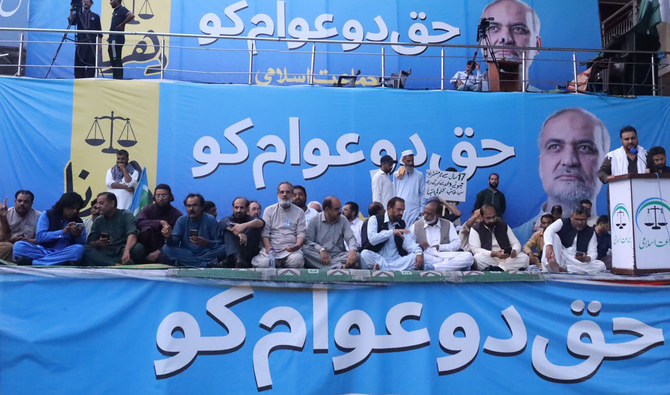
Around 3,000 supporters of the religious political party, demanding that the government withdraw taxes on electricity to offset price hikes, have occupied a road in Rawalpindi since July 26, after being prevented by police from heading to the capital, Islamabad.
Several rounds of talks have been held between a government negotiating team and protest leaders but there has been no breakthrough so far.
“Our sit-in protest is continuing and we will march tomorrow [Aug. 8] on Murree Road [Rawalpindi], on Aug. 11 we will stage a sit-in protest outside the Chief Minister’s House in Lahore, on Aug. 12 we will protest in Peshawar, on Aug. 16 we will also hold a sit-in protest in Multan,” Rehman told reporters on Wednesday.
“We also have the option to call a strike. And if they [the government] still don’t change after all this, we also have the option to peacefully appeal to the people to not pay electricity bills. We don’t want things to get to that point.”
The government raised power prices 26 percent during the last fiscal year, which ended June 30, before tacking on another 20 percent increase on July 13. Officials say the increases were needed to meet conditions set by the International Monetary Fund for a $7 billion loan deal reached last month.
The government has also added a confusing bevy of taxes on top of the base price, adding up to a bill that has more than doubled for some Pakistanis.
“Striking is our democratic right, that we appeal to the people to peacefully shut down their businesses,” Rehman said. “Already they [government] have led to the collapse of people’s businesses.


![]()

Pakistani party holding protests against inflation threatens civil disobedience, new sit-ins
Short Url
https://arab.news/gxtnc
Pakistani party holding protests against inflation threatens civil disobedience, new sit-ins
- Hafiz Naeem-ur-Rehman, chief of the Jamaat-e-Islami party, says will appeal to people not to pay electricity bills
- Around 3,000 supporters of the Jamaat-e-Islami have occupied a road in the garrison city of Rawalpindi since July 26
Latest updates




Recommended


© 2026 SAUDI RESEARCH & PUBLISHING COMPANY, All Rights Reserved And subject to Terms of Use Agreement.