

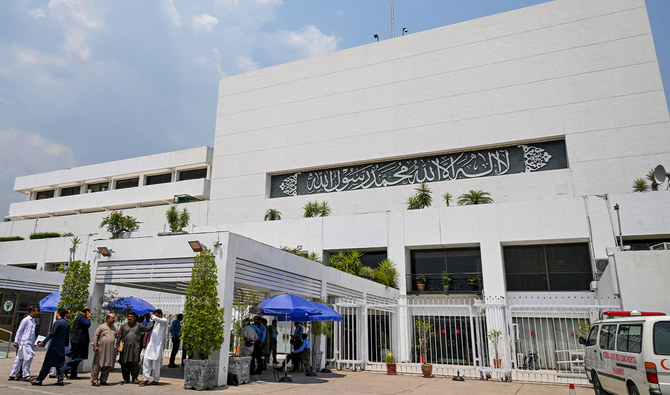

ISLAMABAD: Pakistan’s National Assembly on Tuesday passed a bill that could restrict the allotment of reserved seats to former prime minister Imran Khan’s Pakistan Tehreek-e-Insaf (PTI), dealing a fresh blow to the party of the jailed leader which announced challenging it in court.
PTI candidates had to contest the Feb. 8 general elections as independents after the party was stripped by the election commission of its symbol on technical grounds. They won the most seats in the polls, but the election commission ruled they were not entitled to reserved parliamentary seats for women and minorities that are allocated in proportion to the number of seats a political party wins in general elections.
Last month, Pakistan’s Supreme Court ruled that the PTI was indeed eligible for over 20 extra reserved seats in parliament. The court said the PTI was a political party for the purpose of the Feb. 8 polls and those who contested as independents because the PTI lost its election symbol were in fact PTI candidates. The court also asked the PTI to submit its list of candidates entitled to reserved seats.
Under pressure because of the top court’s ruling, the coalition government led by Prime Minister Shehbaz Sharif proposed a bill seeking amendments to the Elections Act 2017.
“The National Assembly today passed the Elections (Second Amendment) Bill, 2024,” Radio Pakistan reported on Tuesday. “Law Minister Azam Nazeer Tarar said the legislation is the prerogative of the parliament and in accordance with the spirit of the Constitution.”
The bill now awaits Senate approval before it becomes law.
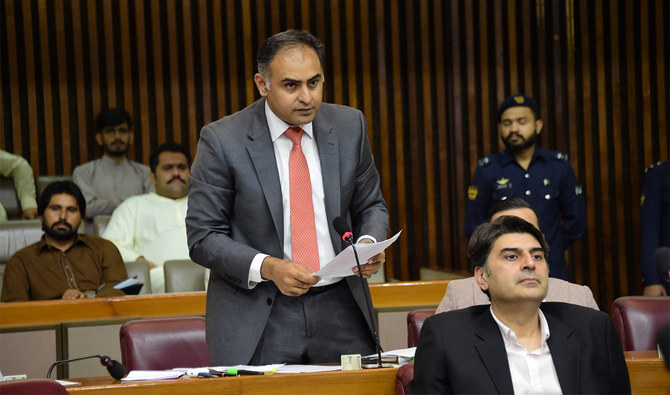
Following the passage of the new bill, PTI Chairman Gohar Khan vowed to challenge it in the Supreme Court, saying the top court judges would set aside the “illegal and unconstitutional” legislation.
“This new legislation is illegal and unconstitutional,” Gohar said while addressing the National Assembly. “We will challenge this and the Supreme Court will set it aside.”
Gohar said parliament might be supreme but interpreting the Constitution fell under the Supreme Court’s domain: “If the Supreme Court has interpreted the Constitution [with its judgment on reserved seats], it is the final word and the parliament cannot set aside that interpretation.”
The Elections (Second Amendment) Bill, 2024, which will prevail over court orders, says if a candidate does not submit a declaration of his affiliation with a political party to the returning officer before seeking the allotment of an election symbol, he or she shall be “deemed to be considered as an independent candidate and not a candidate of any political party.”
Another amendment says if a political party fails to submit its list for reserved seats within the prescribed time period, it would not be eligible for reserved seats at a later stage. A third amendment says a winning independent candidate’s decision to join a political party after elections was irrevocable.
After the election, PTI-backed candidates were forced to join the Sunni Ittehad Council, or SIC party, to claim their share of 70 reserved seats as independents are not eligible for the extra seats.
In Pakistan, parties are allocated 70 reserved seats — 60 for women, 10 for non-Muslims — in proportion to the number of seats won in general elections. This completes the National Assembly’s total 336 seats. A simple majority in Pakistan’s parliament is 169 out of 336 seats.


