

Traditional tabla faces decline as modern music trends dominate Pakistan’s soundscape

The photo taken on August 1, 2024 shows a man playing a tabla (hand drum) at a modest music instrument shop in Rawalpindi’s Bagh Sardaran neighborhood. (AN Photo)
Short Url
Updated 03 August 2024
Follow

Traditional tabla faces decline as modern music trends dominate Pakistan’s soundscape

  • Few people are learning the percussion instrument that once played a central role in South Asia’s classical music
  • A young artist says tabla can be a vital instrument if new music trends are embraced and fusion is given a chance

RAWALPINDI: Arif Hussain, a 65-year-old tabla player, sits in his modest shop in Rawalpindi’s Bagh Sardaran neighborhood, lamenting how his business is struggling to survive as the demand for the region’s once-iconic musical instrument declines.
Despite the central role these hand-played drums have had in South Asia’s classical music, tabla’s resonant tones are fading from Pakistan’s modern soundscapes.
Visitors to this old market in Rawalpindi can still hear its rhythmic beats, though the echoes are no longer as widespread as they once were in royal Subcontinental palaces and bustling bazaars.
The situation was not entirely desperate while Pakistan’s film industry was producing motion pictures that relied on traditional themes and melodies, but the rise of contemporary music has changed that, with fewer people wanting to master the intricate art of playing this percussion instrument.
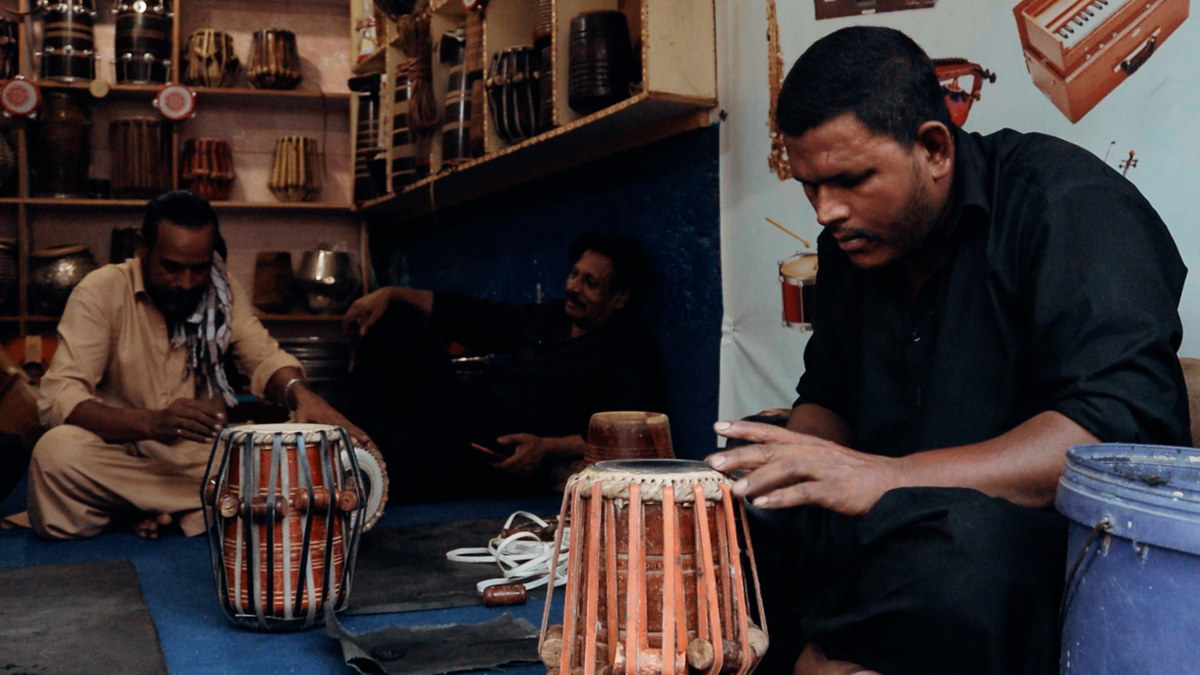


Workers at Arif Hussain's modest shop in Rawalpindi’s Bagh Sardaran neighborhood make tablas (hand drums) on August 1, 2024. (AN Photo)

“Since 1984, I have stopped playing tabla,” Hussain told Arab News during a conversation this week. “There is no work for us anymore. Sometimes if any young people come, I teach them to play tabla. With the decline of the film industry, our work also deteriorated.”
For decades, tabla was a dominant presence in Pakistan’s musical landscape, particularly when ghazals were the entertainment of choice on television and at private gatherings, capturing the grandeur of the Urdu poetic tradition.
This cultural preference endured even as Western influences began to seep into the music scene.
However, as concerts gained popularity, younger artists gravitated toward guitars and drums, embracing more contemporary genres.
As classical singer Babar Niazi pointed out, this was not just the fading of a particular musical instrument but a reflection of a broader cultural shift.
“Back in the era of ghazal, you could not imagine a performance without tabla,” he said. “But since ghazal has declined, tabla isn’t played as much as it used to be.”
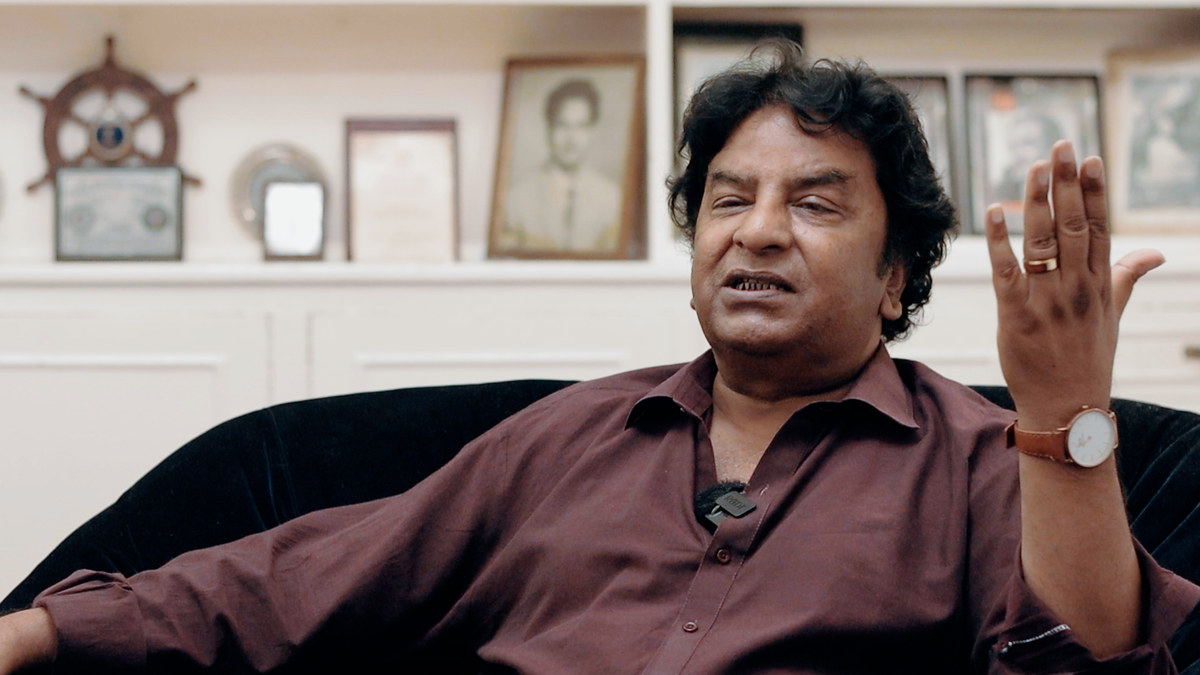


Classical singer Babar Niazi speaks during an interview with Arab News on August 1, 2024 in Islamabad, Pakistan. (AN Photo)

“Many of our ancient instruments are fading away, and with the rise of electronic music, the soul and feel of these traditional instruments are getting lost over time,” he added.
Niazi, who is the son of legendary folk singer Tufail Niazi, noted that modern music is about catchy beats and electronic vibes, which makes it instantly appealing to the younger generation.
A contemporary singer, Alamdar Khan, agreed with him, saying it was hard to compare the old and new styles of music.
“Sometimes retro comes back in fashion, but it’s always about the tempo, the sub-bass, and the super bass,” he noted. “It’s always about what sounds good to the ear and what the public and the masses want.”
Music composer Naveed Anwar explained the situation on the basis of generational gap.
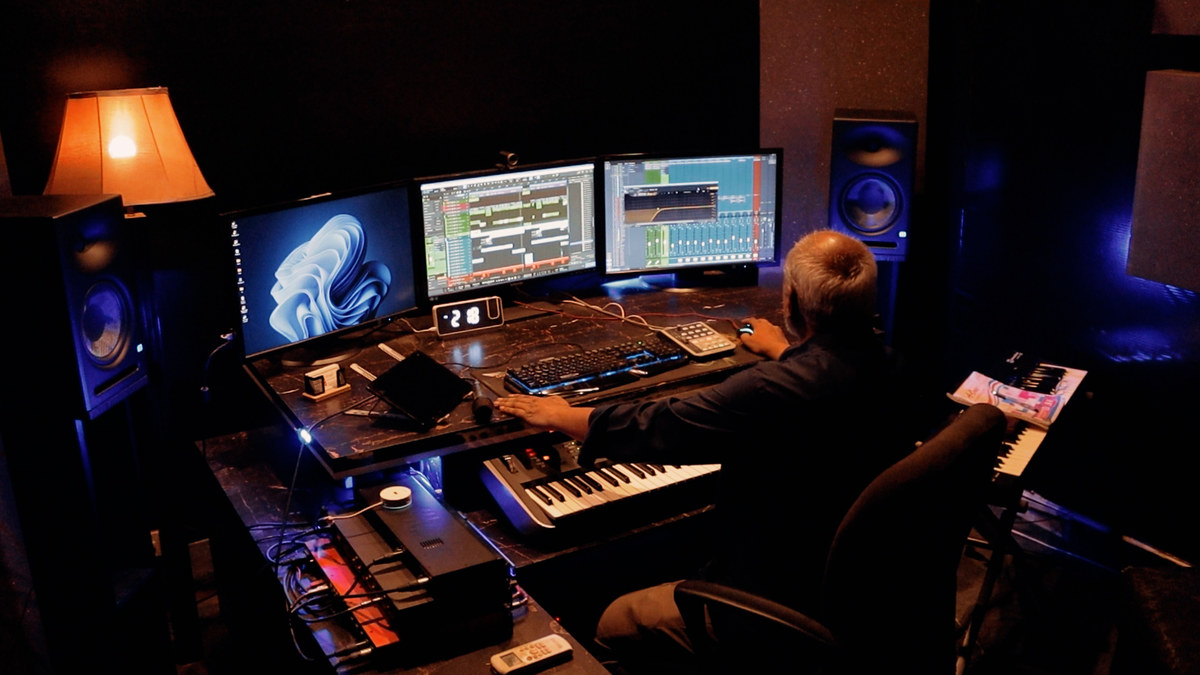


Music composer Naveed Anwar composes a tune at his recording studio in Islamabad, Pakistan on August 1, 2024. (AN Photo)

“The person who plays guitar or drums looks very active and gives a dashing feel,” he said. “This is the reason that today’s generation does not like tabla players or eastern music.”
“Also, tabla is a very difficult instrument to learn,” he continued. “People do not want to work that hard on this approach.”
Young artists believe tabla can still be a vital instrument if fusion music is given a chance.
Coke Studio, one of the most influential and widely followed music platforms in Pakistan, heavily relies on this trend, blending various musical genres like pop, rock, hip-hop and electronic with Pakistani folk and classical music.
“The idea that Nusrat Fateh Ali Khan also had when he collaborated with [Grammy-nominated composer] Michael Brooks was to make it [eastern classical music] relevant for the newer generation,” Saboohi Sarshar, a contemporary singer, told Arab News.
“I think that is something that tabla players and people who make tablas have missed out on, which is how to evolve it for the new generation,” she added.


Pakistan opposition rallies in Khyber Pakhtunkhwa to demand release of Imran Khan

Updated 07 December 2025
Follow

Pakistan opposition rallies in Khyber Pakhtunkhwa to demand release of Imran Khan

  • PTI-led gathering calls the former PM a national hero and demands the release of all political prisoners
  • Government says the opposition failed to draw a large crowd and accuses PTI of damaging its own politics

ISLAMABAD: Pakistan’s opposition led by the Pakistan Tehreek-e-Insaf (PTI) party demanded the release of jailed former prime minister Imran Khan at a rally in the northwestern Khyber Pakhtunkhwa province on Sunday, describing him as a national hero who continues to command public support.

The gathering came days after a rare and strongly worded briefing by the military’s media chief, Lt. Gen. Ahmed Sharif Chaudhry, who dismissed Khan as “narcissistic” and “mentally ill” on Friday while responding to the former premier’s allegations that Pakistan’s chief of defense forces was responsible for undermining the constitution and rule of law.

He said that Khan was promoting an anti-state narrative which had become a national security threat.

The participants of the rally called for “civilian supremacy” and said elected representatives should be treated with respect.

“We, the people of Pakistan, regard Imran Khan as a national hero and the country’s genuinely elected prime minister, chosen by the public in the February 8, 2024 vote,” said a resolution presented at the rally in Peshawar. “We categorically reject and strongly condemn the notion that he or his colleagues pose any kind of threat to national security.”

“We demand immediate justice for Imran Khan, Bushra Bibi and all political prisoners, and call for their prompt release,” it added, referring to Khan’s wife who is also in prison. “No restrictions should be placed on Imran Khan’s meetings with his family, lawyers or political associates.”

Addressing the gathering, Sohail Afridi, the chief minister of Khyber Pakhtunkhwa, denied his administration was not serious about security issues amid increased militant activity. However, he maintained the people of his province had endured the worst of Pakistan’s conflict with militancy and urged a rethinking of long-running security policies.

The resolution asked the federal government to restore bilateral trade and diplomatic channels with Afghanistan, saying improved cross-border ties were essential for the economic stability of the region.

The trade between the two neighbors has suffered as Pakistan accuses the Taliban administration in Kabul of sheltering and facilitating armed groups that it says launch cross-border attacks to target its civilians and security forces. Afghan officials deny the claim.

The two countries have also had deadly border clashes in recent months that have killed dozens of people on both sides.

Some participants of the rally emphasized the restoration of democratic freedoms, judicial independence and space for political reconciliation, calling them necessary to stabilize the country after years of political confrontation.

Reacting to the opposition rally, Information Minister Attaullah Tarrar said the PTI and its allies could not gather enough people.

“In trying to build an anti-army narrative, they have ruined their own politics,” he said, adding that the rally’s reaction to the military’s media chief’s statement reflected “how deeply it had stung.”

“There was neither any argument nor any real response,” he added, referring to what was said by the participants of the rally.