

Saudi banks’ money supply increases 9% in June to reach $773bn

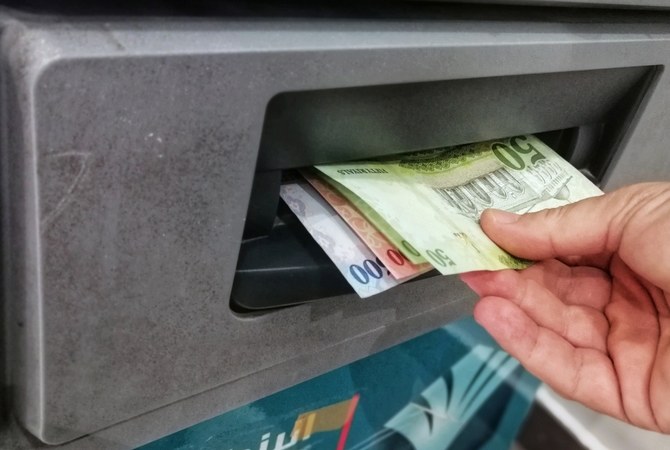
The Saudi Central Bank has released new figures showing the rise. Shutterstock
Short Url
Updated 31 July 2024
Follow

Saudi banks’ money supply increases 9% in June to reach $773bn

  • Increase fueled by 17.32% surge in SAMA’s term and savings accounts, which reached SR903.71 billion
  • Currency outside banks held an 8% share of the money supply, growing by 4%

RIYADH: Saudi banks’ money supply rose 9 percent in June compared to the same month of 2023 to reach SR2.9 trillion ($773 billion), official data showed.

According to figures released by the Saudi Central Bank, also known as SAMA, the increase was mainly fueled by a 17.32 percent surge in the institutions’ term and savings accounts, which reached SR903.71 billion.

These represented the second-largest portion of the total money supply, accounting for 31 percent, while demand deposits made up the largest share at 49 percent.

These products increased by 7 percent during this period, reaching SR1.42 trillion.

Other quasi-money holdings, which include foreign currency deposits, marginal payments for letters of credit, outstanding remittances, and bank repo transactions with the private sector, comprised 12 percent of the total money supply. This category saw a slight increase of 0.32 percent during the period.

Currency outside banks held an 8 percent share of the money supply, growing by 4 percent.

Most Gulf Cooperation Council countries, including Saudi Arabia, peg their currencies to the US dollar to avoid currency fluctuations and eliminate uncertainties in international transactions.

Consequently, interest rates in these countries have mirrored the trends set by the US Federal Reserve.

This month marks the one-year anniversary of the Fed’s latest interest rate hike, which pushed rates to their highest point in 23 years. 

The most recent rate increase occurred in July 2023, elevating the benchmark rate to its current level. 

Starting in early 2022, the Fed moved to counteract the highest inflation in 40 years, peaking at 9.1 percent in June 2022, before dropping to around 3 percent annually.

With inflation cooling, economists are now speculating about when the central bank might start cutting rates, with the Fed set to announce its latest move at 9 p.m. Saudi time on July 31.

In July, Fitch Ratings noted that the high financing growth in recent years has intensified competition for liquidity in the Kingdom.

Despite strong growth in government-related entity deposits at banks over the second half of 2023 and the first quarter of 2024, these funds are primarily in the form of expensive term deposits.

As a result, the proportion of GRE accounts in total sector deposits has reached an all-time high of 32 percent. Fitch expects them to continue growing, further diluting the proportion of Current Account Savings Account in the funding mix, thereby keeping Saudi banks’ average net financing margin stable.

According to Fitch, Saudi banks are projected to grow at about double the GCC average, with financing growth forecasted at approximately 12 percent for 2024.

The sector is likely to increase its focus on corporate financing, which is expected to account for about 60 percent of new originations in 2024, according to the agency.


Saudi consumer inflation eases to 1.8% in January: GASTAT 

Updated 4 sec ago
Follow

Saudi consumer inflation eases to 1.8% in January: GASTAT 

RIYADH: Saudi Arabia’s inflation softened to 1.8 percent in January, signaling contained price pressures even as housing rents remained the main driver of consumer costs, official data showed.  

According to the General Authority for Statistics, average prices for housing, water, electricity, gas and other fuels rose 4.2 percent in January, reflecting a 5.2 percent increase in actual residential rents. 

Saudi Arabia’s inflation trajectory broadly aligns with projections by the International Monetary Fund, which said in October the Kingdom is expected to maintain an annual inflation rate of about 2 percent in 2026. 

In its latest report, GASTAT stated: “The Consumer Price Index in Saudi Arabia recorded an annual increase of 1.8 percent in January 2026, compared to the same month of the previous year.”   

It added: “This increase was mainly driven by a rise in housing, water, electricity, gas, and other fuel prices by 4.2 percent, transport prices by 1.5 percent and restaurant and accommodation services prices by 1 percent.”  

According to the report, expenses for personal care, social protection and miscellaneous goods and services increased 7.9 percent year on year in January, while insurance and financial services costs rose 3.3 percent. 

Prices for recreation, sport and culture increased 2.3 percent, driven by a 3.7 percent rise in package holiday expenses. Education service prices rose 1.6 percent, reflecting higher secondary education costs. 

Food and beverage prices increased 0.2 percent year on year. 

Conversely, prices for furnishings, household equipment and routine household maintenance fell 0.3 percent in January, while healthcare expenses declined 0.1 percent over the same period. 

On a month-on-month basis, Saudi Arabia’s CPI rose 0.2 percent in January from December. 

Housing, water, electricity, gas and other fuels increased 0.5 percent month on month, again driven by higher residential rents. Transport prices rose 0.2 percent, while restaurant and accommodation services gained 1 percent. 

Food and beverage prices fell 0.6 percent during the month, and information and communication costs slipped 0.1 percent. Education, healthcare, furnishings and tobacco prices were largely unchanged. 

Wholesale Price Index 

In a separate report, GASTAT said Saudi Arabia’s Wholesale Price Index rose 2.9 percent in January compared with the same month in 2025. 

The increase was attributed to higher prices for other transportable goods — excluding metal products, machinery and equipment — which climbed 4.9 percent, as well as agricultural and fishery products, which rose 4.2 percent. 

Metal products, machinery and equipment prices increased 1.2 percent year on year in January, while food products, beverages, tobacco and textiles rose 0.3 percent. Ores and mineral prices declined 0.1 percent. 

Compared with December, the Kingdom’s WPI increased 1.5 percent, driven by a 3.4 percent rise in other transportable goods excluding metal products, machinery and equipment. 

On a month-on-month basis, agricultural and fishery product prices increased 0.5 percent, while food products, beverages, tobacco and textiles posted a modest 0.2 percent gain. 

Average prices 

In another report, GASTAT highlighted notable changes in average prices of goods and services across Saudi Arabia in January. 

Local watermelon recorded the largest month-on-month increase at 7.5 percent, followed by local black eggplants at 6.5 percent, local okra at 6.3 percent and Indian pomegranates at 6.1 percent. 

Conversely, several items posted sharp price declines. 

Abu Sorra Egyptian oranges recorded the steepest fall at 28.2 percent, followed by Pakistani mandarins at 21.3 percent and green beans at 12.3 percent.