BEIRUT: Flights to and from Beirut airport were canceled or delayed on Monday as tensions escalated between Israel and armed political group Hezbollah after a strike in the Israeli-occupied Golan Heights killed 12 children and teenagers.
Lufthansa, Swiss and Eurowings of the Lufthansa Group have decided to suspend their flights from and to Beirut up to and including Aug. 5 due to the current developments in the Middle East, a group spokesperson said.
Lebanon’s Middle East Airlines (MEA) also said disruptions to its schedule were related to insurance risks. While Italy and Jordan also announced that they will be suspending all flights to Beirut.
The rocket strike in the Golan Heights on Saturday has added to concerns that Israel and the Iran-backed group could engage in a full-scale war.
Israel’s security cabinet on Sunday authorized the government to respond to the strike. Hezbollah denied any responsibility for the attack, the deadliest in Israel or Israeli-annexed territory since Hamas’ Oct. 7 assault sparked the war in Gaza, which has since spread to several fronts.
Beirut airport’s flight information board and flight tracking website Flightradar24 show Turkish Airlines also canceled two flights overnight on Sunday.
Turkiye-based budget carrier SunExpress, Turkish Airlines subsidiary AJet, Greek carrier Aegean Airlines, Ethiopian Air and MEA have also canceled flights scheduled to land in Beirut on Monday, Flightradar24 shows.
The airlines did not immediately respond to requests for comment.
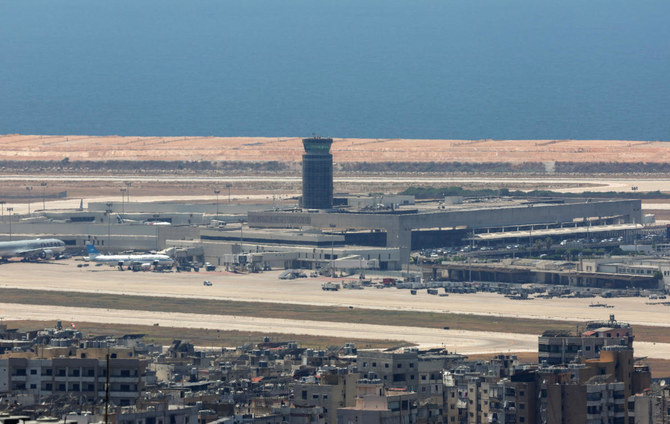
Beirut-Rafic Hariri International Airport is Lebanon’s only airport. It has been targeted in the country’s civil war, and previous fighting with Israel, including in the last war between Hezbollah and Israel in 2006.
On Sunday, MEA said it had delayed the departure of some flights set to land in Beirut overnight. Additional delays to flights landing on Monday were then announced due to “technical reasons related to the distribution of insurance risks for aircraft between Lebanon and other destinations,” MEA said.
Hezbollah and the Israeli military have increased cross-border exchanges of fire since the Gaza war began. The conflict has disrupted flights and shipping across the region, including during reciprocal drone and missile attacks between Israel and Iran in April.
Lufthansa has already suspended night-time flights to and from Beirut for July due to “current developments” in the Middle East.


![]()

Beirut flights canceled, delayed amid fears of Israeli attack
Short Url
https://arab.news/np98s
Beirut flights canceled, delayed amid fears of Israeli attack
- Lufthansa on Monday said it had suspended five routes to and from Beirut
- Turkiye-based budget carrier SunExpress, Turkish Airlines subsidiary AJet, Greek carrier Aegean Airlines, Ethiopian Air and MEA have also canceled flights


Latest updates


Recommended


© 2026 SAUDI RESEARCH & PUBLISHING COMPANY, All Rights Reserved And subject to Terms of Use Agreement.