

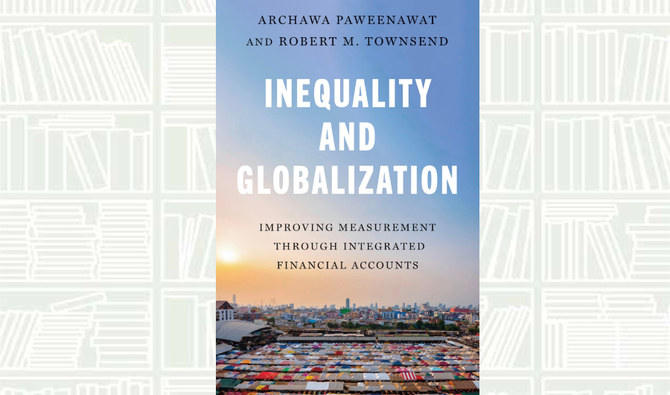
What We Are Reading Today: Inequality and Globalization

Photo/Supplied
Short Url
Updated 26 July 2024
Follow

What We Are Reading Today: Inequality and Globalization

  • Drawing on extensive data from fieldwork in Thailand, Paweenawat and Townsend show how consistent integrated financial accounts at the individual household and small enterprise level can be created using household and firm survey data

Authors: Archawa Paweenawat and Robert M. Townsend

Increasing inequality, the impact of globalization, and the disparate effects of financial regulation and innovation are extraordinarily important topics that fuel spirited policy debates. And yet the facts underlying these debates are of doubtful accuracy.
In reality, as Archawa Paweenawat and Robert Townsend show in Inequality and Globalization, there is a large gap between micro household surveys, which measure key outcomes such as inequality, and aggregated financial accounts, which measure macroeconomic totals and growth.

Paweenawat and Townsend propose a remedy: Integrated financial accounts, in which the flows in income statements, including saving and investment, are consistent with the changes in financial assets and liabilities in the balance sheet at micro and macro levels. None of the leading US micro household surveys or macro accounts meets this criterion.

Drawing on extensive data from fieldwork in Thailand, Paweenawat and Townsend show how consistent integrated financial accounts at the individual household and small enterprise level can be created using household and firm survey data.



What We Are Reading Today: Three Roads Back by Robert D. Richardson

Updated 06 March 2026
Follow

What We Are Reading Today: Three Roads Back by Robert D. Richardson

In “Three Roads Back,” Robert Richardson, the author of magisterial biographies of Ralph Waldo Emerson, Henry David Thoreau, and William James, tells the connected stories of how these foundational American writers and thinkers dealt with personal tragedies early in their careers. 
For Emerson, it was the death of his young wife and, 11 years later, his five-year-old son; for Thoreau, it was the death of his brother; and for James, it was the death of his beloved cousin Minnie Temple. 

Filled with rich biographical detail and unforgettable passages from the journals and letters of Emerson, Thoreau, and James, these vivid and moving stories of loss and hard-fought resilience show how the writers’ responses to these deaths helped spur them on to their greatest work, influencing the birth and course of American literature and philosophy.
As Richardson shows, all three emerged from their grief with a new way of seeing, one shaped by a belief in what Emerson called “the deep remedial force that underlies all facts.”