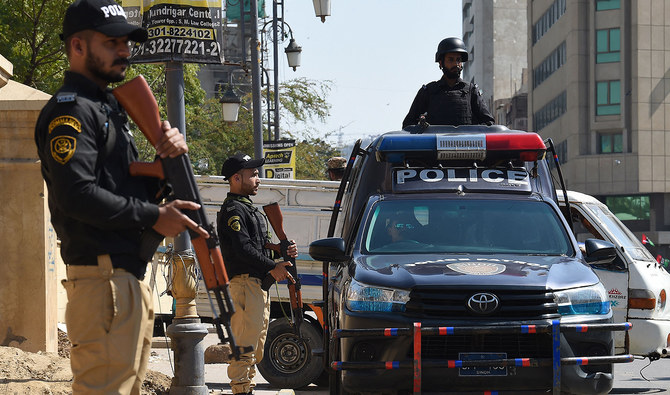
KARACHI: At least five men were killed in an armed clash between two groups in the southern Pakistani city of Karachi late Thursday, police officials said.
Both groups, who exchanged gunfire in Karachi’s Defense Housing Authority (DHA) area, belong to the Bugti tribe based in Pakistan’s southwestern Balochistan province, according to police.
Asad Raza, deputy inspector-general (DIG) of Karachi’s South district, told Arab News that both parties involved were cousins and part of extended family of late Baloch nationalist leader Nawab Akbar Khan Bugti.
“It appears that the conflict began when one party’s vehicle collided with another, leading to a heated argument that quickly escalated to an exchange of fire,” Raza said.
“The two cousins already had past family issues, and the accident acted as a catalyst for the tragedy.”
Police had arrested 17 individuals from both sides, including two gunmen from crime scene and two injured persons, according to the official.
Clashes among tribesmen over family feuds and lands have been a common occurrence in Pakistan’s southwestern Balochistan and southern Sindh provinces.
Earlier this year, Bugti tribesmen attacked bandits in riverine areas of Sindh near the Punjab-Balochistan border and killed nine dacoits, according to local media reports.
The Bugti tribesmen attacked the area to avenge the killing of one of their tribal leaders, Sardar Abdul Rehman Kalpar Bugti, who was allegedly gunned down by the bandits.
The warring factions often accuse each other of injustices and police of siding with opponents, an allegation denied by the law enforcers.


![]()

Five killed in armed clash between rival groups in Pakistan’s Karachi
Short Url
https://arab.news/yh87m
Five killed in armed clash between rival groups in Pakistan’s Karachi
- Both groups, who exchanged gunfire in Karachi’s Defense Housing Authority, belong to the Bugti tribe based in the southwestern Balochistan province
- DIG Asad Raza says the rival groups were led by cousins who already had family issues and an accident involving their cars acted as catalyst for tragedy
Latest updates


© 2026 SAUDI RESEARCH & PUBLISHING COMPANY, All Rights Reserved And subject to Terms of Use Agreement.