

In Pakistan’s Sindh, a historic watchtower whispers tales of Umayyad conquests

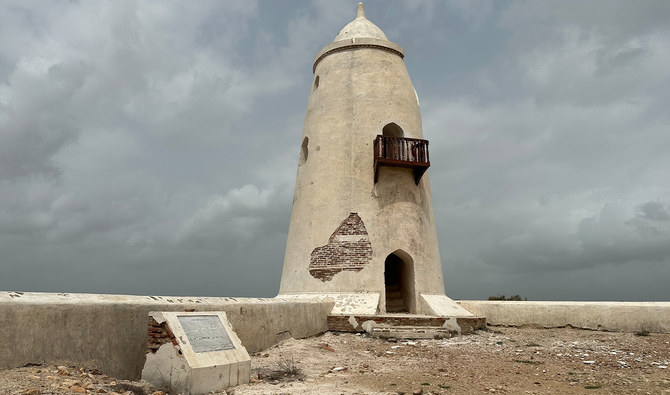
The image taken on July 19, 2024, shows the historic Muhammad Bin Qasim Watchtower in the barely populated town of Pir Patho on the coast of Pakistan’s southern Sindh province. (AN photo)
Short Url
Updated 25 July 2024
Follow

In Pakistan’s Sindh, a historic watchtower whispers tales of Umayyad conquests

  • Located in the barely populated Pir Patho town, the structure is now called Muhammad Bin Qasim Watchtower
  • Ships arriving from different ports took clearance from the watchtower before continuing to travel upstream

PIR PATHO, Thatta: Around a thirty-minute drive from the southern Pakistani city of Thatta stands a stone watchtower that, according to some historians, was used by Arab General Muhammad Bin Qasim during the Umayyad campaigns in India.

No wonder then that the building in the tiny, barely populated town of Pir Patho on the coast of Pakistan’s southern Sindh province has come to be popularly called the Muhammad Bin Qasim Watchtower, its weathered stone structure whispering tales of the region’s Arab past.

Qasim led the conquest of Sindh from 708 to 711 and established Islamic rule throughout the region, serving as governor of Sindh from 712 until his death in 715. Some historians say the watchtower was used for navigation by ships during Arab rule of Sindh. Others says it was mostly used to look out at small cargo-laden ships that arrived from the ancient Indian port of Debal, among others, before carrying on with their journeys up north along the Indus River.

“This used to be a watchtower for ships that would pass by,” said Sarfaraz Nawaz, an official at the Sindh Culture Department. “It is named after Muhammad bin Qasim and is believed to have been built in that era.”
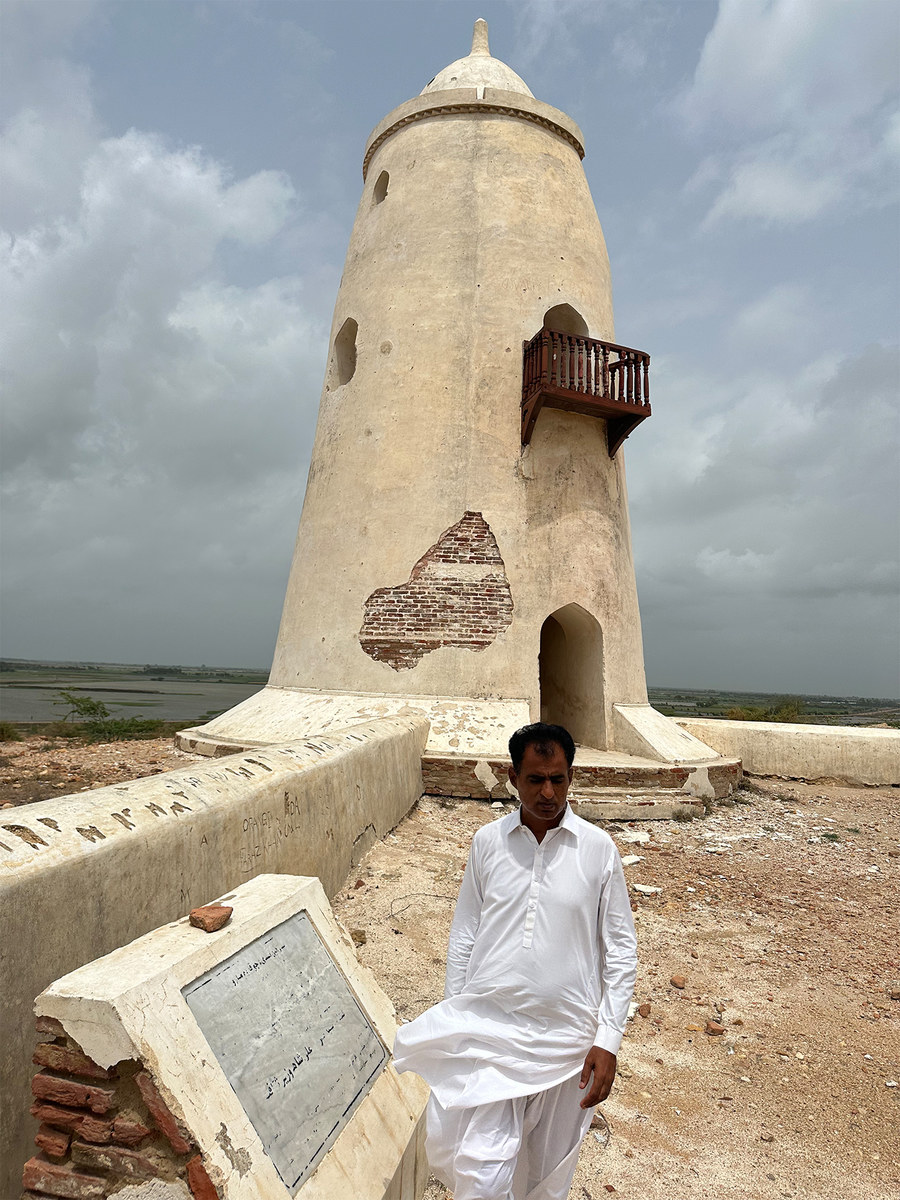


Sarfaraz Nawaz, an official at the Sindh Culture Department, is pictured outside the historic Muhammad Bin Qasim Watchtower in the barely populated town of Pir Patho on the coast of Pakistan’s southern Sindh province. (AN photo)

Historian Dr. Muhammad Ali Manjhi said there was evidence that ships arriving from Debal and other ports would require clearance from here to continue traveling upstream, though he informed the watchtower came to be named after Qasim only after the creation of Pakistan in 1947.

“They did not originally call it Muhammad bin Qasim Tower,” Manjhi told Arab News. “They used to call it the Pir Patho Tower.”

The town of Pir Patho is home to several other archaeological sites, including a Mughal-era mosque, old graveyards and the shrine of Sufi saint Sakhi Jamil Shah Dataar. The area is also known for a major earthquake in the 17th century, in which 50,000 people are believed to have perished, Nawaz said.

A “huge city” once existed at the site of Pir Patho, which was devasted when the Indus River changed its course, Nawaz said, while deadly floods in 2010 once again hit Pir Patho and damaged the historic watchtower.

The Sindh Endowment Fund Trust in 2016 restored the 45-feet-tall tower, which has a circumference of around 65 feet, to its former glory, using kiln-baked bricks and stones.

Nawaz mentioned that although it is unknown who built the tower, it remains a significant landmark.

“Pir Patho was a very important city because of its strategic location. Similarly, the watchtower played a crucial role in guiding ships arriving from the sea for their northward journey,” he said.


Five cops killed as gunmen ambush police van in northwestern Pakistan

Updated 23 December 2025
Follow

Five cops killed as gunmen ambush police van in northwestern Pakistan

  • Over a dozen “well-armed terrorists” ambushed police van in northwestern Karak district, say police
  • Pakistan’s northwestern KP province has witnessed a surge in militant attacks in recent months

PESHAWAR: Five cops were killed when a group of “terrorists” ambushed a police van in Pakistan’s northwestern Karak district on Tuesday, a police official confirmed. 

Karak police spokesperson Shaukat Khan said a heavy police reinforcement has been dispatched to the site of the attack in the district’s Gurguri area to collect evidence. 

“Over a dozen well-armed terrorists ambushed a police mobile van in the jurisdiction of Gurguri police station, an inaccessible area of the district, leaving five policemen martyred,” Khan told Arab News. 

No group has claimed responsibility for the attack. However, similar attacks on police and security forces have been claimed in the past by the Tehreek-e-Taliban Pakistan (TTP) or the Pakistani Taliban. 

Khan identified the slain police officers as Shahid Iqbal, Arif, Sami Ullah, Safdar and the driver named Muhammad Ibrar.

“Evidence has been collected from the crime scene and a comprehensive search operation is now underway to apprehend the perpetrators,” Khan said. 

The Gurguri region is home to a large gas field, where exploration activities take place regularly. This often necessitates heightened security measures by law enforcement personnel.

Pakistan has witnessed a surge in militant activities, particularly in northwestern Khyber Pakhtunkhwa (KP) province bordering Afghanistan, in recent months. 

Earlier this month, one police constable was killed while five others were injured in a suicide blast that targeted a police vehicle in the Lakki Marwat district. 

Similarly, three police personnel were killed in November when militants attacked a checkpost in Hangu city. 

Pakistan has blamed Afghanistan for facilitating cross-border attacks against its security forces and turning a blind eye to the TTP’s activities on its soil. 

Afghanistan rejects the allegations and says it cannot be held responsible for Islamabad’s security lapses.