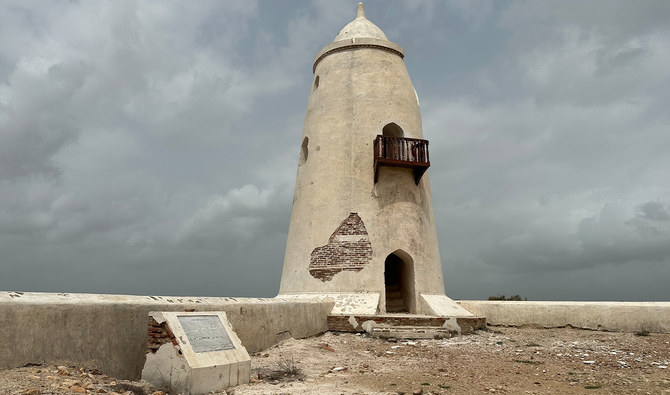

PIR PATHO, Thatta: Around a thirty-minute drive from the southern Pakistani city of Thatta stands a stone watchtower that, according to some historians, was used by Arab General Muhammad Bin Qasim during the Umayyad campaigns in India.
No wonder then that the building in the tiny, barely populated town of Pir Patho on the coast of Pakistan’s southern Sindh province has come to be popularly called the Muhammad Bin Qasim Watchtower, its weathered stone structure whispering tales of the region’s Arab past.
Qasim led the conquest of Sindh from 708 to 711 and established Islamic rule throughout the region, serving as governor of Sindh from 712 until his death in 715. Some historians say the watchtower was used for navigation by ships during Arab rule of Sindh. Others says it was mostly used to look out at small cargo-laden ships that arrived from the ancient Indian port of Debal, among others, before carrying on with their journeys up north along the Indus River.
“This used to be a watchtower for ships that would pass by,” said Sarfaraz Nawaz, an official at the Sindh Culture Department. “It is named after Muhammad bin Qasim and is believed to have been built in that era.”
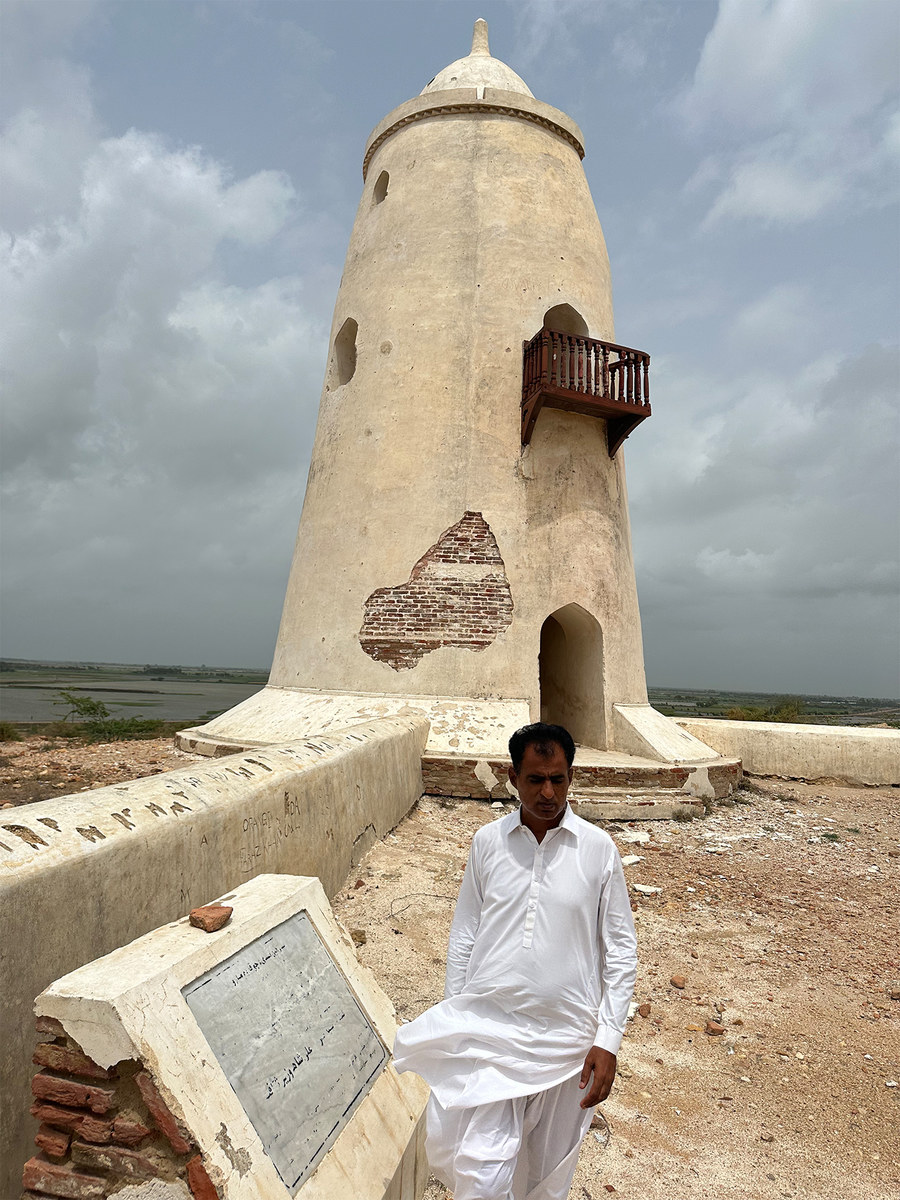
Sarfaraz Nawaz, an official at the Sindh Culture Department, is pictured outside the historic Muhammad Bin Qasim Watchtower in the barely populated town of Pir Patho on the coast of Pakistan’s southern Sindh province. (AN photo)
Historian Dr. Muhammad Ali Manjhi said there was evidence that ships arriving from Debal and other ports would require clearance from here to continue traveling upstream, though he informed the watchtower came to be named after Qasim only after the creation of Pakistan in 1947.
“They did not originally call it Muhammad bin Qasim Tower,” Manjhi told Arab News. “They used to call it the Pir Patho Tower.”
The town of Pir Patho is home to several other archaeological sites, including a Mughal-era mosque, old graveyards and the shrine of Sufi saint Sakhi Jamil Shah Dataar. The area is also known for a major earthquake in the 17th century, in which 50,000 people are believed to have perished, Nawaz said.
A “huge city” once existed at the site of Pir Patho, which was devasted when the Indus River changed its course, Nawaz said, while deadly floods in 2010 once again hit Pir Patho and damaged the historic watchtower.
The Sindh Endowment Fund Trust in 2016 restored the 45-feet-tall tower, which has a circumference of around 65 feet, to its former glory, using kiln-baked bricks and stones.
Nawaz mentioned that although it is unknown who built the tower, it remains a significant landmark.
“Pir Patho was a very important city because of its strategic location. Similarly, the watchtower played a crucial role in guiding ships arriving from the sea for their northward journey,” he said.