ISLAMABAD: Federal Minister for Religious Affairs Chaudhry Salik Hussain shared a startling figure on Wednesday while discussing the number of Pakistanis who went to Iraq for religious tourism but decided not to return, saying there were 50,000 such cases without specifying the period during which these people went missing occurred.
Every year, thousands of Pakistani pilgrims travel to Iran, Iraq and Syria to visit religious shrines in these countries.
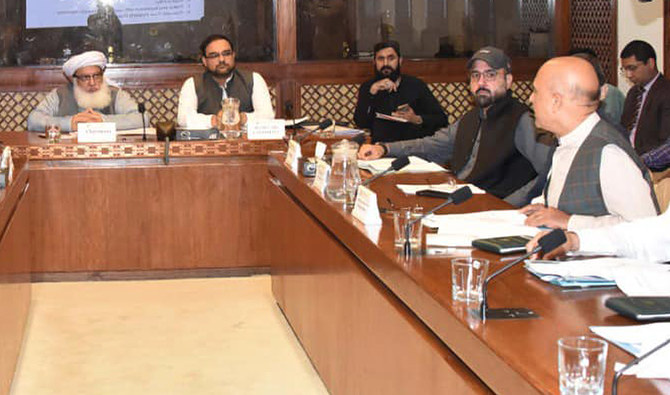
During the briefing to the Senate Standing Committee on Religious Affairs and Interfaith Harmony, the minister said the government had formulated a policy to streamline such visits to the Middle Eastern states, adding it was awaiting the approval of the federal cabinet.
A statement released after the committee’s proceedings reflected that participants discussed the issue at length.
“Chaudhry Salik Hussain revealed during the meeting that nearly 50,000 Pakistanis had gone missing in Iraq,” the statement said.
It informed the government wanted to promote the group system for pilgrims visiting the aforementioned countries, adding that Iraq had its own monitoring system for pilgrims on its borders.
The meeting also reviewed the issues faced by pilgrims at the Taftan border between Pakistan and Iran, which they mostly cross to visit the shrines in the three Middle Eastern states.
Meanwhile, Senator Raja Nisar Abbas, who is part of the Senate committee, said a majority of people who go missing in other countries travel there illegally.
He maintained that those who go for pilgrimage to these countries have their travel documents collected at the border.
He also highlighted the issues faced by pilgrims at the Taftan border, pointing out that they had to wait for several days in the absence of basic facilities.
Abbas proposed that a complaint cell be established for these people, similar to the one that helps Hajj pilgrims.


![]()

Religious affairs minister reports 50,000 Pakistanis missing in Iraq during religious tourism
Short Url
https://arab.news/68rjh
Religious affairs minister reports 50,000 Pakistanis missing in Iraq during religious tourism
- Chaudhry Salik Hussain shares the startling figure while briefing the Senate Standing Committee on Religious Affairs
- He says his ministry has formulated a new policy to address the issue, which is awaiting the federal cabinet’s approval
Latest updates




Recommended


© 2026 SAUDI RESEARCH & PUBLISHING COMPANY, All Rights Reserved And subject to Terms of Use Agreement.