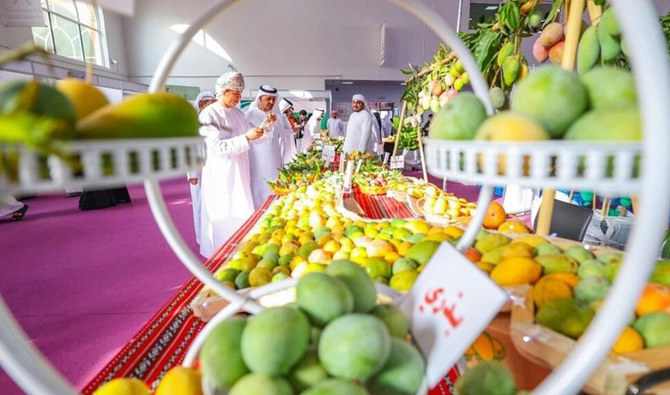
ISLAMABAD: The Pakistan Social Center Sharjah in the United Arab Emirates (UAE) has hosted a mango festival, celebrating the most beloved fruit produced in the South Asian country, according to a statement released by the community organization on Wednesday.
Established in the 1980s, the center serves as a vital hub for the Pakistani community in Sharjah, promoting cultural, educational and social welfare activities.
It periodically organizes festivals and events to support greater integration within the diaspora community.
“The Pakistan Social Center Sharjah, in collaboration with the Pakistani community, hosted its 7th Annual Mango Festival, a celebration of Pakistan’s national fruit,” the statement said. “The event aimed to promote Pakistani produce globally and foster community spirit among expatriates.”
The festival displayed more than 25 varieties of mangoes produced in Pakistan.
Addressing the occasion, the center’s president, Khalid Hussain Chaudhry, highlighted the importance of increasing mango exports and educating younger generations about different varieties of the fruit.
“This year’s Mango Mela [festival] was our most successful yet,” he added.
The event attracted a large number of Pakistani expatriates and other residents of Sharjah, demonstrating the popularity of Pakistani mangoes in the UAE.


![]()

Pakistani community hosts mango festival in Sharjah to celebrate beloved South Asian fruit
Short Url
https://arab.news/9qrxz
Pakistani community hosts mango festival in Sharjah to celebrate beloved South Asian fruit
- The 7th Annual Mango Festival displayed more than 25 varieties of the fruit produced in Pakistan
- The event attracted a large number of Pakistani expatriates along with other residents of Sharjah
Latest updates


Recommended


© 2026 SAUDI RESEARCH & PUBLISHING COMPANY, All Rights Reserved And subject to Terms of Use Agreement.