

German court rules in migration case that there’s no general danger now to all civilians in Syria

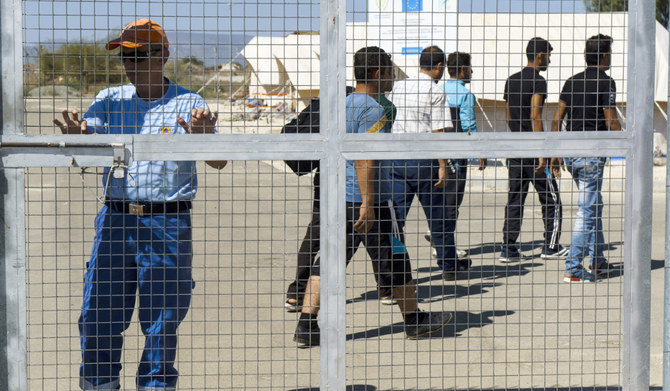
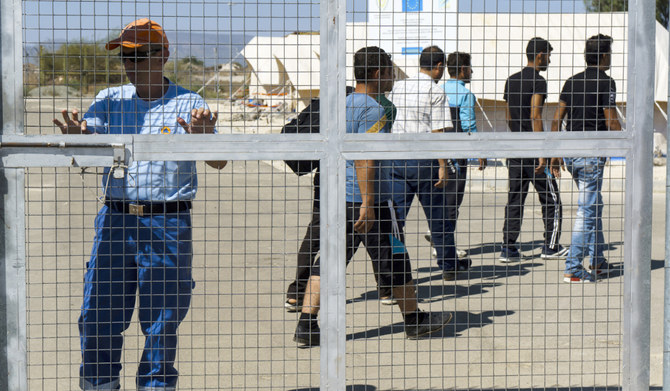
The court in the western city of Muenster ruled in the case of a man from Hasaka province in northeastern Syria who arrived in Germany in 2014. (AFP file photo)
Short Url
Updated 24 July 2024
Follow

German court rules in migration case that there’s no general danger now to all civilians in Syria

  • Germany has been a major destination for Syrians fleeing the country’s 13-year civil war. Attitudes toward migrants have hardened in recent years

BERLIN: A German court has ruled that there is no longer a general danger to all civilians from the long-running conflict in Syria, rejecting a claim to protected status by a Syrian man who had been convicted in Austria for involvement in smuggling people into Europe.
The ruling by the top administrative court of North Rhine-Westphalia state, Germany’s most populous, was announced Monday. Justice Minister Marco Buschmann said Tuesday it was “a decision that one can understand, if one assumes that there are now regions in this country that are very dangerous but also other areas where there isn’t necessary a danger to life.”
It wasn’t immediately clear what consequences if any the ruling would have for German authorities’ practice in handling claims for protection from Syrians, who so far largely have been deemed to face such a threat. It could still be appealed.
The court in the western city of Muenster ruled in the case of a man from Hasaka province in northeastern Syria who arrived in Germany in 2014.
German authorities denied him protected status because he had previously been involved in smuggling people from Turkiye to Europe, an offense for which he was given a several-year sentence in Austria. But a court obliged them to recognize him as a refugee.
The Muenster court reversed that ruling on appeal. The presiding judge said the man didn’t face political persecution in Syria and his previous offenses barred him from being given refugee or other protected status, the court said in a statement.
It also found that he didn’t qualify for a lesser degree of protection in part because there is no longer a “serious individual threat to the life or physical integrity of civilians as a result of arbitrary violence in the context of a domestic conflict in Hasaka province, but also generally in Syria.” The court contended that fighting and attacks in the region no longer reach a level at which civilians face a high probability of being killed and wounded.
A German group that supports asylum-seekers criticized the ruling. Wiebke Judith, a spokesperson for Pro Asyl, argued that it ignores the reality in Syria, German news agency dpa reported.
Germany has been a major destination for Syrians fleeing the country’s 13-year civil war. Attitudes toward migrants have hardened in recent years.
Last month, Chancellor Olaf Scholz vowed to resume deporting criminals from Afghanistan and Syria, though it remains unclear how that would happen.


Brazil moves closer to curbing Indigenous land claims in constitution

Updated 4 sec ago
Follow

Brazil moves closer to curbing Indigenous land claims in constitution

BRASILIA: Brazilian lawmakers moved closer Tuesday toward changing the constitution to limit Indigenous peoples’ rights over their ancestral lands, despite expert claims that they are a key bulwark against global warming.
Land rights for native peoples have been a point of contention in Brazil for years due to the country’s powerful agricultural sector and its allies in the predominantly conservative parliament.
The country has already curbed land claims through the so-called “time frame” rule that means Indigenous peoples can only have protected reserves on lands they physically occupied when the constitution was enacted in 1988.
Proponents say the measure will resolve uncertainty about land demarcation, while opponents say it will open native peoples’ lands to economic exploitation.
The Senate advanced Tuesday a proposed amendment, by 52 votes to 15, that would enshrine the time frame rule in the constitution itself.
The text now moves to the Chamber of Deputies for approval.
The vote came ahead of the start of a Supreme Court case centered on the application of the time frame rule in demarcating Indigenous lands.
The court declared the rule unconstitutional in 2023, in a victory for Indigenous movements.
But Congress passed it into law anyway, despite that decision and the vetoes of leftist President Luiz Inacio Lula da Silva.
Brazil is home to 1.7 million Indigenous people, out of a total population of over 200 million.
Indigenous communities argue that many of Brazil’s native inhabitants were expelled from ancestral homelands throughout the country’s history, particularly during its military dictatorship of 1964 to 1985.
Since returning to power in 2023, Lula has approved 16 Indigenous territories, granting native peoples the right to occupy and exclusively use their natural resources.
Experts say that such territories work as a shield against climate-related threats like deforestation and fires.