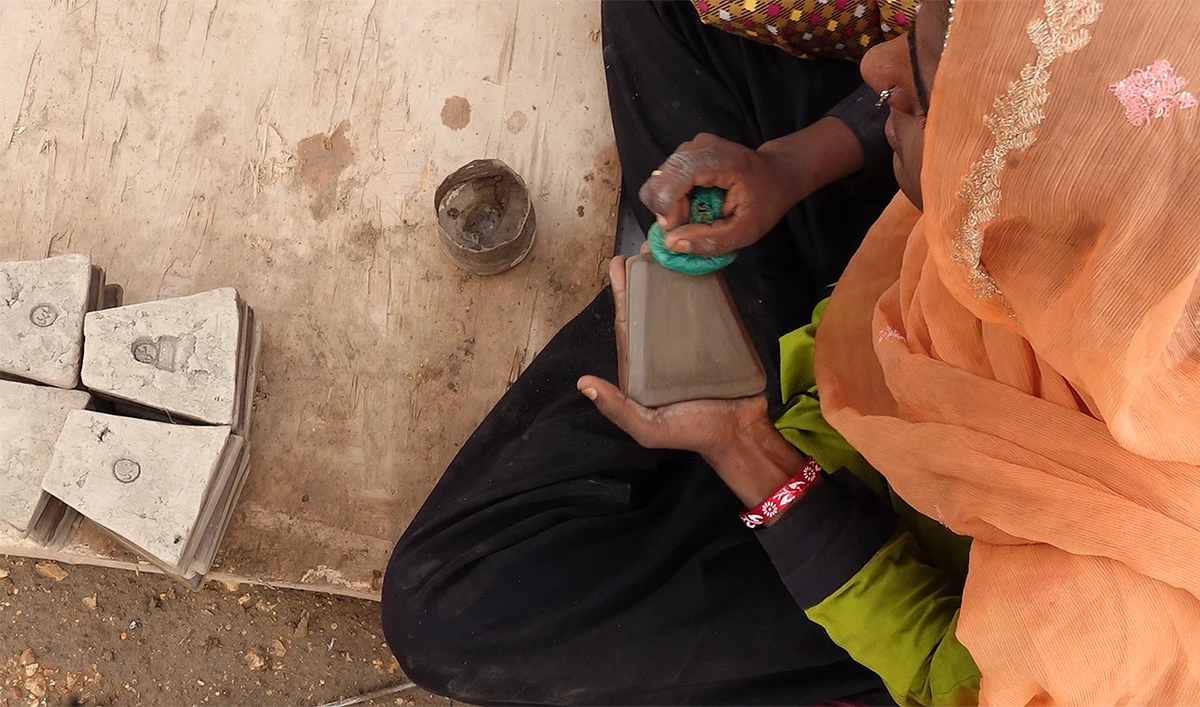
Former beggarwomen mold new lives through tilemaking in Pakistan’s Sindh

A woman is seen making tiles in Makli in Pakistan's southern Sindh province on July 20, 2024. (AN photo)
Short Url
Updated 23 July 2024
Follow

Former beggarwomen mold new lives through tilemaking in Pakistan’s Sindh

  • Dozens of women who used to beg at sprawling Makli necropolis have learnt art of kashi tilemaking 
  • Women say money earned helps them bear household expenses, buy livestock, educate children

MAKLI, Thatta: Hoor Noor used her hands to shape the clay into a tile under the shade of a bamboo structure as the harsh sun shone down around her on the sprawling Makli Necropolis, among the largest cemeteries in the world.

Until a few years ago, Noor used to be among dozens of women beggars at the cemetery located near the city of Thatta in Pakistan’s southern Sindh province. In 2018, celebrated Pakistani architect Yasmeen Lari decided to help beggarwomen earn a dignified living and launched a program to teach them how to make kashi tiles, one of the oldest handicrafts in Sindh.

“Life used to be worthless before,” Noor, 55, who lives in the nearby Shikari village where the training facility was set up, told Arab News as she extracted a tile from a wooden mold. “Now even the children eat and drink well. Now, our life is good.”
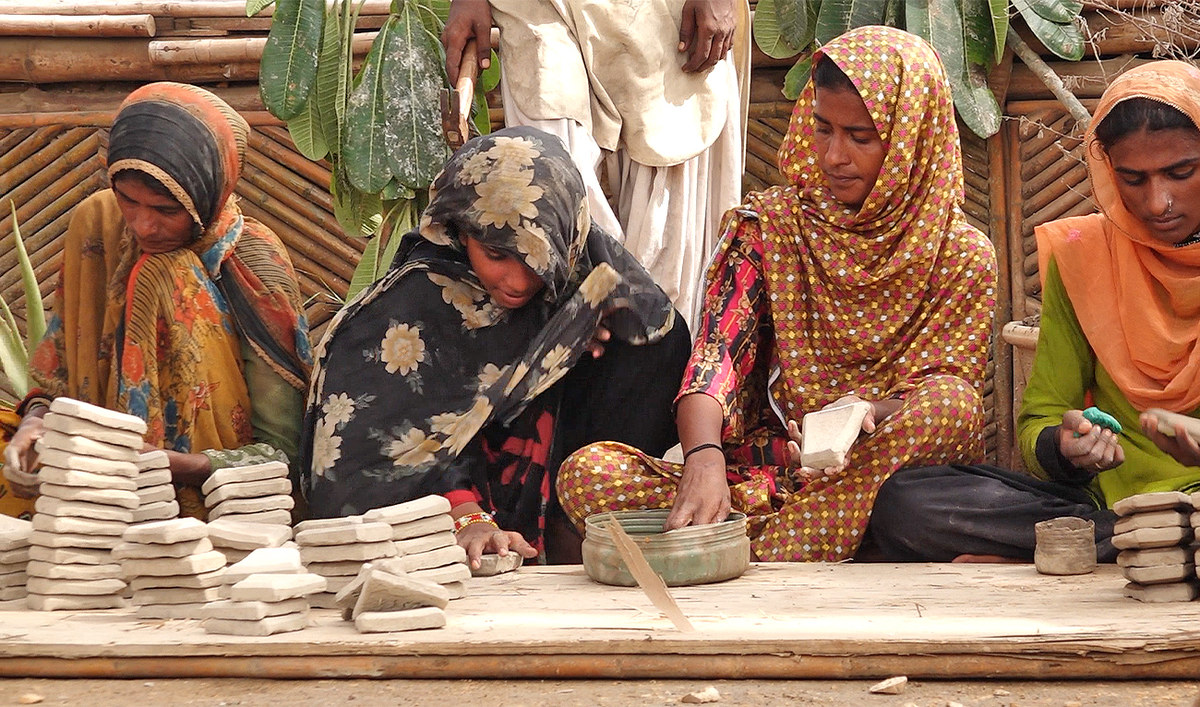


Women make tiles in Makli in Pakistan's southern Sindh province on July 20, 2024. (AN photo)

Makli has over half a million tombs and graves spread over an area of about 10 square kilometers. Among those buried are kings, queens, governors, saints, scholars, and philosophers, many of them lying in brick or stone monuments lavishly decorated with glazed tiles.

Now Noor takes the tiles she makes with her own hands to sell at the same shrines where she once used to beg for alms.

“She started to sell those Kashi tiles and suddenly she started to make money,” Lari told Arab News. “Once she started to make money, it was a changed scenario.”
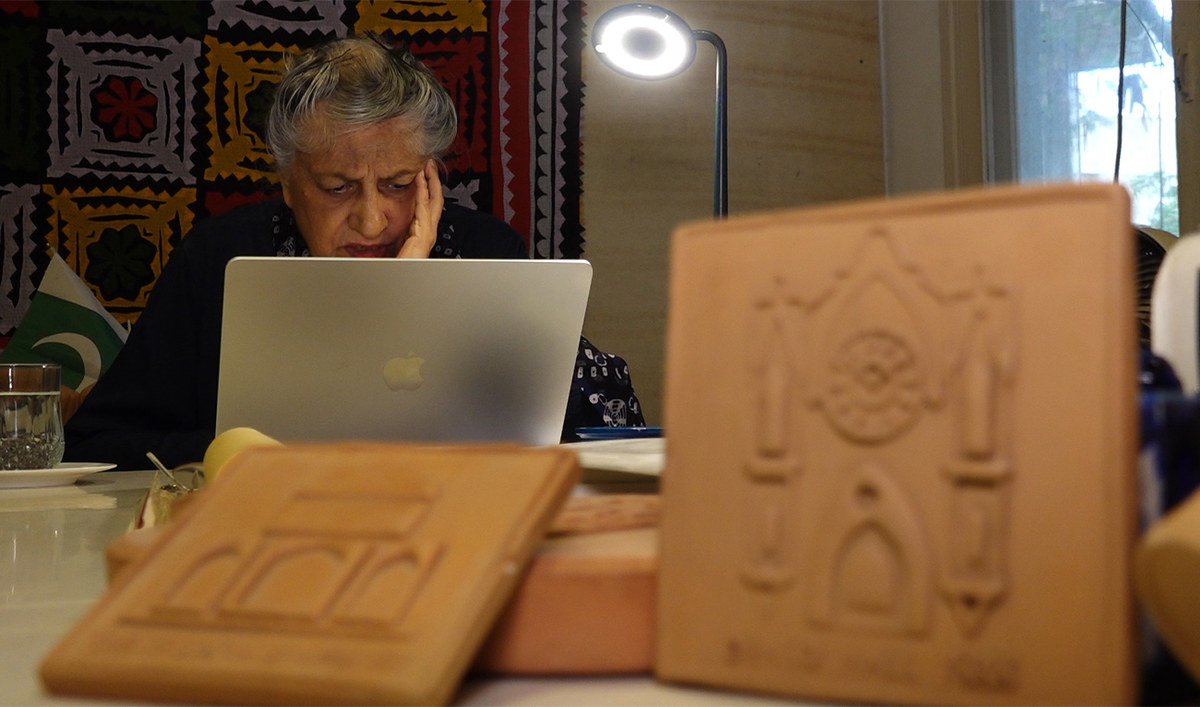


Celebrated Pakistani architect Yasmeen Lari is working at her office in Karachi, Pakistan on July 20, 2024. (AN photo)

Noor’s story has inspired other women and Lari’s training program has been attended by around 230 beggars, most of them women, since it was launched. 

Tiles produced in the program have been used in several heritage places in Karachi, including the Denso Hall library and the historic Kharadar Chowk. In their latest project, the women are making tiles for a heritage street near the Pakistan State Oil House in Karachi’s upscale Clifton area. Ultimately, Lari’s goal is to train women from up to 15,000 Sindh villages in the craft of traditional kashi tilemaking. 

Indeed, as more streets and heritage structures are restored in Karachi, Lari said more women in Makli would find an honest day’s work.

“The more people will use it [kashi tiles] in the cities, the more these women will be able to be trained,” the architect said. 
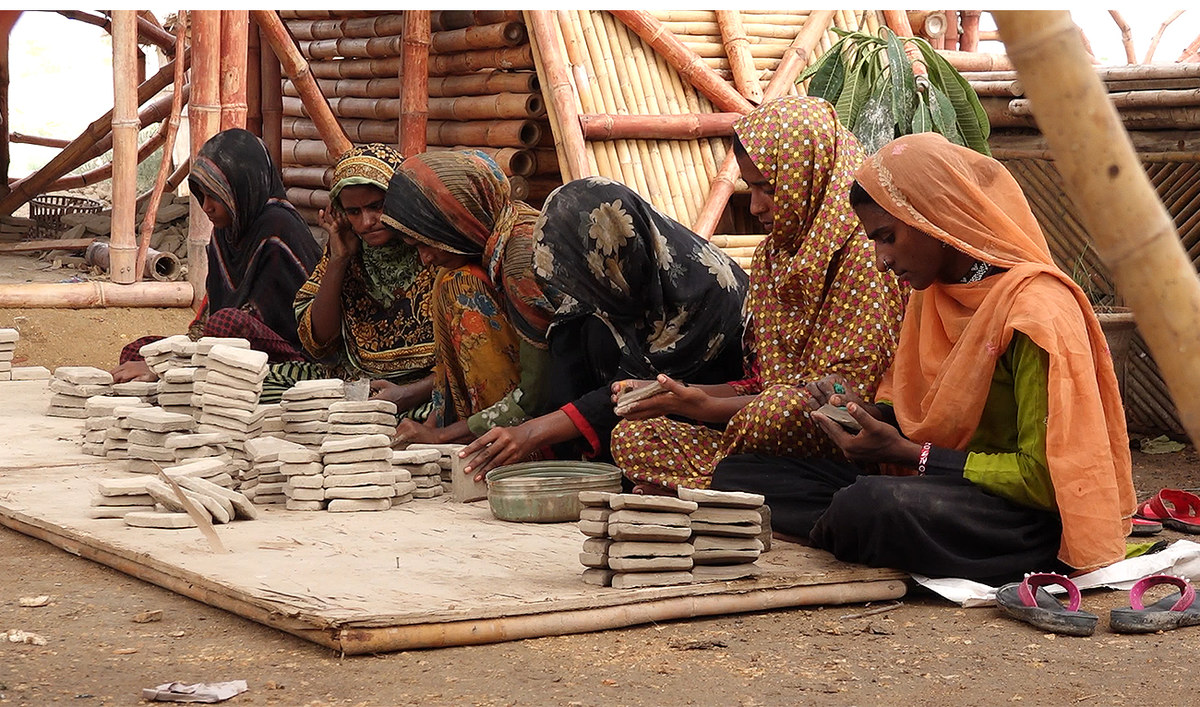


Women make tiles in Makli in Pakistan's southern Sindh province on July 20, 2024. (AN photo)

Those trained in the craft have already witnessed a dramatic improvement in their lives, with some earning as much as Rs20,000 [$71.98] per month, Lari said. 

“After the household expenses, if money is left, we [also] buy small goats,” Hoor said as she wedged clay in her hands. 

Another craftswoman and mother of five, Samia Qadir, said she was glad her children were now able to go to school.

“My daughter gets to go to school,” Qadir told Arab News. “If I’d had the opportunity, I would have gone too …But I work, I make tiles, I am happy, and our children are also happy.”
Pakistan condemns Israel’s contentious move to approve land registration in West Bank

Updated 8 sec ago
Follow

Pakistan condemns Israel’s contentious move to approve land registration in West Bank

  • Israel’s cabinet on Sunday voted in favor of beginning land registration process that makes it easier for settlers to buy lands in West Bank 
  • Pakistan’s foreign office says such measures in violation of international law, UN General Assembly and Security Council resolution

ISLAMABAD: Pakistan’s foreign office on Monday condemned the Israeli cabinet’s contentious decision to approve registration of large areas of land in the West Bank as “state property,” saying the move was in violation of international law and the United Nations Security Council resolutions. 

Members of the Israeli cabinet on Sunday voted in favor of beginning a process of land registration in the West Bank for the first time since 1967. The move is being seen by many, including the Palestinian Authority (PA), as measures to tighten Israel’s control over the West Bank area by making it easier for Jewish settlers to buy land.

The ruling Israeli coalition ‌includes many ‌pro-settler members who want Israel to annex ​the ‌West ⁠Bank, ​land captured ⁠in the 1967 Middle East war to which Israel cites biblical and historical ties. The West Bank is among the territories that Palestinians seek for a future independent state. Much of it is under Israeli military control, with limited Palestinian self-rule in some areas run by the PA. 

“Pakistan strongly condemns the latest attempt by the Israeli occupying power to convert areas of the Occupied West Bank into so-called state property, and to expand illegal settlement activities,” Pakistan’s foreign office spokesperson said in a statement. 

The spokesperson said such actions are “in clear violation” of international law, UN Security Council and General Assembly resolutions. It stressed that such measures must be rejected by the international community.

“Pakistan calls on the international community to take concrete measures to end Israeli impunity, and ensure respect for international law,” the statement said. 

The foreign office reiterated its support for the people of Palestine in securing their right to self-determination, and for an independent, Palestinian state based on pre-1967 borders, with Al-Quds Al-Sharif as its capital.

The PA presidency has rejected the cabinet’s decision, saying it constitutes “a de-facto annexation of ‌occupied Palestinian territory and a declaration of the commencement of annexation plans aimed at entrenching the occupation ⁠through illegal settlement ⁠activity.”

The United Nations’ highest court said in a non-binding advisory opinion in 2024 that Israel’s occupation of Palestinian territories and settlements there is illegal and should be ended as soon as possible. Israel disputes this view.