BANGKOK: Cyanide poisoning was likely the cause of the deaths of six foreigners whose bodies were found in a room in a plush Bangkok hotel, with the suspected killer among the dead, Thai police said on Wednesday
The rapid-acting, deadly chemical was found on drinking glasses and a teapot in the room at the luxury Grand Hyatt Erawan hotel, and interviews with relatives of the dead revealed there had been a dispute over debt related to an investment, police said.
The six were all of Vietnamese ethnicity, two of those US nationals, and were found dead late on Tuesday. The US Federal Bureau of Investigation had assisted police with the investigation, police said.
“We found cyanide in the teacups, all six cups we found cyanide,” Trirong Phiwpan, Commander of the Thai police evidence office, told a press conference.
“After staff brought tea cups and two hot water bottles, milk and tea pots ... one of the six introduced cyanide.”
The results of an autopsy were expected within the next day, police said.
Vietnam’s government said its embassy in Bangkok was closely coordinating with Thai authorities on the case, while the US State Department said it was monitoring the situation and local authorities were responsible for the investigation.
The Grand Hyatt Erawan, operated by Erawan Group , has over 350 rooms and is located in a popular tourist district known for luxury shopping and restaurants.
News of the deaths, initially reported by some Thai media as a shooting, could be a setback for Thailand as it bets heavily on its vital tourism sector reviving an economy that has struggled since the pandemic.
Thailand is expecting 35 million foreign arrivals this year, up from 28 million last year who spent 1.2 trillion baht ($33.71 billion).
Prime Minister Srettha Thavisin on Tuesday urged a swift probe into the issue to limit the impact on Thailand’s travel sector.

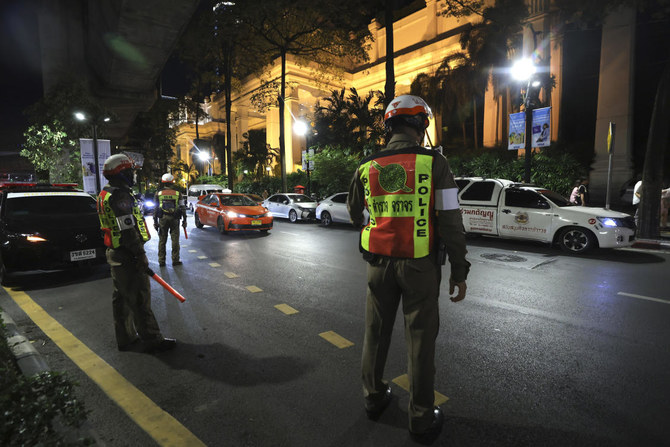
Thai police say cyanide killed 6 foreigners in Bangkok hotel, including suspect
https://arab.news/jn8p5
Thai police say cyanide killed 6 foreigners in Bangkok hotel, including suspect
- The rapid-acting, deadly chemical was found on drinking glasses and a teapot in the room at the luxury Grand Hyatt Erawan hotel
- The six were all of Vietnamese ethnicity, two of those US nationals, and were found dead late on Tuesday
Britain needs ‘AI stress tests’ for financial services, lawmakers say
- Lawmakers urge AI-specific stress tests for financial firms
LONDON: Britain’s financial watchdogs are not doing enough to stop artificial intelligence from harming consumers or destabilising markets, a cross-party group of lawmakers said on Tuesday, urging regulators to move away from what it called a “wait and see” approach.
In a report on AI in financial services, the Treasury Committee said the Financial Conduct Authority and the Bank of England should start running AI-specific stress tests to help firms prepare for market shocks triggered by automated systems.
The committee also called on the FCA to publish detailed guidance by the end of 2026 on how consumer protection rules apply to AI, and on the extent to which senior managers should be expected to understand the systems they oversee.
“Based on the evidence I’ve seen, I do not feel confident that our financial system is prepared if there was a major AI-related incident and that is worrying,” committee chair Meg Hillier said in a statement.
TECHNOLOGY CARRIES ‘SIGNIFICANT RISKS’
A race among banks to adopt agentic AI, which unlike generative AI can make decisions and take autonomous action, runs new risks for retail customers, the FCA told Reuters late last year.
About three-quarters of UK financial firms now use AI. Companies are deploying the technology across core functions, from processing insurance claims to performing credit assessments.
While the report acknowledged the benefits of AI, it warned the technology also carried “significant risks” including opaque credit decisions, the potential exclusion of vulnerable consumers through algorithmic tailoring, fraud, and the spread of unregulated financial advice through AI chatbots.
Experts contributing to the report also highlighted threats to financial stability, pointing to the reliance on a small group of US tech giants for AI and cloud services. Some also noted that AI-driven trading systems may amplify herding behavior in markets, risking a financial crisis in a worst-case scenario.
An FCA spokesperson said the regulator welcomed the focus on AI and would review the report. The regulator has previously indicated it does not favor AI-specific rules due to the pace of technological change.
The BoE did not respond to a request for comment.
Hillier told Reuters that increasingly sophisticated forms of generative AI were influencing financial decisions. “If something has gone wrong in the system, that could have a very big impact on the consumer,” she said.
Separately, Britain’s finance ministry appointed Starling Bank CIO Harriet Rees and Lloyds Banking Group ‘s Rohit Dhawan as “AI Champions” to help steer AI adoption in financial services.


