

Chinese investors embrace Saudi equities as 2 ETFs debut in Shanghai, Shenzhen

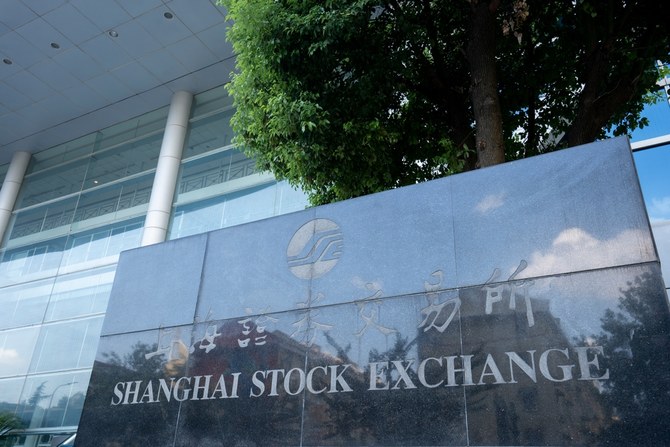
Shanghai Stock Exchange in the city’s Lujiazui Financial District
Short Url
Updated 16 July 2024
Follow

Chinese investors embrace Saudi equities as 2 ETFs debut in Shanghai, Shenzhen

RIYADH: Chinese investors showed strong interest in Saudi equities as two new exchange-traded funds focused on the Kingdom’s stocks debuted in Shanghai and Shenzhen.  

The feeder funds, operating under the Qualified Domestic Institutional Investor program, began trading on July 16, with both briefly hitting the 10 percent daily limit on their launch day.    

The first fund, CSOP Saudi Arabia ETF QDII, managed by China Southern Asset Management, is listed on the Shenzhen Stock Exchange after raising 634 million Chinese yuan ($87 million).   

The second fund, the Huatai-PineBridge managed CSOP Saudi Arabia ETF QDII, started trading on the Shanghai Stock Exchange after raising 590 million Chinese yuan, Bloomberg reported.   

The new offerings mark a significant step in the deepening economic ties between China and Saudi Arabia, allowing mainland investors to diversify their portfolios with exposure to the Kingdom’s stock market.     

This comes as investor relations between the two nations flourish with China becoming the top greenfield foreign direct investor in Saudi Arabia with investments amounting to $16.8 billion in 2023, a 1,020 percent rise from the previous year.      

The two ETFs indirectly invest in the Kingdom’s stock market through the CSOP Saudi Arabia ETF, which was listed on the Hong Kong Stock Exchange, marking the first Saudi Arabia-focused ETF in the Asia-Pacific region.   

Following their approval from the China Securities Regulatory Commission last month, these funds are designed to facilitate greater international diversification for Chinese investors, particularly in sectors where Saudi Arabia has considerable influence, such as energy and oil.   

“People will pay more attention to Saudi Arabia looking at the energy and financial sector compared with US or Japan investment options,” Mao Wei, chief equity investment officer at China Southern Asset Management Co., told Bloomberg.   

Mainland investors will find it easier to build exposure to Saudi stocks using the funds as they can invest in yuan and find information in Chinese, according to Melody Xian He, deputy chief executive officer at CSOP Asset Management.   

About 20,000 individuals and funds took allocations in the ETFs during an offer period of seven days, she said in an interview.   

As investment links between China and Saudi Arabia deepen, Hong Kong could be “the largest beneficiary of the Saudi China ETF connect program because ETFs that are listed in Saudi Arabia and mainland China could feed back into the Hong Kong ETF,” said Rebecca Sin, an analyst at Bloomberg Intelligence in Hong Kong.   

“The next step of the Saudi China ETF Connect could be that Saudi Arabia asset managers launch a feeder fund,” she added.  

This fund tracks the FTSE Saudi Arabia Index and counts the Kingdom’s sovereign wealth fund among its major investors.  

The Saudi China ETF program aims to facilitate the cross-listing of funds in both countries and the launch of feeder funds, further cementing financial cooperation between the two nations amidst evolving geopolitical landscapes.  


Oil supply disruption in Gulf raises inflation risks and growth concerns worldwide

Updated 08 March 2026
Follow

Oil supply disruption in Gulf raises inflation risks and growth concerns worldwide

RIYADH: Rising oil prices are emerging as an inflation and growth shock for the US and the global economy as Gulf producers cut output, declare force majeure, and warn that storage constraints could trigger wider shut-ins. 

Kuwait said it had started reducing crude production and declared force majeure, while Iraq has already cut about 1.5 million barrels per day and warned reductions could exceed 3 million bpd if export routes remain blocked. 

Qatar has halted liquefied natural gas liquefaction and declared force majeure on exports, while Abu Dhabi National Oil Co. said it is actively managing offshore output as storage pressures build. 

Asian refiners and petrochemical producers have begun cutting runs and declaring force majeure as Middle East feedstock supplies are disrupted, Reuters reported. 

The immediate result is a sharper pass-through of energy costs to consumers and industry. 

A note from JPMorgan Chase said “supply disruptions in the Gulf are accelerating faster than expected as storage constraints begin to force upstream shut-ins across the region.” Brent crude opened March 6 near $83 a barrel and quickly rose above $94, with the bank estimating about 2.5 million barrels a day of shut-ins after seven days of conflict, although reported disruptions currently appear closer to 2 million barrels a day. It said more than 4 million barrels a day of production may need to be curtailed by March 13. 

Goldman Sachs said in a global economics report that “the main economic impact for most countries is that the recent rise in oil prices to around $80/bbl will boost inflation and slow growth,” estimating that oil near current levels would add 0.2 percentage point to global headline inflation and shave 0.1 point off global growth. A temporary move to $100 a barrel would lift the inflation hit to 0.7 point and deepen the growth drag to 0.4 point. 

For the US, the shock is milder than for oil-importing economies but still material. Goldman Sachs said the effect on US core inflation should remain relatively limited compared with Europe and emerging markets because the country relies more heavily on domestic energy supply, although households are already seeing higher fuel costs. 

Reuters reported that US gasoline prices have risen more than 10 percent in a week, while AAA said the national average for regular gasoline climbed nearly 27 cents week on week to $3.25 a gallon as crude prices advanced. 

Higher fuel costs threaten to squeeze consumer spending, raise freight and airline expenses, and complicate the path for the Federal Reserve if headline inflation remains sticky. 

Outside the US, the impact could be greater as many economies are more exposed to imported oil and gas. 

Goldman Sachs said the biggest headline inflation effects would likely be felt across parts of Central and Eastern Europe and Asia, while Europe and Asia also face added pressure from gas markets after the shutdown of Qatar’s LNG production, which the bank said affects 19 percent of global LNG supply. 

The bank raised its April 2026 TTF gas price forecast to €55 ($64) per megawatt-hour from €36, warning that a prolonged disruption could recreate conditions similar to the 2022 European energy crisis. 

The supply shock is also being amplified by logistics. The Strait of Hormuz, which normally handles roughly 20 percent of global oil and LNG supply, has been blocked for days, leaving Gulf exporters with fewer available vessels and rapidly filling storage tanks. 

That is pushing producers to reroute barrels where possible rather than maintain normal output. 

Saudi crude is increasingly being redirected toward Yanbu on the Red Sea, while Egypt is seeking to position itself as part of that alternative corridor.  

Asharq Bloomberg reported, citing two government officials, that Egypt has offered 10 crude and petroleum-product storage tanks for lease at Ain Sokhna and Ras Badran, targeting global oil traders and shippers with spare storage estimated at about 29 million barrels. 

Goldman Sachs said global financial conditions had already tightened by 31 basis points since March 6 and estimated that, if sustained, this alone could trim global gross domestic product growth by another 0.3 percentage point over the next year. 

The bank added that central banks have historically looked through many oil shocks, but a larger move in prices or stronger pass-through to consumer costs could delay rate cuts, particularly in emerging markets.