ISLAMABAD: Amnesty International, a high-profile global rights organization, criticized police in Pakistan’s southwestern Balochistan province on Friday for the “unlawful use of force” to disperse protesters demonstrating against an alleged enforced disappearance last month.
Civil society groups and activists in Balochistan have frequently raised concerns about enforced disappearances, accusing state agencies of unlawfully detaining individuals to suppress dissenting voices, a claim the government has consistently denied.
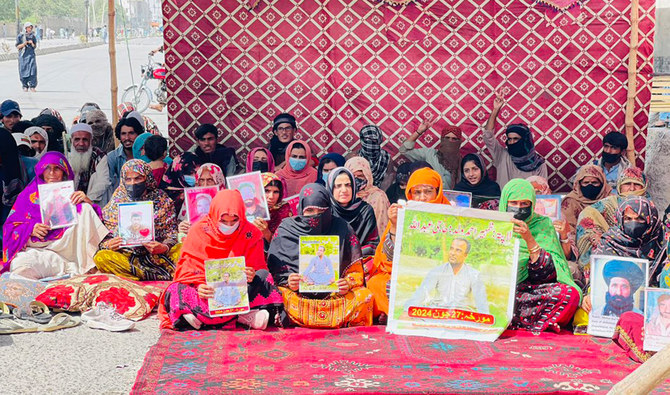
According to the Baloch Yakjehti Committee, an ethnic rights movement, Zaheer Ahmed Baloch, a Balochistan resident and government employee, was forcibly disappeared on June 27, prompting his family’s demand to know his whereabouts.
The clash occurred on Thursday when demonstrators attempted to force their way into Quetta’s Red Zone, an area housing key government installations, to register their protest.
“Amnesty International condemns the unlawful use of force by the police in Pakistan, including the use of tear gas and batons at a peaceful protest in Quetta on 11 July and the mass arbitrary and unlawful arrests of peaceful protesters,” it said in a social media post.
“The protest was organized by the Baloch community in Quetta calling for the safe return of Zaheer Ahmed Baloch, who was forcibly disappeared on 27 June,” it continued. “Amnesty International has received information of several protesters who were injured and are in need of urgent medical treatment.”
Amnesty International highlighted “the arbitrary detention of peaceful protesters” violated the International Covenant on Civil and Political Rights, to which Pakistan is a signatory.
The organization urged the government to provide medical treatment to all injured protesters, especially those still in police custody.
Additionally, it called on authorities to immediately and unconditionally disclose the whereabouts of detained protesters and to either release all demonstrators or charge and try them promptly in a civilian court.
“Drop all charges against peaceful protesters,” it added.
Balochistan has witnessed a low-level insurgency by Baloch nationalist groups, who accuse the Pakistani government of exploiting the province’s natural resources while neglecting its development, a claim the state denies.
This province’s volatile situation has led to an increased influence of security and law enforcement agencies, exacerbating tensions between the state and the disaffected segments of Baloch society.


![]()

Amnesty International criticizes police in Pakistan’s southwest for ‘unlawful use of force’ against protesters
Short Url
https://arab.news/vdbct
Amnesty International criticizes police in Pakistan’s southwest for ‘unlawful use of force’ against protesters
- Baloch demonstrators had a clash with police in Quetta while protesting enforced disappearances in the province
- Amnesty urged the Pakistani authorities to ‘drop all charges against peaceful protesters’ in a social media post
Latest updates


© 2026 SAUDI RESEARCH & PUBLISHING COMPANY, All Rights Reserved And subject to Terms of Use Agreement.