

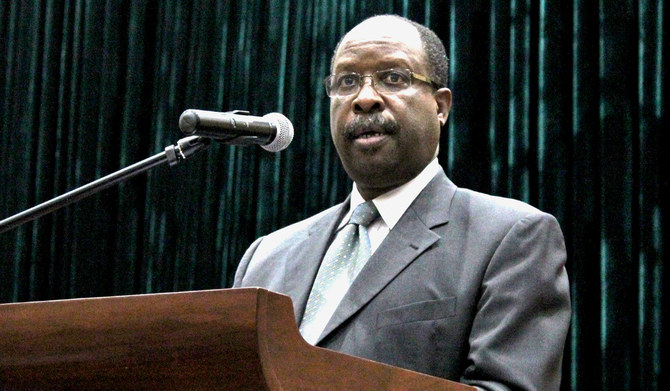

UNITED NATIONS: Terrorism and organized crime by violent extremist groups linked to Al-Qaeda and the Daesh are a “pervasive threat” in Africa’s volatile Sahel region and are spilling over to West Africa’s coastal countries, the top UN envoy for the area warned Friday.
Leonardo Simão, the UN special representative for the Sahel and West Africa, said the focus on combating terrorism has had limited effect in stopping rampant illegal trafficking in the Sahel and the effort needs more police.
“It’s drugs, it’s weapons, it’s human beings, it’s mineral resources, and even food,” Simão said after briefing the UN Security Council.
According to Secretary-General Antonio Guterres’ new report on the Sahel and West Africa, hundreds of people have been killed in the first half of 2024 alone in terrorist attacks, many of them civilians..
BACKGROUND
US Ambassador Linda Thomas-Greenfield supported ECOWAS and UN efforts in West Africa and the Sahel and said the Security Council ‘must also step up.’
The vast majority of deaths occurred in Burkina Faso, Mali and Niger, whose ruling military juntas in March announced a joint security force to fight terrorism, though the force has yet to begin operations. The three countries are increasingly cutting ties with the US military and allying with Russia on its security challenges.
Last week, the three juntas doubled down on their decision to leave the Economic Community of West African States, the nearly 50-year-old regional bloc known as ECOWAS, following the creation of their own security partnership, the Alliance of Sahel States, in September.
Simão did not comment on the countries’ international alliances, but said their withdrawals from ECOWAS will be “harmful to both sides.” He lauded ECOWAS for taking a’ “vigorous approach” to engaging with Burkina Faso, Mali and Niger and urged the countries to maintain regional unity.
He called for the UN’s continued support of the Accra Initiative, a military platform involving Burkina Faso and nearby coastal countries to contain the spread of extremism in the Sahel. He also said the Security Council should pursue financing regionally led police operations.
US Ambassador Linda Thomas-Greenfield expressed support for ECOWAS and UN efforts in West Africa and the Sahel and said the Security Council “must also step up.”
Thomas-Greenfield urged increased funding and the appointment of a UN resident coordinator in the region, saying a UN presence is critical to support UN development efforts “as well as ensuring the delivery of much needed humanitarian assistance.”
Russia’s deputy ambassador, Anna Evstigneeva, countered that international security efforts amount to an “attempt to continue imposing new colonial models” on Burkina Faso, Mali and Niger. She accused Western donors of limiting assistance for “political reasons.”
“Mali, Burkina Faso and Niger are conducting an uncompromising and coordinated fight against terrorist groups and they are achieving success and stabilizing their territories,” Evstigneeva said.
The region’s deadliest terrorist attacks this year took place in Burkina Faso, where the militant terrorist groups Jama’at Nusrat Al-Islam wal-Muslimin, which has ties to Al-Qaeda, and the Daesh claim “extensive swaths” of territory, Guterres said in the report. In February alone, major terrorist attacks killed 301 people, including a single assault that claimed 170 lives.
According to the Armed Conflict Location and Event Data Project, there were 361 conflict-related deaths in Niger during the first three months of 2024, a significant increase from 250 over the same period last year.
Guterres encouraged the “accelerated implementation” of remaining security agreements, including recent plans for a counterterrorism center in Nigeria and the deployment of an ECOWAS standby force to help eradicate terrorism.
The military juntas of Burkina Faso, Mali and Niger have ended long-standing foreign military partnerships in recent years.
In 2022, France withdrew its troops from Mali over tensions with the junta, followed by a military withdrawal from Niger at the government’s request..
The UN ended its 10-year peacekeeping mission in Mali in December 2023 at the junta’s insistence. It had been the deadliest UN peacekeeping mission, with more than 300 personnel killed.
The US military is set to conclude its withdrawal from Niger, also at the junta’s request, by Sept. 15.
Guterres said regional insecurity “continues to impact negatively on the humanitarian and human rights situation.”
The report said 25.8 million people in Burkina Faso, Mali, Niger and Nigeria need humanitarian assistance this year. Those four countries had more than 6.2 million people internally displaced and 630,000 refugees in April. In addition, 32.9 million people faced food insecurity.
Guterres said humanitarian agencies lack adequate funding, having received only 13 percent of the $3.2 billion needed for 2024. “Without additional funding, millions of vulnerable people will be left without vital support,” he said in the report.


