

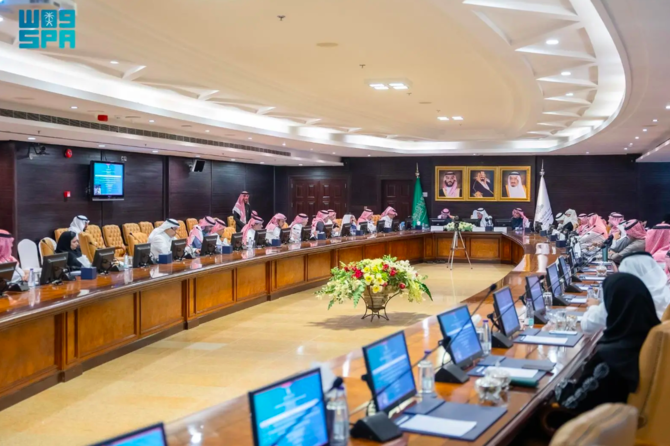

RIYADH: Reestablishing a business council with Canada after a five-year hiatus is the latest example of the pivotal role the Federation of Saudi Chambers is playing in facilitating international trade, experts have insisted.
On July 7 it was announced that Mohammed bin Nasser Al-Duleim would be chairman of the Saudi-Canadian Business Council – six months after the two nations inked an agreement to restart the body.
The reestablishment of the council is the latest in a plan spearheaded by the Federation of Saudi Chambers to boost the Kingdom’s international trading relationships as part of the Vision 2030 economic diversification plan.
In January, the federation’s president, Hassan Al-Huwaizi, announced that the number of Saudi foreign business councils had reached 70, including with major global economic players such as China, the US, Japan, and the UK, as well as South Korea, Bahrain, and the UAE.
Other countries with whom councils are established include Germany, Italy, and France.
In an interview with Arab News, economist Mahmoud Khairy said these organizations allow enhanced communication by providing a platform for continuous dialogue between participating nations, help facilitate a better understanding of each other’s economic policies and interests, and promote transparency and trust in trade relationships.
He added: “Through these platforms, countries can work together on various trade-related issues such as tariff reduction, standardization of regulations, and investment facilitation.
“Collaborating with various countries through these platforms can attract foreign investors looking to tap into the Saudi market, driving investment inflows and supporting the country’s economic development goals.”
Reflecting on the latest move involving Canada, Khairy said: “The Federation of Saudi Chambers plays a pivotal role in facilitating international trade and economic cooperation, particularly highlighted by the announcement to restart the business council with Canada.”
In 2022 Saudi Arabia was Canada’s leading two-way trading partner in the Middle East and North Africa region and ranked 23rd globally.
The merchandise trade between the two countries totaled approximately $5.1 billion, with Canadian exports at $1.3 billion and imports from Saudi Arabia at $3.8 billion.
Established in 1980, the Federation of Saudi Chambers is the umbrella and only legitimate representative of the Saudi business community – and 28 chambers – in all its various groups, sectors and regions, according to its website.
It facilitates bilateral trade, business dialogues, and policy advocacy, promoting investment and collaboration in energy, technology, healthcare, and education to enhance economic ties and streamline processes for foreign investors..
The objectives of the international councils include enhancing awareness among Saudi and foreign private sectors about economic environments and investment opportunities across their respective countries.
They aim to foster communication with stakeholders to enhance cooperation and address obstacles, facilitate amicable resolutions of commercial disputes, and emphasize training programs, technical transfers, and knowledge rights.
The councils also focus on identifying tax laws, publishing annual investment climate reports, and promoting mutual business visits, conferences, exhibitions, and economic projects to strengthen bilateral economic relations.
Saudi-based economist Talat Hafiz echoed the sentiments of Khairy, saying that expanding the Kingdom’s businesses’ through councils will support its non-oil gross domestic product by improving exports.
He flagged potential problems to expanding business networks abroad that are common to any international growth plan, such as cost of export and imports and currency fluctuations.
“However, these challenges can be easily managed by examining the economic viability of any expansion to ensure its viability and success,” he concluded.
Hafiz emphasized that the FSC plays a crucial role in enhancing and taking the trading relationships between Saudi Arabia and other countries to the next level.
Saudi-Canada trade
The Saudi-Canadian Business Council will serve as a platform for business leaders from the countries to showcase and promote their activities. It will facilitate the establishment of trade partnerships, exploration of new areas of economic cooperation, and exchange of information on opportunities and markets in both countries, according to the Saudi Press Agency.
“Bilateral relations between Canada and Saudi Arabia include common interests on many peace and security issues, including energy security, humanitarian affairs, and counter-terrorism,” said Ahmed Samir Islam, president and executive director at Canada Saudi Business Council – a Toronto-based organization that operates in partnership with the Riyadh-located Saudi Canadian Business Council.
Islam emphasized that the Canadian society is “very proud of the contribution it is making to educate some of the future leaders of Saudi society, including its very talented group of Saudi physicians as well as exceptional students of other disciplines.”
Khairy flagged other areas where both countries can learn from each other, including digital healthcare, artificial intelligence, and energy, as well as venture capital, and consultancy.
The economist went on to note that while Saudi Arabia has become the second largest market for Canadian exports in the Middle East, there is “huge room for the economic and trading relationship to grow further in the future.”
Hafiz also highlighted specific areas of the economy that are set to benefit, citing the industrial, tourism, technologies, education, and health sectors.
“This in turn will over time reflect positively on the two countries’ economy and bilateral trade,” he added.
The trade relationship between the Kingdom and the northern American country included significant arms exports, with Saudi Arabia being the top non-US destination for Canadian military goods in 2022. These exports were primarily composed of light-armored vehicles equipped with machine guns and anti-tank cannons.


