ISLAMABAD: Pakistan’s foreign office on Wednesday refuted a claim by the United Nations refugee agency (UNHCR) that the country had suspended its plan to repatriate illegal foreign immigrants, mostly Afghan nationals, following a deportation drive launched by the government last year.
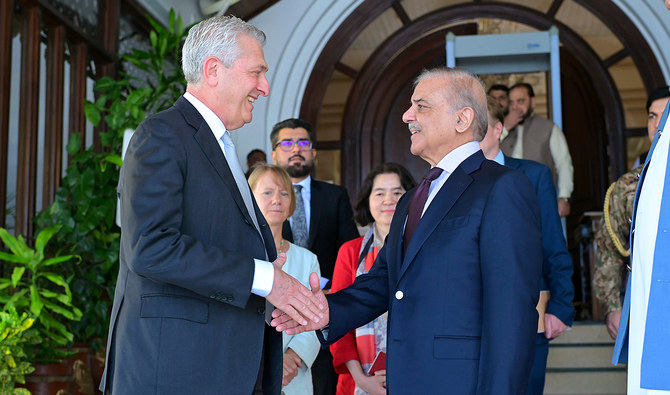
The foreign office dismissed the assertion only a day after UN High Commissioner for Refugees Filippo Grandi concluded his three-day visit to Pakistan where he met Prime Minister Shehbaz Sharif, Foreign Minister Ishaq Dar and Minister for States and Frontier Regions Amir Muqam, among other senior officials.
The UN refugee agency said in a statement Grandi called for the timely extension of the Proof of Registration (PoR) cards, a critical identity document held by over 1.3 million Afghans that legalizes their status in the country.
The UN agency said its visiting official expressed appreciation that the repatriation plan for illegal foreigners had been “suspended,” seeking assurances it would remain on hold. When asked about the development, however, foreign office spokesperson Mumtaz Zahra Baloch rejected the claim.
“That’s not true,” she said response. “It may be noted that no such understanding has been given by Pakistan to the UNHCR, including in recent meetings with the High Commissioner for Refugees.”
Baloch added the repatriation program remained in place and was being “implemented in an orderly and phased manner.”
The UN agency said its top official offered to work toward a dialogue over the issue later this year, promising to bring together key stakeholders to develop a package of solutions that could benefit both the Afghan refugees and the host country.
“In the meantime, as Pakistan continues to host some 3 million Afghans, all solutions need to be explored in addition to voluntary repatriation, including third-country resettlement and longer-term solutions within Pakistan,” the UNHCR added.
Meanwhile, the Afghan embassy said in a social media post that Kabul’s acting envoy in Islamabad, Sardar Ahmed Shakeeb, told Grandi in a meeting that refugees from his country were suffering due to a lack of a clear official policy over the issue in Pakistan.
“The Ambassador underscored that Afghan refugees should not be subjected to forced deportation but rather allowed to repatriate with dignity,” the post said, adding that Shakeeb called for the provision of a unified and valid card for all Afghan nationals residing in Pakistan.
The Pakistani government launched its deportation drive in November last year after a spike in suicide bombings which the officials blamed on Afghan nationals, without providing much evidence.
So far, over 620,000 Afghans have been deported to their country.
The government also says Afghans are involved in smuggling, militant violence and other crimes.
A cash-strapped Pakistan navigating record inflation, alongside a tough International Monetary Fund bailout program last year, also said undocumented migrants had remained a drain on its resources for decades.


![]()

Pakistan denies UN refugee agency’s claim of suspending repatriation of ‘illegal’ foreign nationals
Short Url
https://arab.news/n9u3m
Pakistan denies UN refugee agency’s claim of suspending repatriation of ‘illegal’ foreign nationals
- Pakistan has so far deported over 620,000 Afghan nationals after launching a deportation drive last year
- Afghan envoy to Pakistan says the government lacks a clear policy over the issue, making refugees suffer
Latest updates


© 2026 SAUDI RESEARCH & PUBLISHING COMPANY, All Rights Reserved And subject to Terms of Use Agreement.