Pakistan PM approves $179.5 million for low-income electricity consumers amid cost-of-living crisis

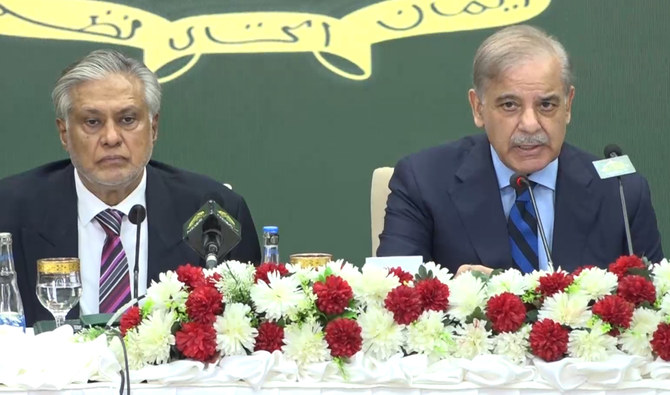
In this still image taken from a video, Prime Minister Shehbaz Sharif (R) addresses a press conference in Islamabad, Pakistan on July 9, 2024. (PMO)
Short Url
Updated 09 July 2024
Follow

Pakistan PM approves $179.5 million for low-income electricity consumers amid cost-of-living crisis

  • Shehbaz Sharif says the decision will benefit 25 million households constituting 94 percent of domestic consumers
  • The three-month subsidy package is for people using up to 200 electricity units until the change of weather

ISLAMABAD: Prime Minister Shehbaz Sharif on Tuesday approved a three-month Rs50 billion ($179.5 million) subsidy package for electricity consumers using up to 200 units per month after backlash from the salaried class over the tax-laden federal budget that sparked debate over the rising cost of living in Pakistan.
The announcement came after the government approved approximately 51 percent increase in the cost of electricity last week for low-income consumers, with an aim to meet one of the conditions laid out by the International Monetary Fund (IMF).
Faced with a prolonged economic crisis, the Sharif administration is trying to secure yet another staff-level agreement with the IMF for a bailout of more than $6 billion.
“The government will spend Rs50 billion which has been taken out from the development funds,” the prime minister said while addressing a ceremony on energy reforms in Islamabad. “We are providing the facility for three months from July, August and September to households that spend 200 units.”
He maintained the decision would benefit 25 million households, which constitute 94 percent of the domestic electricity users, adding they would only pay four to seven rupees per unit including K-Electric consumers.
“These three summer months are hard to cope with but electricity consumption also declines when the weather gets pleasant in October,” he added.
Pakistan produces expensive electricity due to a combination of factors including high reliance on imported fossil fuels, inefficient energy mix, substantial transmission and distribution losses apart from chronic issues like circular debt and regulatory inefficiencies.
The outdated infrastructure and inefficient power plants further exacerbate costs, while underutilization of domestic resources, such as hydropower and coal, add to the problem.
Additionally, fluctuations in foreign exchange rates and complex tariff structures contribute to higher electricity prices.


Pakistan calls jailing of rights lawyers ‘domestic affair’ as EU flags free speech concerns

Updated 44 min 15 sec ago
Follow

Pakistan calls jailing of rights lawyers ‘domestic affair’ as EU flags free speech concerns

  • EU says the convictions of Imaan Mazari-Hazir, Hadi Ali Chattha violate freedom of expression
  • Both lawyers were arrested last week over social media posts under Pakistan’s cybercrime laws

ISLAMABAD: The European Union on Thursday criticized Pakistan over the conviction of two human rights lawyers for their social media activity, saying the ruling ran counter to core democratic principles that Islamabad is committed to uphold, a charge the government denied while calling the development its “domestic affair.”

Imaan Mazari-Hazir and her husband Hadi Ali Chattha were arrested last Friday as they were on their way to a court appearance and were later remanded to two weeks in judicial custody.

Authorities accused them of violating the Prevention of Electronic Crimes Act (PECA) over posts on X that they said incited ethnic divisions and portrayed the military as being involved in “terrorism.” Both deny the allegations.

“The conviction of human rights lawyers Imaan Mazari and Hadi Ali Chattha over social media activity goes against freedom of expression and independence of lawyers,” Anouar El Anouni, the EU’s spokesperson for foreign affairs and security policy, said in a post on X. “These are not only key democratic principles but also part of Pakistan’s international human rights commitments.”

Pakistan is one of the largest beneficiaries of the EU’s Generalized Scheme of Preferences Plus (GSP+), which grants duty-free access to most European markets in return for implementing 27 international conventions covering human rights, labor standards, environmental protection and good governance.

Pakistan’s GSP+ status came under scrutiny in the past after, in April 2021, the European Parliament adopted a resolution calling for an immediate review, citing concerns over violence against religious minorities, curbs on media freedom and broader human rights issues.

Responding to the EU concern, Pakistan’s foreign office spokesperson Tahir Andrabi described the development as Pakistan’s “domestic affair.”

“The conviction, under our local laws, has taken place through a judicial process,” he said during his weekly media briefing. “The relevant individuals have a right to appeal, have a right to a judicial recourse.”

“There’s local remedy available for these individuals, and Pakistan while, is remains engaged with the EU on all issues, does make a distinction about our domestic affairs,” he added.