

PIF-backed Lucid exceeds quarterly delivery estimates

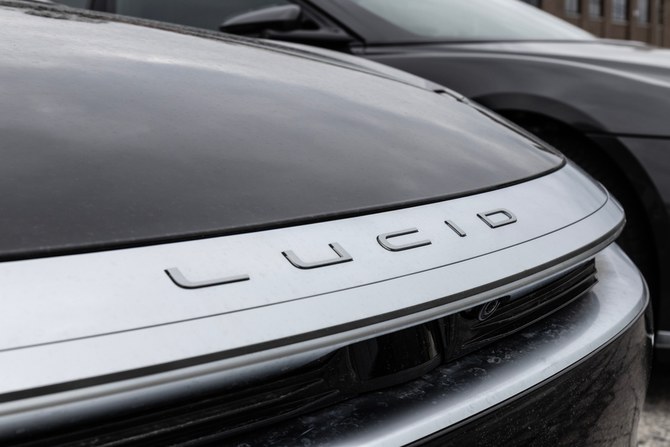
PIF currently has a 60 percent stake in Lucid. Shutterstock
Short Url
Updated 09 July 2024
Follow

PIF-backed Lucid exceeds quarterly delivery estimates

RIYADH: Lucid Motors, majority-owned by Saudi Arabia’s sovereign wealth fund, delivered 2,394 electric vehicles in the second quarter of this year, a 21.70 percent increase compared to the first quarter. 

In a statement, the company said it also produced 2,110 vehicles during the same period. 

Earlier in 2024, a cohort of analysts polled by investment research firm Visible Alpha forecast that Lucid would deliver 1,940 units in the second quarter. 

Lucid posted this strong growth just a few months after it received an additional $1 billion investment from the Public Investment Fund. 

In a filing to the US securities regulator, the company said the money will reach Lucid through a newly created series of convertible preferred stock, which can be converted into about 280 million shares.

PIF currently has a 60 percent stake in the company and has invested billions as part of its mandate to diversify the Kingdom’s economy beyond oil.

Moreover, Lucid manufactured 3,838 vehicles in the first half of this year, and the firm aims to make more than 5,162 cars by the year-end to meet its annual output forecast of 9,000 units. 

Demand for electric vehicles has grown at a slower-than-expected pace in 2023, pressured by high borrowing costs, economic uncertainties and rising consumer affinity toward hybrid alternatives. 

Electric vehicle manufacturers, including Lucid, have responded by slashing prices and offering incentives such as affordable financing options to lure consumers.

The company’s most popular car, Lucid Air’s Pure model, is currently available at $69,000. 

Lucid’s Air luxury sedans compete with Tesla’s Model S and electric vehicles from Mercedes-Benz, BMW, Audi and Porsche, among other brands.

In September 2023, Lucid opened its first plant outside the US in Saudi Arabia, with an initial capacity of 5,000 electric vehicles a year. 

Lucid is not the only electric vehicle car brand in which the government of Saudi Arabia has an interest.

In November 2022, the Kingdom’s Crown Prince Mohammed bin Salman announced the launch of Ceer, a government-owned enterprise that will design, manufacture and sell battery-powered vehicles in Saudi Arabia.

According to the Kingdom’s Ministry of Industry and Mineral Resources, Ceer is expected to contribute SR30 billion ($7.9 billion) to the country’s gross domestic product by 2034. 

Additionally, in September 2023, PIF raised its stakes in luxury carmaker Aston Martin to 20.5 percent from 17.9 percent. 


Kuwait forecasts 54.7% rise in fiscal deficit as oil revenues weaken 

Updated 11 sec ago
Follow

Kuwait forecasts 54.7% rise in fiscal deficit as oil revenues weaken 

JEDDAH: Kuwait expects its fiscal deficit to widen sharply in the 2026–2027 budget year as lower oil income weighs on public finances, with the shortfall projected to rise 54.7 percent to 9.8 billion dinars ($31.9 billion). 

Announcing the draft budget, Finance Minister Yaqoub Al-Refaei estimated total expected revenues at 16.3 billion dinars, marking a 10.5 percent decline compared with the previous fiscal year. 

Kuwait is pushing Vision 2035 reforms to diversify its economy and boost non-oil growth but remains exposed to oil price volatility despite moderate inflation and strong non-oil expansion. 

“The minister disclosed that oil revenues were budgeted at 12.8 billion dinars, a 16.3 percent contraction compared to the current budget ending March 31, 2026,” the Kuwait News Agency, known as KUNA, reported. 

Highlighting a positive trend for fiscal diversification, non-oil revenues are projected to rise 19.6 percent to 3.5 billion dinars. 

He noted that total expenditure is expected to reach 26.1 billion dinars, with salaries and subsidies accounting for 76 percent, capital spending 11.8 percent, and other expenditures 12.2 percent. The FY 2026–2027 budget is based on a conservative oil price estimate of $57 per barrel. 

The minister, however, stressed that Kuwait’s fiscal break-even price — the price needed to balance the budget — is significantly higher, at $90.5 per barrel. 

The draft budget, covering April 1, 2026, to March 31, 2027, includes capital spending of 3.1 billion dinars, with significant allocations for infrastructure and strategic projects, according to a release by the Ministry of Finance. 

Of this, 318 million dinars will fund the Ministry of Public Works for developments such as Mubarak Al-Kabeer Port, the Umm Al-Hayman plant expansion, the North Kabd station, and the expansion of Kuwait International Airport’s Terminal 2. 

Additional allocations support the health ministry’s cancer control center, as well as the Defense and Interior ministries for military equipment. 

Higher spending is also driven by a 741.2 million-dinar increase in the public treasury’s contribution to social insurance to cover pension fund deficits. 

Conversely, support for fuel used in power generation and refined products declined by 449.2 million dinars due to falling global oil prices. 

The ministry highlighted that the budget would create 14,518 new positions, reflecting efforts to boost employment while continuing to diversify revenue sources.