



KARACHI: Looking for used clothes and shoes, bags and toys for your children or knock-offs from coveted fashion brands?
Head to Light House, a famous street off MA Jinnah Road in Pakistan’s commercial hub of Karachi where all these items are available for cheap only if you’re willing to trudge through rows of stalls and shops and piles upon piles of goods on sale.
“When I think of Light House, I think of it as the place where I can get imported items I need within a normal price range,” Muhammad Jehangir, a 25-year-old customer visiting the market from Peshawar, told Arab News.
“If you want to buy anything, Light House in Karachi is the best place. You can find everything here,” he added, as he showed off his purchase: a pair of shoes for around $100 that would have cost him up to five times more if purchased new:
“The cheapest shoes are available here as well as shoes imported from other countries.”
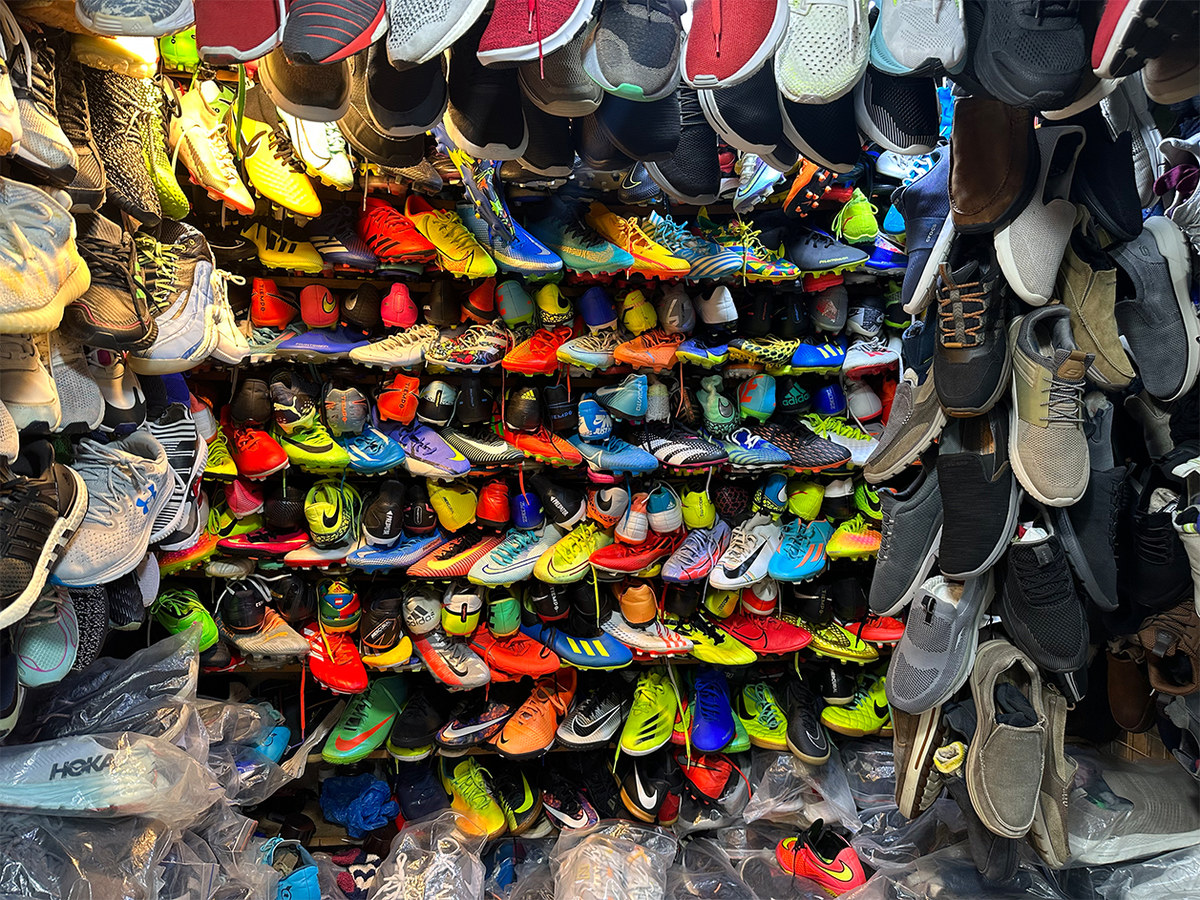
Imported second-hand shoes are on display at a shop in Light House market, a famous street off MA Jinnah Road in Pakistan’s commercial hub of Karachi, on July 6, 2024 (AN Photo)
While a global crackdown on counterfeit goods has pushed fakes into back rooms, in Asia sales are more blatant with markets from Jakarta and Kuala Lumpur to Bangkok and Beijing filled with fake brands including Prada, Burberry and Louis Vuitton. In Karachi, Light House is the hub of the illicit trade.
But the street was not always a center for second-hand merchandise and fashion fakes. Before the partition of the Indian subcontinent in 1947, it was a famed cinema hub of Karachi.
“So, this area is famous because of Light House cinema. Light House Cinema dates back to before the partition, it was named Light House in 1946,” said Iqbal A. Rehman Mandvia, who has authored a book, ‘Is Dasht Me Ik Shehr tha,’ on Karachi.
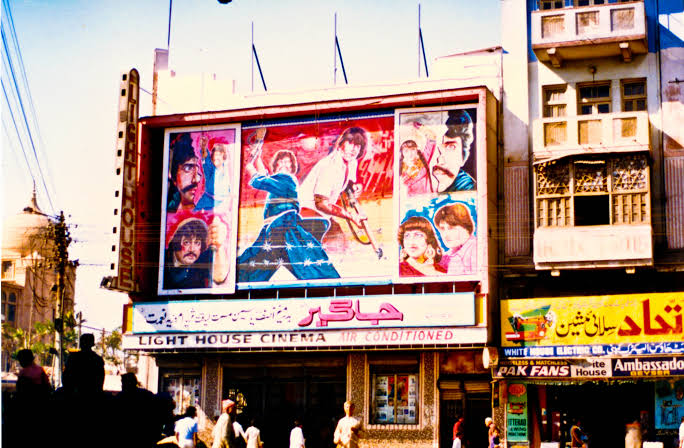
An old undated photo shows Light House cinema in Karachi, Pakistan. (Iqbal A. Rehman Mandvia)
“Before that, it was called Globe Cinema. It became Light House in 1946 and remained here until 1980, after which it became a business center.”
Now the area was known as a landa bazaar, or a market for second-hand clothes, Mandvia said.
Across the road from the cinema stood the now defunct Café Lasani, known for decades for its famous chicken tikka.
“It was a golden era,” Mandvia said, remembering famous films he had watched at Light House.
“I watched the movie ‘Josh’ here, followed by ‘Umrao Jaan Ada’ … Light House was an air-conditioned cinema that screened good films and the area was nice too.”
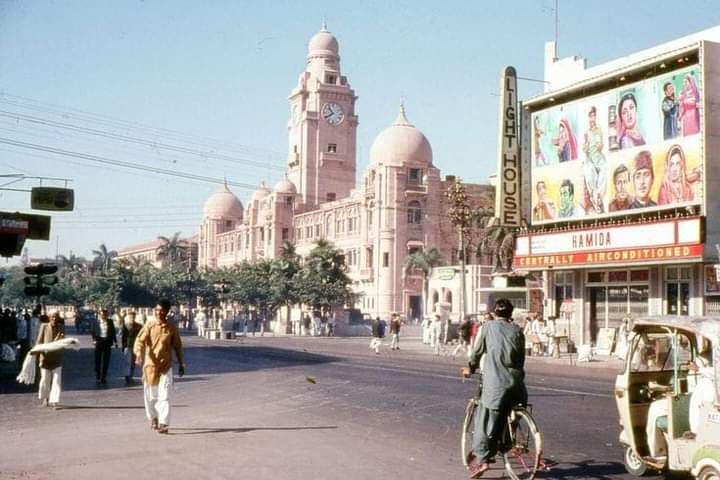
An old undated photo shows Light House cinema in Karachi, Pakistan. (Iqbal A. Rehman Mandvia)
Muhammad Sabir, whose grandfather bought several shops in the area in 1948, recalled that the main attraction was once the movie theater.
“Noor Jehan’s film ‘Koel’ was playing, and people broke down the doors of the cinema in their quest to get tickets,” he said as he showed an imported pair of jeans to a customer at his shop.
Sabir, now 76, had just been born when his grandfather bought the shops and initially ran grocery stores, tailoring shops and laundry services there before switching over to selling used goods.
“We also changed our business and moved into the field of second-hand clothing,” he added.
And now that’s why customers throng the market.
“When we hear about Light House, we think of it as a place where we can find unique and affordable items at cheap prices that come from abroad,” Sonia, a regular customer who only gave her first name, told Arab News, showing off three toys she had purchased for her children for Rs100 ($0.36) a piece.
“They are very different and good. You can find everything here, like very good toys and branded shoes that have been used once or twice, but you can also find new ones.”


