



KARACHI: Dozens of mango varieties from Pakistan’s southern Sindh province were displayed at a three-day festival in Karachi on Saturday, aiming to introduce citizens to different types of the fruit and its products, according to the organizers.
Pakistan produces nearly 200 varieties of mangoes, frequently described as the “king of fruits,” particularly in the southeastern province of Sindh, which is home to vast mango orchards.
The most famous of these varieties include Sindhri, Dusheri, Chaunsa, Anwar Ratole and Langra. However, growers emphasize that many people are unaware of other varieties, such as Fajri, Saroli, Neelum, Gulab Khasa, Al-Phanso, Bagan Pali, and Paraga, among many others.
The three-day mango festival, hosted by the Sindh Agriculture University, Tandojam, in collaboration with the Pakistan Maritime Museum, began on Friday and will conclude on Sunday.
“The primary aim is to raise awareness among our people, who already love mangoes, that it’s not just about Sindhri and Chaunsa,” said Dr. Zulfiqar Yousufani, a progressive grower whose mangoes are exported to Europe, Saudi Arabia, the United Arab Emirates and other parts of the Middle East. “There are many varieties. Try them too.”
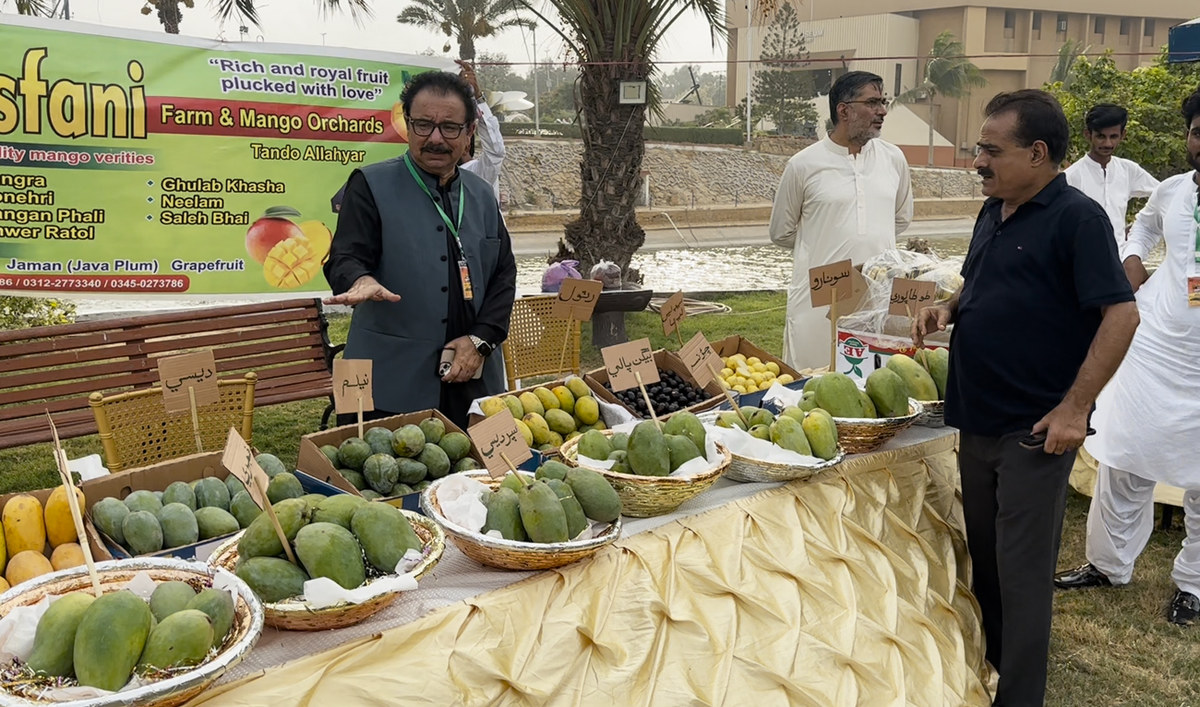
Dr. Zulfiqar Yousufani (left), a progressive grower, speaks to visitors at his stall during the second day of a mango festival, offering a wide variety of Pakistani mangoes, in Karachi on July 6, 2024. (AN Photo)
He said the idea behind the festival was to highlight that Pakistani mangoes were the best and loved across the world.
“Following Sindhri, Sonehri, Bagan Pali, and Chaunsa are also being exported in significant quantities,” Yousufani said, pointing to the mango varieties at his stall.
Tehseen Fatima, who teaches at the agriculture university in Tandojam, pointed out that mango products were also displayed to educate people about other uses of the fruit.
“You can see here, we have prepared various mango products to raise awareness among children, the community and students,” she said.
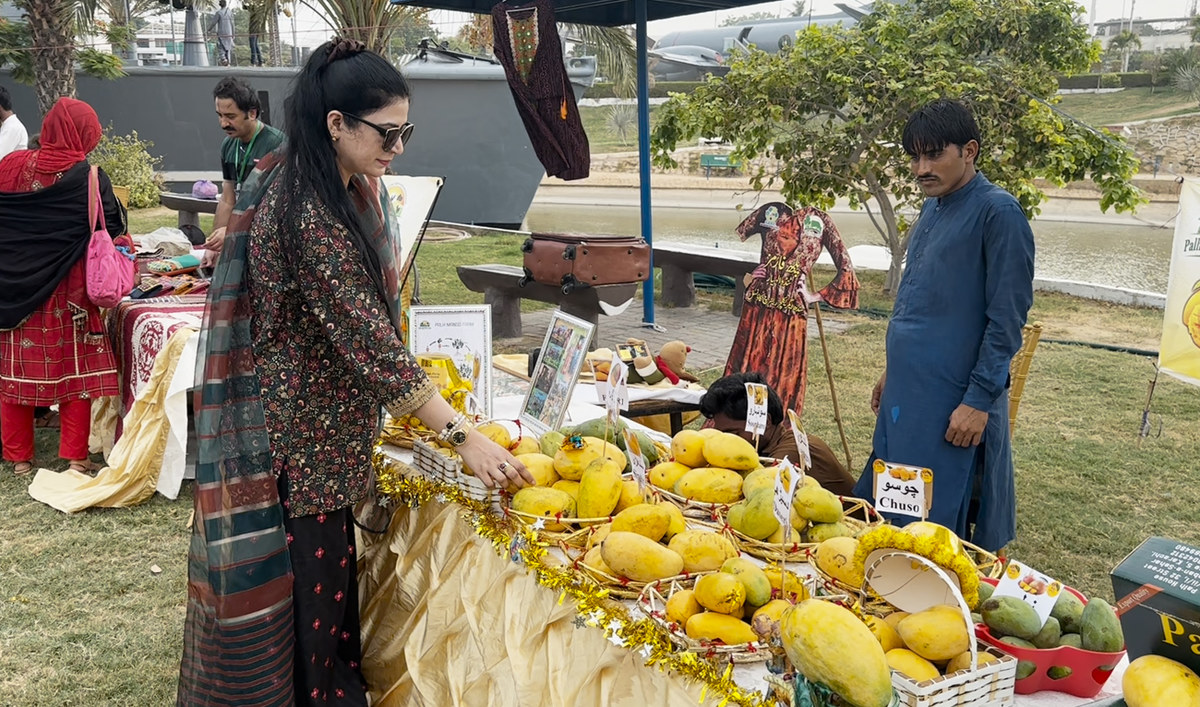
Tehseen Fatima, professor at the Sindh Agriculture University Tandojam, inspects mangoes during the second day of a mango festival, offering a wide variety of Pakistani mangoes, in Karachi on July 6, 2024. (AN Photo)
She informed that mangoes are predominantly cultivated in Mirpurkhas in Sindh.
“You can observe different farmers displaying their varieties, from off-season to on-season, premature to late-season,” she said.
Fatima pointed out that mangoes produced in Sindh were renowned for their exceptional taste due to specific climate and soil conditions that enhanced their nutritional quality while giving them vibrant color and appealing taste.
“This is why mangoes from Sindh are imported by various countries,” she continued.
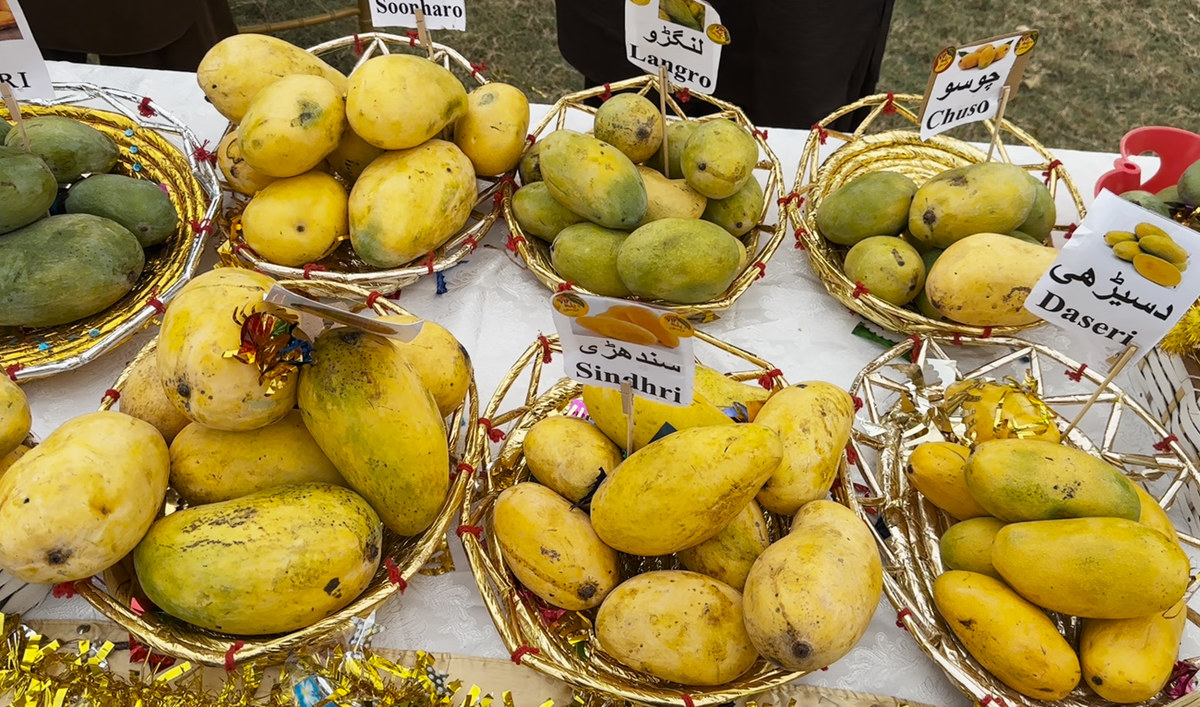
This photo shows the general view of the three-day mango festival, offering a wide variety of Pakistani mangoes, in Karachi on July 6, 2024. (AN Photo)
Speaking to Arab News, Lubna Aslam, a housewife attending the festival with her family, expressed surprise at the multitude of mango varieties.
“We were only familiar with a few types. After visiting the exhibition, I discovered the wide range of them,” she said, adding that she now wanted to explore and try other varieties as well.


