ISLAMABAD: Prime Minister Shehbaz Sharif said on Friday the digitization of the country’s tax system was a top government priority to prevent tax evasion worth billions of rupee and meet a challenging tax revenue target of 13 trillion rupees ($46.66 billion) for the new fiscal year that started July 1, a near 40 percent jump from last year.
The South Asian country has set challenging revenue targets in its annual budget to help it win approval from the IMF for a loan to stave off another economic meltdown, even as domestic anger rises at new taxation measures.
On Thursday, Pakistan’s tax authority said it has blocked 210,000 SIM cards of users who have not filed tax returns in a bid to widen the revenue bracket. In May, Pakistan signed an agreement with consulting giant McKinsey and Company for the digitalization of its tax system.
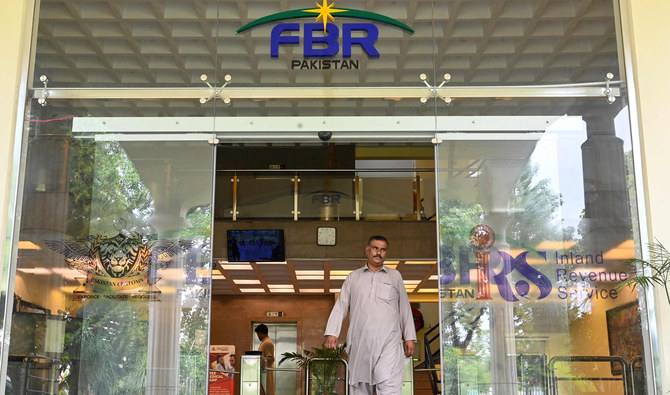
Sharif chaired a meeting on Friday to review the reforms process of the Federal Board of Revenue (FBR), instructing it to bring taxable non-filers into the tax net.
“The meeting was told that during the FBR digitization [process], 4.5 million taxable individuals have been identified who were not part of the tax net,” state-run APP reported, adding that over 300,000 people had fixed tax returns within the last few weeks due to new government measures.
“Refunds of 4,000 companies have been stopped during the last two weeks, following the detection of under-invoicing and forged sales tax refunds,” APP said. “The prime minister said that the tax evaders as well as the officers and staffers facilitating them would be punished and vowed not to spare those plundering the public kitty.”
The premier also sought a report on the magnitude of tax evasion and the measures for its prevention.
“He vowed to introduce a taxation system of international standard in the country and called for engaging well reputed professionals and experts for formulation of tax policy.”
Among reforms the IMF is pushing for a new bailout package, like the last two loans, are strengthening public finances including through gradual fiscal consolidation, broadening the existing tax base, improving tax administration, and debt sustainability.
Pakistan is in talks with the lender for a loan of $6 billion to $8 billion, as it seeks to avert a default for an economy growing at the slowest pace in the region.
The rise in the tax target is made up of a 48 percent increase in direct taxes and a 35 percent hike in indirect taxes over revised estimates of the current year. Non-tax revenue, including petroleum levies, is seen increasing by 64 percent.
The tax would increase to 18 percent on textile and leather products as well as mobile phones besides a hike in the tax on capital gains from real estate. Workers will also get hit with more direct tax on income.
Opposition parties, mainly parliamentarians backed by the jailed former Prime Minister Imran Khan, and major trade bodies have rejected the budget and tax measures, calling them highly inflationary.


![]()

Pakistan says digitization of tax system top priority amid efforts to widen revenue base
Short Url
https://arab.news/62wvy
Pakistan says digitization of tax system top priority amid efforts to widen revenue base
- Pakistan’s tax authority recently blocked 210,000 SIM cards of users who have not filed tax returns
- In May, Pakistan signed an agreement with McKinsey and Company for digitalization of its tax system
Latest updates


© 2026 SAUDI RESEARCH & PUBLISHING COMPANY, All Rights Reserved And subject to Terms of Use Agreement.