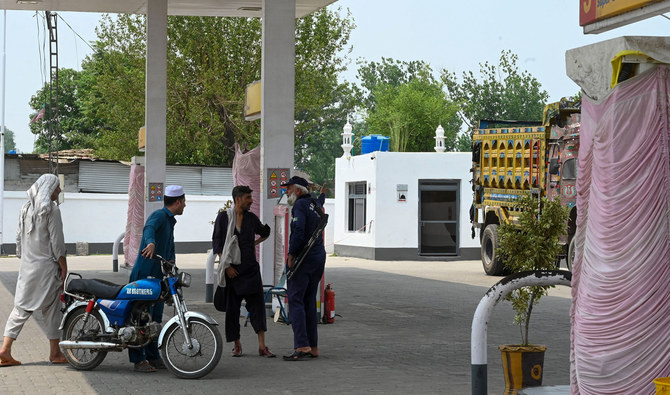
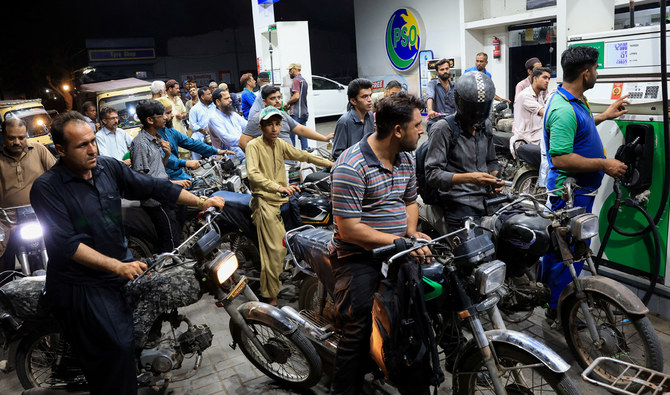
ISLAMABAD: The supply of petroleum products was partially disrupted in parts of Pakistan on Friday after petroleum dealers announced a nationwide strike to protest the government’s decision to impose an advance tax on turnover that they said would adversely impact their businesses already reeling from high taxes and inflation.
The Pakistan Petroleum Dealers Association (PPDA) gave the strike call this week, calling on the government to withdraw an advance income tax of 0.5 percent imposed in the recently passed federal budget 2024-25. As a result, a majority of privately-owned fuel stations remained closed on Friday, while outlets operated by oil marketing companies were supplying fuel to consumers, according to local media reports.
Pakistan’s tax-heavy $67.76 billion budget for the new fiscal year came into effect on Monday amid an annual inflation projection of up to 13.5 percent for June. The ambitious budget with a challenging tax revenue target of Rs13 trillion ($46.66 billion) has drawn the ire of the government’s allies and opposition alike. The revenue collection target for the new fiscal year is almost 40 percent higher than the last fiscal year.
The PPDA has said its business of selling petroleum products is already taking a hit due to staggering inflation and high taxes in Pakistan.
“We are going on a nationwide strike starting July 5 and plan to close petrol pumps across the country,” PPDA Chairman Abdul Sami Khan told Arab News on Wednesday. “Our demand is simple: the government should immediately withdraw the advance tax decision.”
Talks between the government and the association this week failed to break the deadlock between the two sides.
Khan warned that if the government does not reverse its decision, petroleum dealers would be forced to close their businesses for good.
“We are ready to discuss our concerns and possible solutions with the government,” he said. “We request the prime minister, petroleum minister and finance minister to immediately abolish this tax, otherwise we will be unable to continue running our businesses.”
‘BLACKMAILING TACTICS’
The government, however, says it will only listen to petroleum dealers’ “genuine concerns.”
Imran Ahmed, the director-general of oil at Pakistan’s petroleum ministry, rejected the strike call, saying the government would not entertain “blackmailing tactics.”
“We will not support the strike or such tactics,” he told Arab News on Wednesday. “This new advance tax applies to all traders, not only petroleum dealers.”
He said the ministry has instructed oil marketing companies to keep as many sites open as possible to ensure a smooth supply of petroleum products in the country.
“We have also instructed PSO [Pakistan State Oil] to ensure maximum supply and storage of petroleum products by keeping their sites open,” Ahmed said.


![]()
![]()

Pakistan fuel supply partially disrupted as dealers announce nationwide strike
Short Url
https://arab.news/zkmjf
Pakistan fuel supply partially disrupted as dealers announce nationwide strike
- Petroleum dealers are protesting a government move to impose 0.5% advance tax on turnover
- Government says will not give in to ‘blackmail tactics,’ ensure smooth supply of fuel countrywide
Latest updates


Recommended


© 2026 SAUDI RESEARCH & PUBLISHING COMPANY, All Rights Reserved And subject to Terms of Use Agreement.