MINSK: Belarusian leader Alexander Lukashenko has freed at least 10 political prisoners, rights campaigners said on Thursday, including a veteran opposition figure suffering from cancer.
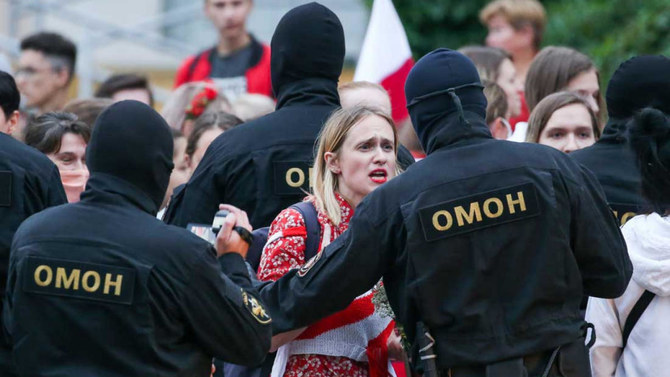
But the rare pardon still leaves some 1,400 people behind bars for political activity, most of them arrested after peaceful mass protests in 2020 and convicted on a range of charges related to alleged extremism.
Human rights group Viasna said it knew of three women and seven men who had been freed.
The only one named so far by relatives is Ryhor Kastusiou, 67, a former opposition party leader and presidential candidate. He was arrested in 2021 and sentenced the following year to 10 years in a penal colony after being convicted of plotting against the government to seize power. Following his arrest, he was diagnosed with cancer.
Activists said their happiness at the releases was bitter-sweet.
“This is a very great joy, of course, almost childlike. But it is joy through tears — there is anger too for what people have to go through,” said Inna Kovalenok, a representative of a relatives’ group that campaigns for the release of prisoners.
Andrei Stryzhak, head of an organization called Bysol that raises funds to support political prisoners and their families, said it was a delusion to think the authorities had become more humane.
“To believe that something has suddenly changed in the minds of those who torture, rape and kill for the sake of maintaining power is a dangerous fantasy bordering on treason and crime,” he posted on Telegram.
Lukashenko, a close ally of Russian President Vladimir Putin, this week announced an amnesty to mark the 80th anniversary of Belarus’s liberation from the Nazis in World War Two. State news agency Belta said it was expected to apply to about 7,850 prisoners including minors, pregnant women, pensioners and people suffering from tuberculosis or cancer.
Those convicted of crimes against the state or extremist and terrorist activities were excluded, but Lukashenko signalled there would be some exceptions for those who were seriously ill.
Lukashenko, in power since 1994, staged a violent crackdown in 2020 to suppress mass protests following an election that the opposition and Western governments said he had heavily rigged.
Sviatlana Tsikhanouskaya, who ran against him in that election and now leads the opposition in exile, welcomed the release of some prisoners but said more were still being detained.
“Political trials & arrests continue without a break in #Belarus,” Tsikhanouskaya posted on X. “Repression doesn’t stop for a day & we won’t stop our fight for freedom.”
Tsikhanouskaya’s husband Syarhei is among the best known prisoners, along with Nobel Peace Prize winner Ales Bialiatski and Maria Kolesnikova, a protest leader who tore up her passport in September 2020 to thwart the security services from expelling her from the country by forcing her to cross into Ukraine.


![]()

Belarus frees 10 political prisoners but 1,400 remain, rights group says
Short Url
https://arab.news/4kmtf
Belarus frees 10 political prisoners but 1,400 remain, rights group says
- The rare pardon still leaves some 1,400 people behind bars for political activity
- Human rights group Viasna said it knew of three women and seven men who had been freed


Latest updates


© 2026 SAUDI RESEARCH & PUBLISHING COMPANY, All Rights Reserved And subject to Terms of Use Agreement.