

Saudi exporters receive over 31k certificates of origin in June in sign of robust sector

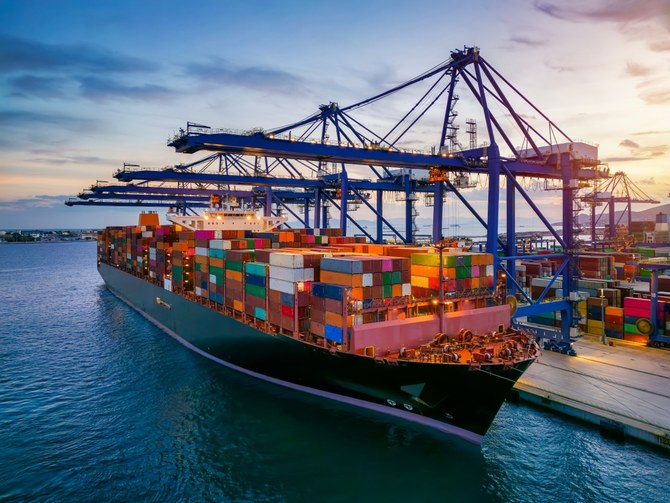
The last time the figure dropped below 30,000 was April 2023, according to information released by the Saudi Press Agency. Shutterstock
Short Url
Updated 03 July 2024
Follow

Saudi exporters receive over 31k certificates of origin in June in sign of robust sector

RIYADH: More than 30,000 certificates of origin were issued to Saudi manufacturers for the 14th consecutive month in June, highlighting the robustness of the Kingdom’s export sector.  

The Ministry of Industry and Mineral Resources granted 31,887 permits to Saudi exporters in the sixth month of the year, supporting operations across industrial, commercial, and individual sectors. 

The last time the figure dropped below 30,000 was April 2023, according to information released by the Saudi Press Agency. 

This comes as the Kingdom continues to strengthen its local manufacturing base and promote a thriving export sector.  

This initiative is part of the Kingdom’s goal under the Vision 2030 economic transformation plan to increase the share of non-oil exports to Saudi Arabia’s gross domestic product from 16 percent to 50 percent by the decade’s end.   

The document certifies the national origin or acquisition status of products, underscoring the ministry’s commitment to streamline and support services for exporters across various sectors, including industrial establishments, commercial enterprises, and individual businesses such as farmers, fishermen, and artisans.  

The permit comprises four distinct modes: one for national products destined for Gulf Cooperation Council countries, another for Arab nations, a preferential origin certificate, and a bilingual version tailored for countries that do not provide preferential treatment. 

The Ministry of Industry and Mineral Resources began issuing these documents after the Cabinet decided to transfer the issuance of COs for all national products from the Ministry of Commerce to the Ministry of Industry.  

The CO service, launched at the beginning of 2023, also offers an electronic platform that allows businesses to obtain certification without visiting the ministry, thus saving time and effort. 

According to the London-based broker Trade Finance Global, the certificates ultimately make a product more cost-efficient for buyers and easier to sell. 

This service also aims to support the national industry and streamline procedures to promote the growth and development of Saudi exports, according to the ministry. 

In May, the Ministry of Industry and Mineral Resources issued 38,319 certificates of origin as part of its initiatives to enhance exports across diverse sectors. 

Saudi exports of national origins refer to products exported directly from Saudi Arabia, typically produced or manufactured within the country. These exports contribute significantly to the Kingdom’s economy, showcasing its industrial capabilities across sectors such as petrochemicals, minerals, refined products, and agricultural goods.


Multilateralism strained, but global cooperation adapting: WEF report

Updated 10 sec ago
Follow

Multilateralism strained, but global cooperation adapting: WEF report

DUBAI: Overall levels of international cooperation have held steady in recent years, with smaller and more innovative partnerships emerging, often at regional and cross-regional levels, according to a World Economic Forum report.

The third edition of the Global Cooperation Barometer was launched on Thursday, ahead of the WEF’s annual meeting in Davos from Jan. 19 to 23.

“The takeaway of the Global Cooperation Barometer is that while multilateralism is under real strain, cooperation is not ending, it is adapting,” Ariel Kastner, head of geopolitical agenda and communications at WEF, told Arab News.

Developed alongside McKinsey & Company, the report uses 41 metrics to track global cooperation in five areas: Trade and capital; innovation and technology; climate and natural capital; health and wellness; and peace and security.

The pace of cooperation differs across sectors, with peace and security seeing the largest decline. Cooperation weakened across every tracked metric as conflicts intensified, military spending rose and multilateral mechanisms struggled to contain crises.

By contrast, climate and nature, alongside innovation and technology, recorded the strongest increases.

Rising finance flows and global supply chains supported record deployment of clean technologies, even as progress remained insufficient to meet global targets.

Despite tighter controls, cross-border data flows, IT services and digital connectivity continued to expand, underscoring the resilience of technology cooperation amid increasing restrictions.

The report found that collaboration in critical technologies is increasingly being channeled through smaller, aligned groupings rather than broad multilateral frameworks.  

This reflects a broader shift, Kastner said, highlighting the trend toward “pragmatic forms of collaboration — at the regional level or among smaller groups of countries — that advance both shared priorities and national interests.”

“In the Gulf, for example, partnerships and investments with Asia, Europe and Africa in areas such as energy, technology and infrastructure, illustrate how focused collaboration can deliver results despite broader, global headwinds,” he said.

Meanwhile, health and wellness and trade and capital remained flat.

Health outcomes have so far held up following the pandemic, but sharp declines in development assistance are placing growing strain on lower- and middle-income countries.

In trade, cooperation remained above pre-pandemic levels, with goods volumes continuing to grow, albeit at a slower pace than the global economy, while services and selected capital flows showed stronger momentum.

The report also highlights the growing role of smaller, trade-dependent economies in sustaining global cooperation through initiatives such as the Future of Investment and Trade Partnership, launched in September 2025 by the UAE, New Zealand, Singapore and Switzerland.

Looking ahead, maintaining open channels of communication will be critical, Kastner said.

“Crucially, the building block of cooperation in today’s more uncertain era is dialogue — parties can only identify areas of common ground by speaking with one another.”