KARACHI: Pakistan is looking to clinch a staff level agreement on an International Monetary Fund (IMF) bailout of more than $6 billion this month after addressing all of the lender’s requirements in its annual budget, its junior finance minister told Reuters.
The South Asian country has set challenging revenue targets in its annual budget to help it win approval from the IMF for a loan to stave off another economic meltdown, even as domestic anger rises at new taxation measures.
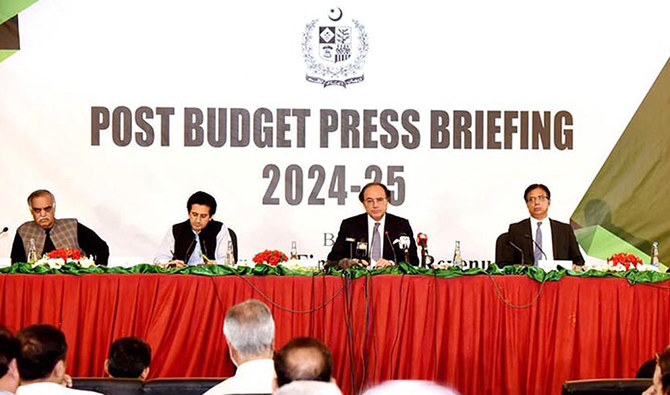
“We hope to culminate this (IMF) process in the next three to four weeks,” Minister of State for Finance, Revenue and Power Ali Pervaiz Malik said on Wednesday, with the aim of thrashing out a staff level agreement before the IMF board recess.
“I think it will be north of $6 billion,” he said of the size of the package, though he added at this point the IMF’s validation was primary focus.
The IMF did not respond immediately to a request for comment.
Pakistan has set a tax revenue target of 13 trillion rupees ($47 billion) for the fiscal year that began on July 1, a near-40 percent jump from the prior year, and a sharp drop in its fiscal deficit to 5.9 percent of gross domestic product from 7.4 percent the previous year.
Malik said the point of pushing out a tough and unpopular budget was to use it as stepping stone for an IMF program, adding the lender was satisfied with the revenue measures taken, based on their talks.
“There are no major issues left to address, now that all major prior actions have been met, the budget being one of them,” Malik said.
While the budget may win approval from the IMF, it could fuel public anger, according to analysts.
“Obviously they (budget reforms) are burdensome for the local economy but the IMF program is all about stabilization,” Malik said.
Sakib Sherani, an economist who heads private firm Macro Economic Insights, said a quick deal with the IMF was needed to avoid pressure on Pakistan’s foreign exchange reserves and the currency given the country’s maturing debt repayments and the effects of unwinding of capital and import controls that were applied earlier.
“If it takes longer, then the central bank may be forced to temporarily re-instate import and capital controls,” he said. “There will be a period of uncertainty, and one casualty is likely to be the rally in equities.”
Pakistan’s benchmark share index has rallied roughly 10 percent since the budget was presented on June 12, helped by continued optimism on getting an IMF bailout package to bolster the struggling economy.


![]()

Pakistan has met all requirements for IMF bailout deal, finance official says
Short Url
https://arab.news/rzwa6
Pakistan has met all requirements for IMF bailout deal, finance official says
- Ali Pervaiz Malik says the point of pushing out a tough and unpopular budget was to use it as stepping stone for an IMF program
- State minister for finance and revenue acknowledges the budget reforms are ‘burdensome’ but says IMF loan is for ‘stabilization’
Latest updates


© 2026 SAUDI RESEARCH & PUBLISHING COMPANY, All Rights Reserved And subject to Terms of Use Agreement.