Pakistan urges UN to reevaluate ‘Responsibility to Protect’ doctrine amid Gaza war

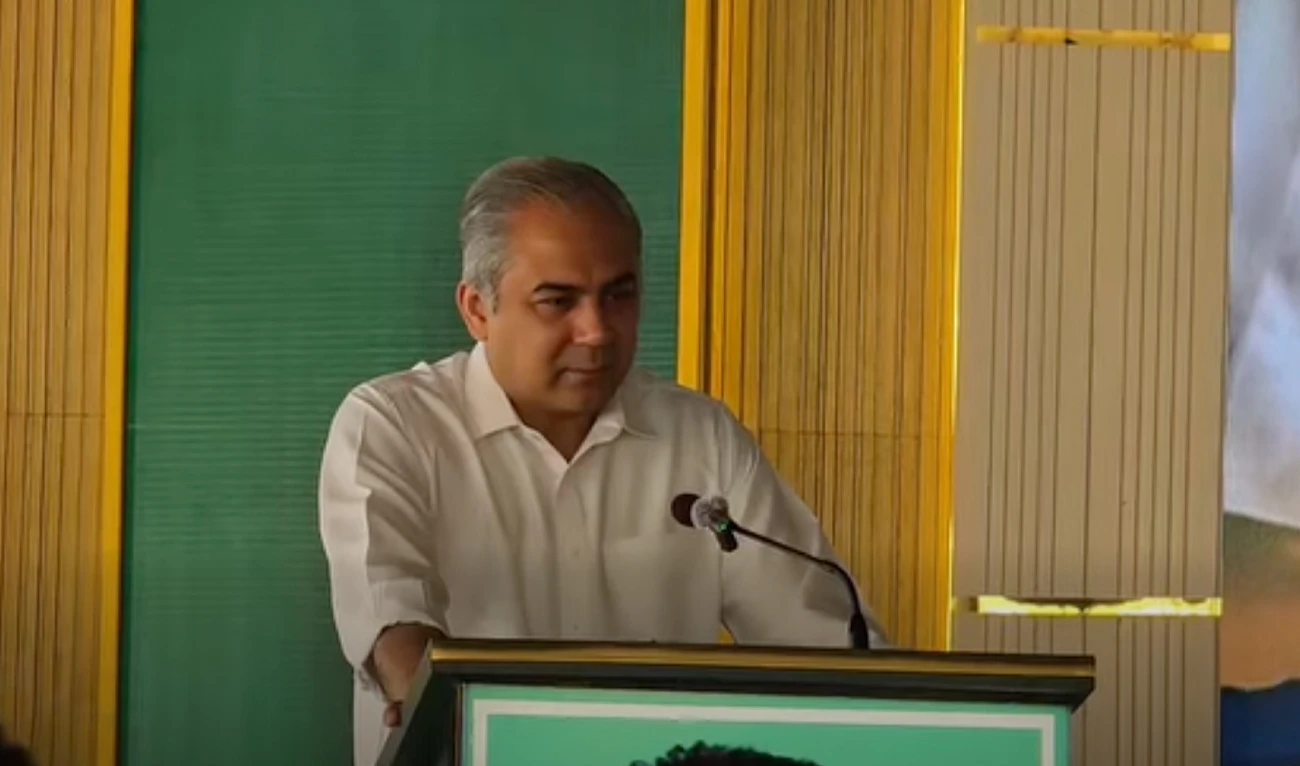
Pakistan’s Permanent Representative to the United Nations Ambassador Munir Akram speaks during a General Assembly meeting to review Palestine’s application for full membership at the United Nations in New York on May 1, 2024. (Pakistan Mission to UN/File)
Short Url
Updated 02 July 2024
Follow

Pakistan urges UN to reevaluate ‘Responsibility to Protect’ doctrine amid Gaza war

  • R2P doctrine is a political commitment to protect civilians from the worst forms of violence
  • Concept emerged after mass atrocities committed in Rwanda, former Yugoslavia in 1990s

ISLAMABAD: Pakistan’s Permanent Representative to the United Nations, Munir Akram, has urged the UN to reevaluate the Responsibility to Protect (R2P) doctrine in light of ongoing foreign occupations and human rights violations in Palestine and Indian-administered Kashmir, state-run media reported on Tuesday.

The R2P is an international norm that seeks to ensure that the international community never again fails to halt the mass atrocity crimes of genocide, war crimes, ethnic cleansing, and crimes against humanity. The concept emerged in response to the failure of the international community to adequately respond to mass atrocities committed in Rwanda and the former Yugoslavia during the 1990s. The International Committee on Intervention and State Sovereignty developed the concept of R2P during 2001.

“The ongoing genocide in Gaza and the worst human rights violations in Indian Occupied Kashmir are clear examples of the failure of the R2P concept and the prevention of genocide and war crimes against humanity,” Radio Pakistan quoted Ambassador Akram as saying in an address to the 97th plenary meeting of General Assembly in New York.

“Given the scale of killings, devastation and the humanitarian crisis, there is no more apt situation calling for urgent intervention to stop the genocide than in Gaza, where the international community has failed so far.”

He also called on the UN’s Special Adviser on the R2P to take cognizance of Pakistan’s call and pay special attention to the situation in Indian-administered Kashmir and India. 

Nuclear-armed rivals and neighbors India and Pakistan have fought three wars, including two over control of the disputed Kashmir region in the Himalayas. Both rule parts of Kashmir but claim it in full. Pakistan accuses India of trying to marginalize Muslims in Kashmir with its policies, which New Delhi denies.

India is around 80 percent Hindu and about 14 percent Muslim and is the world’s third-largest Muslim country. Muslims accuse Modi’s right-wing nationalist party of pursuing a Hindu agenda that discriminates against them and directly imposes laws interfering with their faith. Modi denies this but the situation has led to sporadic violence between members of the two communities.

Meanwhile, Palestinian health authorities say Israel’s ongoing ground and air campaign in Gaza has killed more than 37,000 people, mostly civilians, and driven much of the enclave’s 2.3 million people from their homes. 

Pakistan does not recognize Israel and is a longtime supporter of Palestinian statehood, championing the cause of Palestine on global platforms for decades.


Pakistan’s first female central bank governor dies at 71

Updated 19 sec ago
Follow

Pakistan’s first female central bank governor dies at 71

  • Shamshad Akhtar led the State Bank of Pakistan from 2006 to 2009 and later served twice as caretaker finance minister
  • Finance Minister Muhammad Aurangzeb describes Akhtar as an accomplished economist and an outstanding human being

KARACHI: Shamshad Akhtar, Pakistan’s first woman to serve as governor of the central bank and one of the country’s most internationally experienced economic policymakers, died at the age of 71, officials said on Saturday.

Akhtar led the State Bank of Pakistan from 2006 to 2009, becoming the first and only woman to lead the institution since its establishment in 1948. She later served twice as caretaker finance minister, overseeing fiscal management during transitional governments ahead of the 2018 and 2024 general elections.

According to local media reports, Akhtar died of cardiac arrest.

President Asif Ali Zardari expressed sorrow over her passing in a statement.

“The president paid tribute to her services in the field of economics and financial management, noting her contribution to strengthening economic governance in the country,” the presidency said, adding that he extended condolences to the bereaved family and prayed for the departed soul.

Finance Minister Muhammad Aurangzeb described Akhtar as a highly accomplished economist and an outstanding human being.

“Dr. Shamshad Akhtar was a dignified, principled and wise voice in Pakistan’s economic history,” he said.

He said she served Pakistan with integrity and dedication across several senior economic roles, adding that her national service would always be remembered with respect.

At the time of her death, Akhtar was serving as chairperson of the Pakistan Stock Exchange, a role that placed her at the intersection of Pakistan’s monetary policy, fiscal management and capital markets.

Beyond Pakistan, she held senior positions at major international institutions, including the World Bank, the Asian Development Bank and the United Nations Economic and Social Commission for Asia and the Pacific.

Born in Hyderabad, she was educated in Karachi and Islamabad and held advanced degrees in economics from institutions in Pakistan and the United Kingdom.

Akhtar was widely regarded as a technocrat known for institutional discipline, policy continuity and a strong commitment to economic reform.

With input from Reuters