

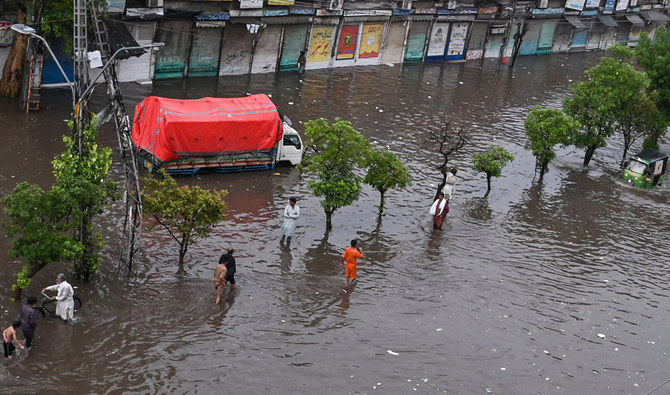

ISLAMABAD: Pakistan’s top disaster management authority has established a National Emergencies Operation Center (NEOC) in anticipation of intense cloud bursts and moderate to heavy rainfall expected to start tomorrow, Tuesday, as the country enters the monsoon season.
A statement from the PM office said on Monday the NEOC would use latest tools and technologies, including real-time satellite feeds, to anticipate disasters up to three months in advance and was run by a multidisciplinary team of experts employing the power of geographic information systems (GIS), remote sensing, climatology, meteorology, seismology, hydrology, and data sciences to monitor and analyze global and local hazards.
“NEOC has been reported a significant activity from the eastern Indian side, indicating intense cloud bursts that may hit Pakistani areas,” the PM Office said on Monday.
“Repeated early warnings have been shared with all provinces, and rainfall is likely to start over the upper catchments of all major rivers particularly Sutlej, Ravi and Chenab from July 2, 2024.”
The disaster management authority had also issued an alert regarding lightning expected in different cities of Punjab and the federal capital, Islamabad, during July 5-7, which could lead to rapid rises in water levels, flash flooding events, and urban flooding in metropolitan areas, the statement said.
” NDMA warns that the anticipated rainfall poses a significant risk of low to medium level flooding in River Sutlej, with water levels expected to reach low flood levels (approximately 50,000 cusecs) by July 5 and high flood levels (approximately 120,000 cusecs) by July 10,” the PM Office added.
The disaster management authority has been working closely with the federal and provincial departments to ensure preparedness and response to any potential emergency, the statement said, advising the public to remain vigilant and follow instructions from local authorities as well as download the “Pak NDMA Disaster Alert” for timely alerts, weather reports and flood updates.
“Protect yourself from floodwater, avoid contact with it, which may be contaminated or contain debris or electrical wires,” it added. “Develop an evacuation plan with your family, identify a safe location, and create an emergency kit with essential supplies.”
The disaster management authority also advised travelers to avoid unnecessary travel in case of heavy rainfalls and likely floods.
Pakistan is consistently ranked among the world’s worst-affected countries from climate change. Unprecedented rainfall and melting of glaciers in June 2022 triggered massive floods across the country that killed nearly 1,700 people and inflicted damages worth $3 billion. Scientists and experts attributed the floods to the adverse effects of climate change.
Pakistan also went through a severe heat wave in May and June, which saw temperatures in some regions rise to above 50 degrees Celsius.


