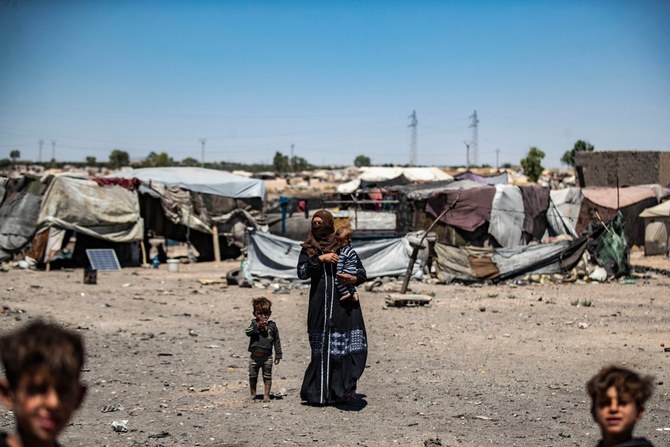
BAGHDAD: Iraqi authorities in Baghdad and the administration in the semi-autonomous northern Iraqi Kurdish region have been arbitrarily detaining and deporting Syrian refugees to their country, a leading international rights group said Thursday.
The New York-based Human Rights Watch said it has documented cases in which Iraqi authorities deported Syrians even though they had legal residency or were registered with the UN refugee agency.
The Syrians reported being arrested in raids at their workplace or on the streets, and, in two cases, at residency offices while trying to renew their permits.
According to UNHCR, Iraq hosts at least 260,000 Syrian refugees, with about 90 percent of them living in the autonomous Kurdish region of northern Iraq. About 60 percent live in urban areas, while the rest are in refugee camps.
Human Rights Watch spoke to seven Syrians in Irbil and Baghdad between April 19 and April 26 who were being deported — including four at the airport in Irbil waiting to be put on a flight, the statement said.
Sarah Sanbar, Iraq researcher with HRW, said the watchdog was unable to determine the total number of Syrians deported. The group said the deportations have left Syrians in Iraq living in fear.
“By forcibly returning asylum seekers to Syria, Iraq is knowingly placing them in harm’s way,” Sanbar said.
An Iraqi government spokesperson did not immediately respond to requests for comment from The Associated Press.
Iraqi authorities have also made it increasingly difficult for Syrians to stay legally in the country.
The Iraqi Kurdish regional government in the north has — at Baghdad’s request — suspended visa entry for Syrian citizens as part of broader efforts to regulate foreign labor in Iraq, restricting the Syrians’ ability to enter the Kurdish region for work or refuge.
Many companies in Iraq employ Syrian workers without legally registering them, making them work long hours for low pay.
New rules in the Iraqi Kurdish region require companies to register Syrian workers and pay social security contributions for them. However, some companies make the employees pay half of the social security fees from their salaries.
A Syrian worker in the Kurdish region told the AP that on-arrival fees for a one-month visa for Syrians used to cost $150. Those visas could be extended for up to a year. She spoke on condition of anonymity, fearing she could be deported.
Now, Syrians must be registered with a social security number showing their employer pays taxes on them, he said, otherwise they cannot renew their visas. In Baghdad, a one-year work visa that comes with a social security number costs $2,000.
Host countries that have sheltered Syrian refugees have increasingly pushed for their return home, where the country’s war, now in its 14th year, is mostly frozen along the former front lines. The United Nations and rights groups say Syria remains unsafe for returns.
Human Rights Watch said that in July 2023, returnees from Iraq were reportedly tortured in Syrian military intelligence custody and conscripted into military service.


![]()

A leading human rights group calls on Iraq to halt deportations of Syrian refugees
Short Url
https://arab.news/bcadb
A leading human rights group calls on Iraq to halt deportations of Syrian refugees
- Human Rights Watch said it has documented cases in which Iraqi authorities deported Syrians even though they had legal residency or were registered with the UN refugee agency
- Sarah Sanbar, Iraq researcher with HRW, said the watchdog was unable to determine the total number of Syrians deported


Latest updates


© 2026 SAUDI RESEARCH & PUBLISHING COMPANY, All Rights Reserved And subject to Terms of Use Agreement.