MADRID: Spanish authorities intercepted another submarine suspected of transporting drugs to Europe from South America and arrested four Colombian nationals who were crewing the vessel, officials said Thursday.
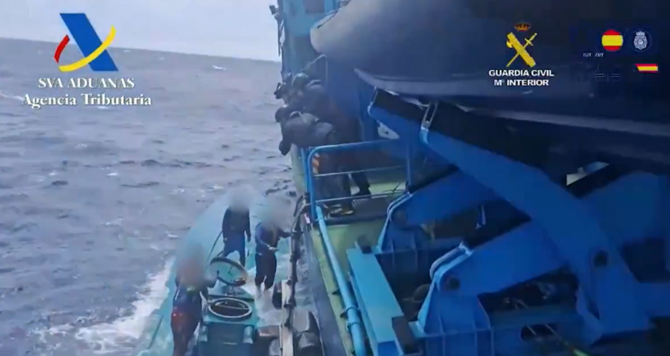
Police rescued the occupants after they had scuttled the 20-meter (65-foot) long narco-submarine 518 kilometers (312 miles) west of Cadiz on Tuesday, when it was heading for the mainland.
Due to the characteristics of the boat and the crew’s behavior, authorities believed that it transported cocaine, the Civil Guard said in a statement on Wednesday.
The crew surfaced safely while the submarine flooded and sank with its cargo, the statement added.
The Civil Guard told the Associated Press that they would not try to retrieve the vessel which is believed to be at a depth of 1,000 meters (0.6 miles),
The submarine, which departed from Colombia, is similar to those intercepted by authorities in previous operations in northwestern Spain in 2019 — when three metric tons of cocaine were confiscated — — and last year.
Similar vessels have been discovered in the Atlantic Ocean, especially near Central and South America. They usually sail underwater at shallow depths and are rarely able to submerge.
The Colombian and Ecuadorian authorities have been working on the seizure of this sort of semi-submersible. The Colombian Navy said that in 2024 they have uncovered 13 such vessels laden with illicit drugs in the Pacific.


![]()

Spain arrests four Colombians rescued from submarine suspected of transporting drugs
Short Url
https://arab.news/24fr3
Spain arrests four Colombians rescued from submarine suspected of transporting drugs
- Police rescued the occupants after they had scuttled the 20-meter long narco-submarine 518 kilometers west of Cadiz
- The crew surfaced safely while the submarine flooded and sank with its cargo


Latest updates



Recommended


© 2026 SAUDI RESEARCH & PUBLISHING COMPANY, All Rights Reserved And subject to Terms of Use Agreement.