


LONDON: An “atmosphere of Islamophobia” is pushing French Muslims to emigrate to countries including the UK and Canada, a new book has claimed.
The phenomenon has been compared to a “brain drain” by the authors of “France, Loving It But Leaving It,” The Times reported on Monday.
But unlike a conventional brain drain, Muslim professionals in France are trading one prosperous country for another.
France has the largest Muslim population in Europe, with an estimated 7-10 percent of the country’s 67 million people belonging to the faith.
Of the Muslims who have emigrated from France, more than seven in 10 reported leaving in part due to racism and discrimination.
France follows a policy of laicite, or secularism, which forbids the display of religious symbols in professional life, including in law, the civil service and education.
Many of the Muslims emigrating are among the most professionally ambitious but also the most devout, leading to a clash of values, according to one of the book’s co-authors, Olivier Esteves.
The professor at the University of Lille cited the popularity of Marine Le Pen’s National Rally as also playing a role in the brain drain. The far-right party claims that Islam is an existential threat to French identity.
Esteves said an election victory for NR would lead to a renewed surge in emigration among professional French Muslims.
“People who oppose immigration often say ‘it feels like we’re no longer at home,’” he said. “But there are more and more French Muslims who no longer feel at home in France.
“In the next few months, we will see a growing disinhibition of Islamophobic words and behaviour.
“We wrote about women who are spat on for wearing the hijab — that kind of thing is only going to get worse.”
The survey that formed the basis of the book was based on 1,000 respondents mostly on social media. About 140 of those were subject to in-depth interviews by the book’s authors.
Esteves said the number of Muslims who have left France could be in the “tens of thousands.”
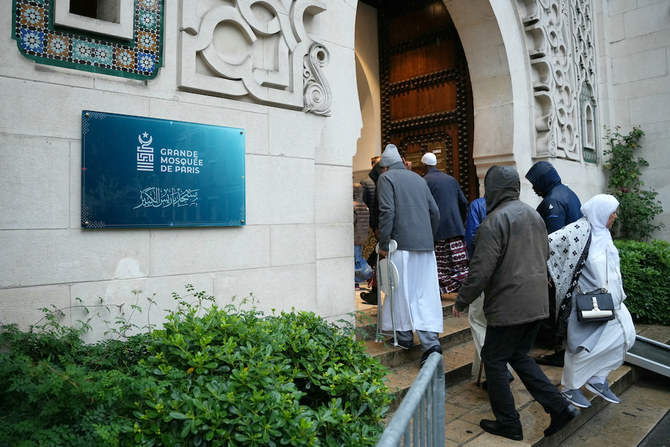
Last month, Muslims gathered outside the Grand Mosque in Paris to voice their concerns about being made to feel like outsiders in their own country.
One attendee, Aminata Sylla, told The Times that she “could not wait” to leave for Britain or Oman.
“It’s been a build-up of all the negative experiences I’ve had. When it’s not that I’m black, it’s that I’m Muslim, then it’s that I wear a headscarf. I feel like I can’t breathe sometimes,” she said.
Sylla, who is studying for a master’s degree in international relations at Sorbonne University, said she was made to “feel like an animal” through a series of negative experiences, including being kicked on the Paris metro for wearing a hijab.
The 25-year-old describes herself as a “daughter of France who has been abandoned by her mother.”
Mehdi, a French teacher in Preston, England, who emigrated from his hometown Lyon three years ago, said the decision to leave was “heartbreaking.”
The 39-year-old added: “I don’t think I’d ever cried as much as when I took the ferry to leave for good. I felt it was a failure to not be able to maintain my relationship with this country.”


