TEL AVIV: The viability of a US-backed proposal to wind down the eight-month-long war in Gaza was cast into doubt on Monday after Israeli Prime Minister Benjamin Netanyahu said he would only be willing to agree to a “partial” ceasefire deal that would not end the war, comments that sparked an uproar from families of hostages held by Hamas.
In an interview broadcast late Sunday on Israeli Channel 14, a conservative, pro-Netanyahu station, the Israeli leader said he was “prepared to make a partial deal — this is no secret — that will return to us some of the people,” referring to the roughly 120 hostages still held in the Gaza Strip. “But we are committed to continuing the war after a pause, in order to complete the goal of eliminating Hamas. I’m not willing to give up on that.”
Netanyahu’s comments did not deviate dramatically from what he has said previously about his terms for a deal. But they come at a sensitive time as Israel and Hamas appear to be moving further apart over the latest ceasefire proposal, and they could represent another setback for mediators trying to end the war.
Netanyahu’s comments stood in sharp contrast to the outlines of the deal detailed late last month by US President Joe Biden, who framed the plan as an Israeli one and which some in Israel refer to as “Netanyahu’s deal.” His remarks could further strain Israel’s ties to the US, its top ally, which launched a major diplomatic push for the latest ceasefire proposal.
The three-phased plan would bring about the release of the remaining hostages in exchange for hundreds of Palestinians imprisoned by Israel. But disputes and mistrust persist between Israel and Hamas over how the deal plays out.
Hamas has insisted it will not release the remaining hostages unless there’s a permanent ceasefire and a full withdrawal of Israeli forces from Gaza. When Biden announced the latest proposal last month, he said it included both.
But Netanyahu says Israel is still committed to destroying Hamas’ military and governing capabilities, and ensuring it can never again carry out an Oct. 7-style assault. A full withdrawal of Israeli forces from Gaza, where Hamas’ top leadership and much of its forces are still intact, would almost certainly leave the group in control of the territory and able to rearm. In the interview, Netanyahu said that the current phase of fighting is ending, but that didn’t mean the war was over.
During the initial six-week phase, the sides are supposed to negotiate an agreement on the second phase, which Biden said would include the release of all remaining living hostages, including male soldiers, and Israel’s full withdrawal from Gaza. The temporary ceasefire would become permanent.
Hamas appears concerned that Israel will resume the war once its most vulnerable hostages are returned. And even if it doesn’t, Israel could make demands in that stage of negotiations that were not part of the initial deal and are unacceptable to Hamas — and then resume the war when Hamas refuses them.
Netanyahu’s remarks reinforced that concern. After they were aired, Hamas said they represented “unmistakable confirmation of his rejection” of the US-supported deal, which also received the backing of the United Nations’ Security Council.
In a statement late Sunday after Netanyahu’s lengthy TV interview, the Palestinian militant group said his position was “in contrast” to what the US administration said that Israel had approved. The group said that its insistence that any deal should include a permanent ceasefire and the withdrawal of all Israeli forces out of the entire Gaza Strip “was an inevitable necessity to block Netanyahu’s attempts of evasion, deception, and perpetuation of aggression and the war of extermination against our people.”
Netanyahu shot back and in a statement from his office said Hamas opposed a deal. He said Israel would not withdraw from Gaza until all 120 hostages are returned.
Hamas welcomed the broad outline of the US plan but proposed what it said were “amendments.” US Secretary of State Antony Blinken, during a visit to the region earlier this month, said some of Hamas’ demands were “workable” and some were not, without elaborating.
Netanyahu and Hamas both have incentives to keep the devastating war going despite the catastrophic toll it has had on civilians in Gaza and the mounting anger in Israel that after so many months Israel has not reached its aims of returning the hostages and defeating Hamas.
The families of hostages have grown increasingly impatient with Netanyahu, seeing his apparent reluctance to move ahead on a deal as tainted by political considerations. A group representing the families condemned Netanyahu’s remarks, which it viewed as an Israeli rejection of the latest ceasefire proposal.
“This is an abandonment of the 120 hostages and a violation of the state’s moral duty toward its citizens,” it said, noting that it held Netanyahu responsible for returning all the captives.
In its Oct. 7 cross-border assault, Hamas-led militants killed 1,200 people and took 250 people captive, including women, children and older people. Dozens were freed in a temporary ceasefire deal in late November and of the 120 remaining hostages, Israeli authorities say about a third are dead.
Israel’s retaliatory war has killed more than 37,000 Palestinians, according to the Health Ministry in the Hamas-ruled territory. It has sparked a humanitarian crisis and displaced most of the territory’s 2.3 million population.


![]()
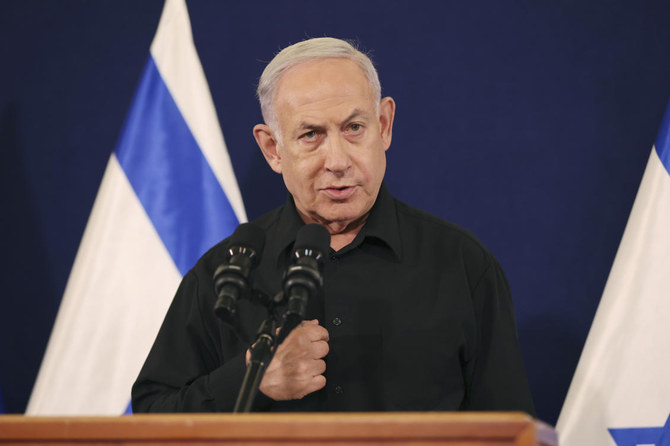
Netanyahu will only agree to ‘partial’ ceasefire, but not end to Gaza war

Short Url
https://arab.news/9u66k
Netanyahu will only agree to ‘partial’ ceasefire, but not end to Gaza war
- Viability of US-backed peace proposal cast into doubt with Israeli leader’s comments
- Netanyahu’s remarks could further strain Israel’s ties to the US, its top ally


Latest updates


© 2026 SAUDI RESEARCH & PUBLISHING COMPANY, All Rights Reserved And subject to Terms of Use Agreement.