- PPP’s Aseefa Bhutto says Pakistani people deserve a better budget, urges the government to provide relief to poor
- Information minister says opposition has not prepared shadow budget, is criticizing government without justification
ISLAMABAD: The coalition partners of Prime Minister Shehbaz Sharif’s administration and the opposition parties on Sunday criticized the budget for the next fiscal year (FY25) while offering suggestions to improve it to provide relief to the public.
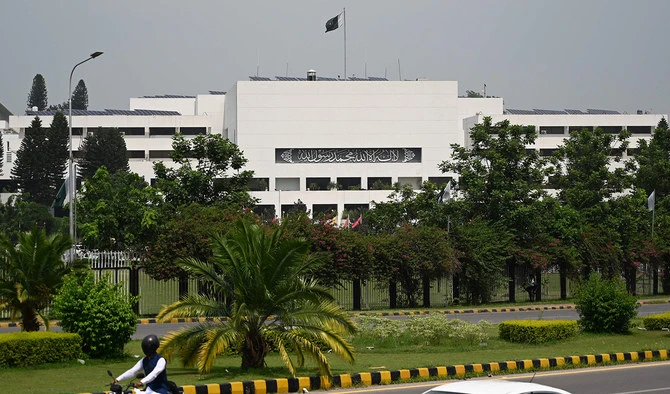
The National Assembly of Pakistan kicked off debate on the federal budget on Thursday, as the government hopes for its passage this week.
During the discussions, both the opposition lawmakers and members of the government’s allied parties slammed the budget while asking the Sharif administration to review the taxes imposed on the salaried class, food items and other sectors.
Islamabad has set an ambitious tax revenue generation target of about Rs13 trillion ($46.55 billion) in the budget, which was presented on June 12 by Federal Minister for Finance and Revenue Muhammad Aurangzeb.
“Do you think this is the budget the people of Pakistan deserve,” Aseefa Bhutto-Zardari, Pakistan Peoples Party lawmaker and daughter of the slain ex-premier Benazir Bhutto, said while participating in the debate. “The people of Pakistan deserve better.”
She urged the government to provide relief to the public.
“Together we have to find way to give relief to the people who are suffering 15 hours a day without electricity in this sweltering heat,” she added.
The PPP leader also asked the government to support farmers battered by storms, floods and recent controversial decisions related to wheat import.
“We must find ways to help the blue-collar workers who have no job security,” she said. “We must find ways to develop our human capital. We must find ways to provide relief directly to the poorest of the poor of this country.”
Another senior PPP lawmaker Khurshid Shah termed the budget “difficult” that would increase burden on the public.
He suggested the government to work on population control to save resources and provide education, health, clean drinking water and other facilities to people.
“The government should offer incentives to the public to bring down the population number,” he added.
Opposition lawmaker from Jamiat Ulema-e-Islam Shahida Begum said no relief was provided to the public in the budget, criticizing the government’ spending and lack of transparency related to the utilization of public funds.
“The government should reduce income tax and try to broaden the tax base to collect more revenue,” she said.
Sunni Ittehad Council’s Ali Muhammad Khan emphasized the idea of abolishing interest to strengthen the national economy.
“If we abolish interest, then all budgets would be for the prosperity and progress of the country and the nation,” he said.
Responding to all the criticism, Federal Minister for Information and Broadcasting Attaullah Tarar said the opposition had not bothered to prepare even a shadow budget and was only criticizing the government without justification.
He pointed out the government had increased the salaries of public servants along with the minimum wage level and reduced tariff for industrial electricity.
“Everyone is resorting to criticism, but no one talks about the budget,” he said.
“Pakistan’s friendly countries want to invest here which is in their [opposition’s] interest and ours as well,” he continued. “We have to make Pakistan a peaceful country for trade and investments.”