




JEDDAH: Perennial plants, with their remarkable ability to endure harsh conditions such as droughts, climatic variations, and human activities, play a crucial role in our ecosystem, providing sustenance for people and animals, and contributing to the overall well-being of the environment.
Recognizing the importance of these invaluable assets, the National Center for Vegetation Cover Development and Combating Desertification has embarked on a program to relocate and care for perennial trees in the Madinah region.
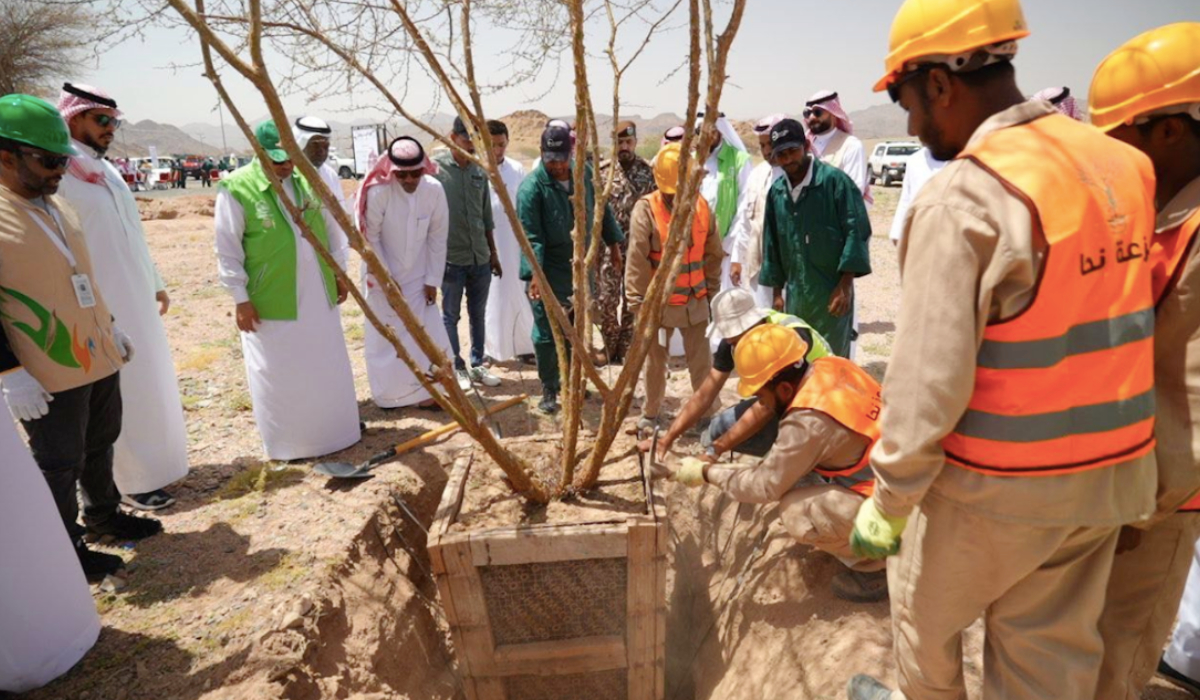
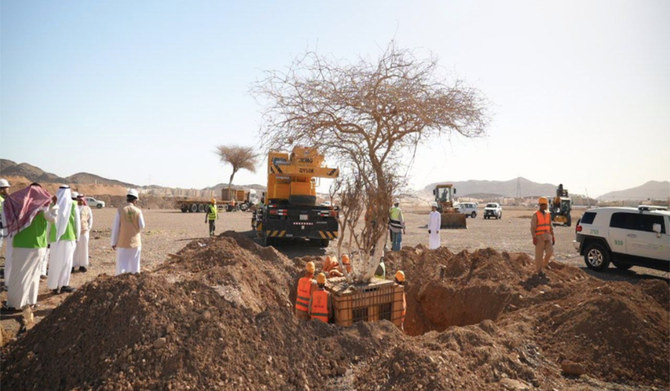
In a four-month operation, some trees were moved to Al-Bayda Al-Bari Park as part of the Kingdom’s efforts toward environmental sustainability and vegetation development. (Supplied)
In a four-month operation, the center moved some trees to Al-Bayda Al-Bari Park as part of the Kingdom’s aims regarding environmental sustainability and vegetation development.
Khalid bin Saadullah Al-Saidi, representative of the general administration of grazing and the general administration of protection, supervision, and inspection of NCVC in the Madinah region, told Arab News: “The goal is to preserve the vegetation and relocate these perennial plants to maintain and care for them, achieving the desired objectives through collaboration and initiatives with environmental advocates across the Kingdom.”
HIGHLIGHT
The National Center for Vegetation Cover Development and Combating Desertification has embarked on a program to relocate and care for perennial trees in the Madinah region.
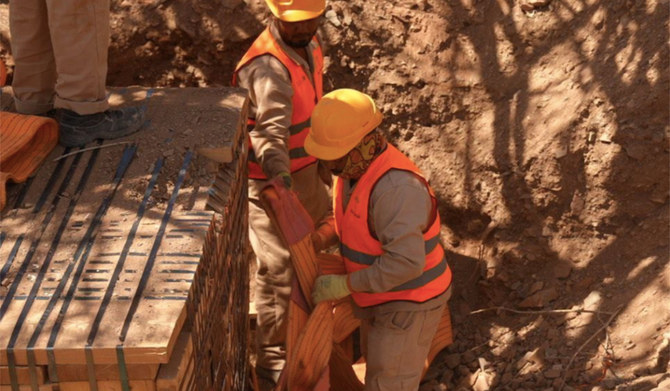
The relocation process involves a thorough selection of trees, based on their type, size, condition, age, and benefits.
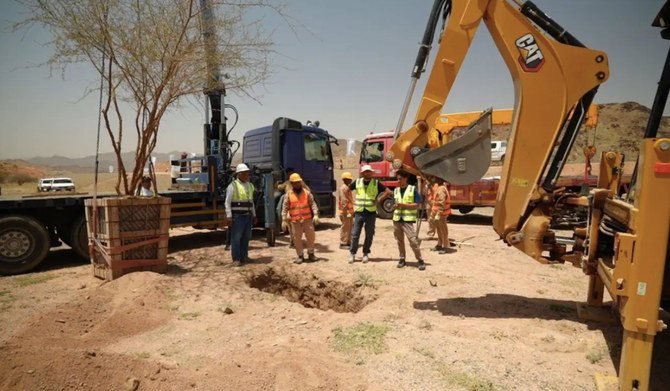
Specialists from the center use modern methods to relocate the trees, minimizing damage and ensuring survival.
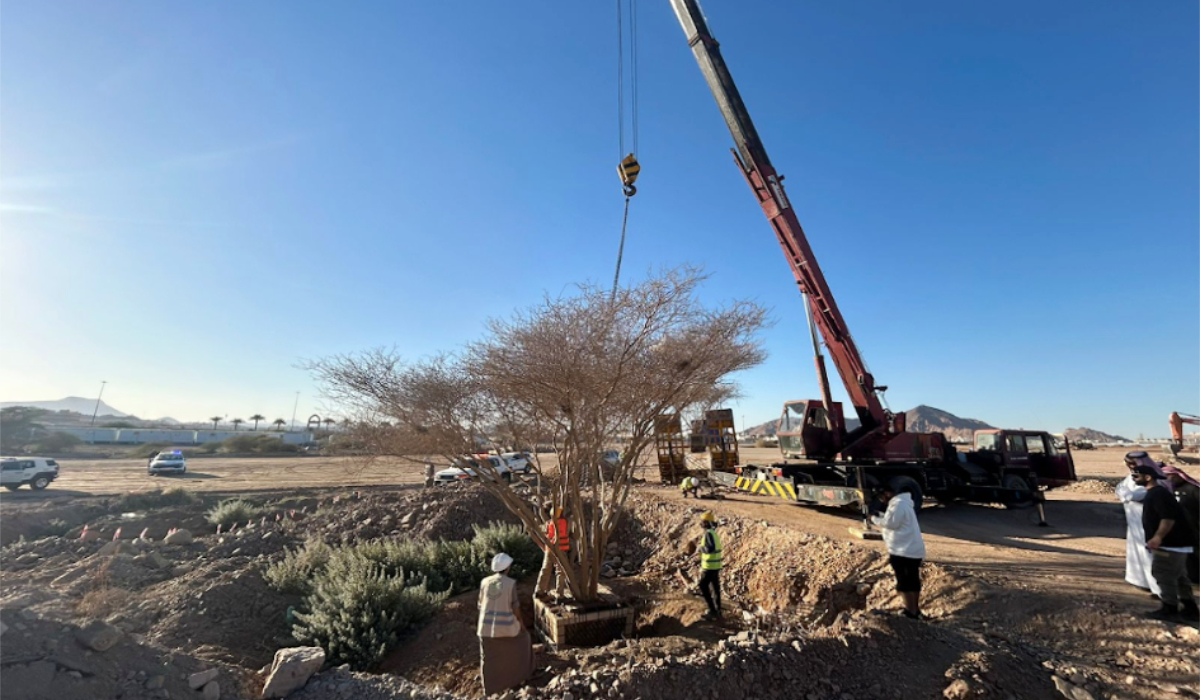
The criteria used in selecting the trees depend on the type of tree, whether it is wild or cultivated, its size, condition, age, and the extent of its benefit. (Supplied)
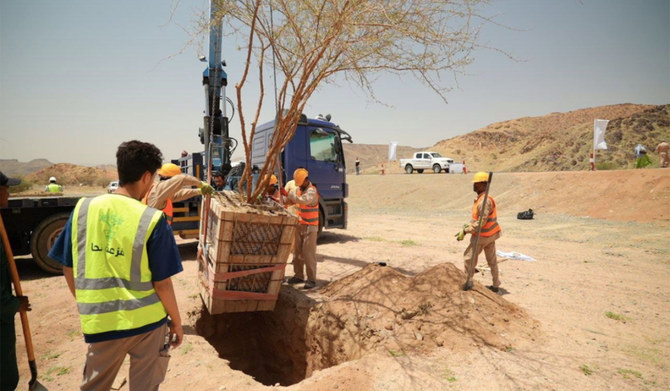
The process involves preparing the new site, digging, and manufacturing wooden molds to hold the trees, as well as providing carriers, equipment, and special transport tractors.
Perennials, such as Acacia ehrenbergiana, the Latin thorn tree (Acacia tortilis) and the Maerua crassifolia, that obstruct projects and development lines also will be relocated.
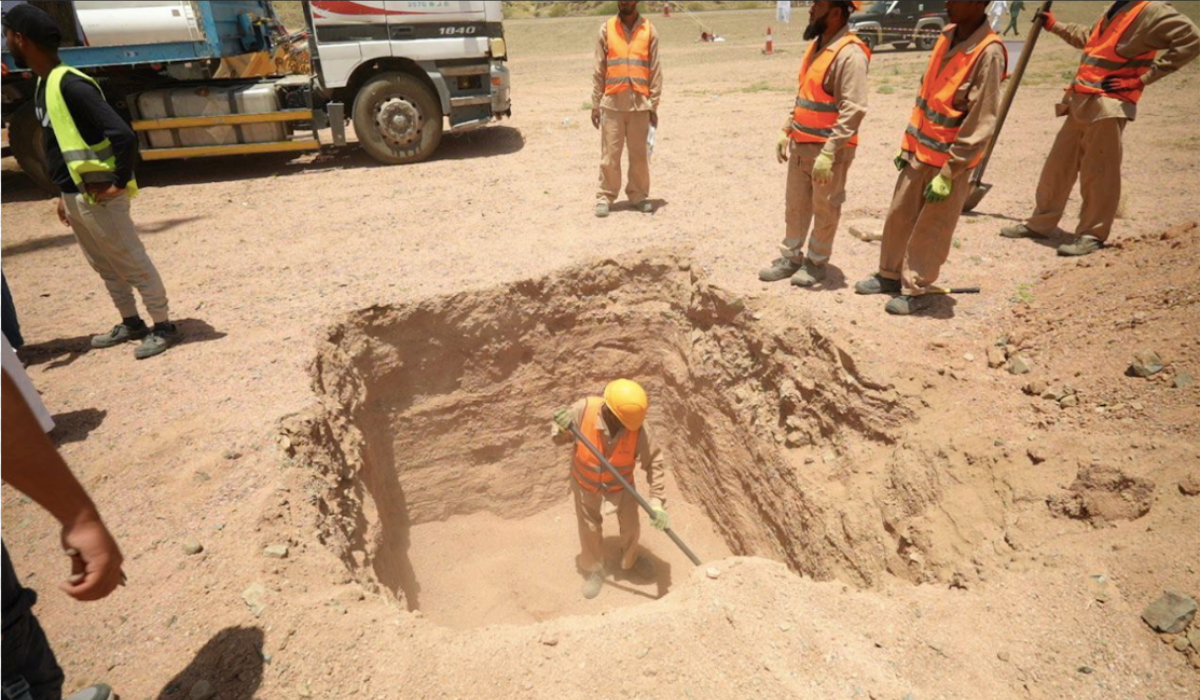
The process of relocating trees involves preparing the new site, digging, and manufacturing wooden molds to hold the trees, as well as providing carriers, equipment, and special transport tractors. (Supplied)
“Acacia ehrenbergiana trees are important local trees in the Kingdom, characterized by their large size, numerous branches, and ability to withstand harsh climatic conditions,” Al-Saidi said.
The wild acacia tree can act as a windbreak, and also provides shade and shelter for birds, as well as sustenance for livestock. The trees can grow to a height of about nine meters, and bear yellow flowers, mostly blooming from mid-February to May. These attract grazing bees, which produce “Salim” honey.
The relocation process went smoothly, thanks to the presence of experts from the center, Al-Saidi said.
“We also acknowledge the cooperation of the Ministry of Transport branch in the region in transporting the trees on main roads, and the interest and cooperation of citizens in this initiative,” he added.
This endeavor makes a substantial contribution to conserving and enriching biodiversity in the Madinah region. Focusing on indigenous tree species, which are integral to the environment and resilient to various conditions, is essential for ensuring sustainability for both present and future generations. The relocation of these trees not only expands green spaces, but also expedites the lengthy process of growth and restoration.
Earlier, on the occasion of World Environment Day, Al-Saidi said: “It is always the duty of individuals to care for the environment and practice proper behaviors to ensure sustainability for the current and future generations.”
NCVC continues to work on such activities and initiatives throughout the year, aiming to safeguard mature and rare trees, ensuring their long-term sustainability, and enriching biodiversity and eco-tourism efforts.
The center’s efforts will lead to the preservation of a wide variety of trees across the Kingdom, promoting environmental sustainability and conservation.




