


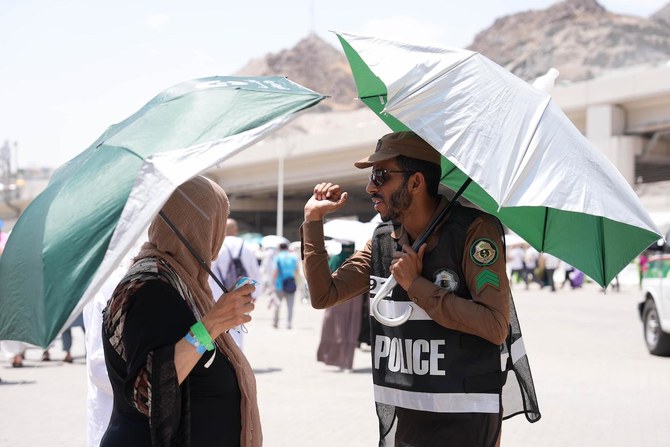
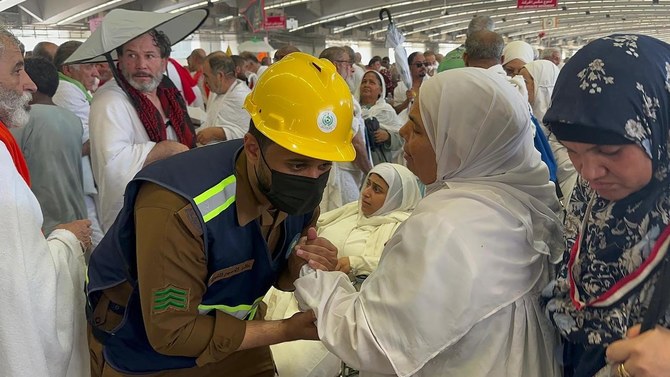
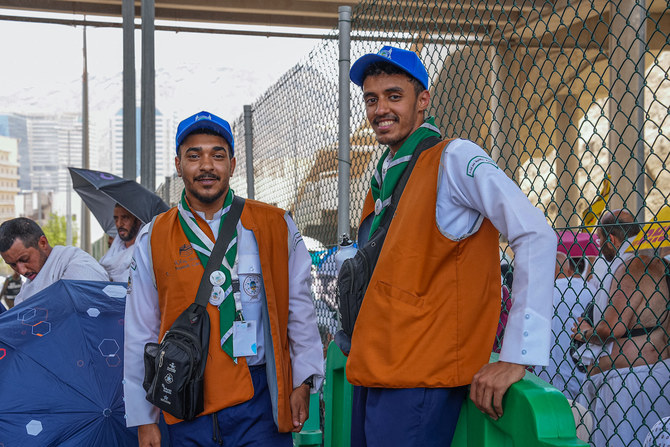

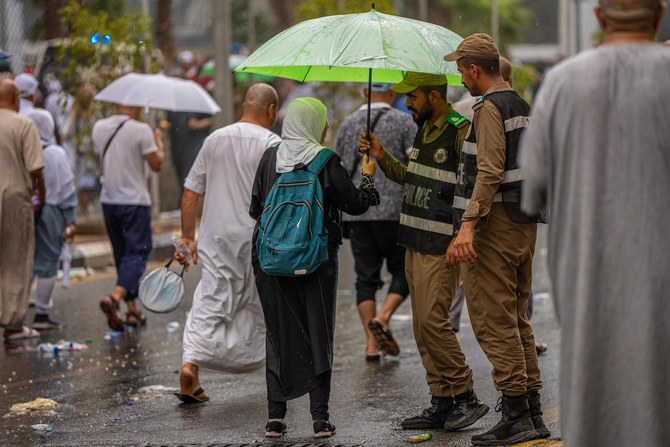

MAKKAH: During the Hajj season, locals in the holy city are often praised for their fluency in several languages, stemming from their interactions with people from around the world.
Their engagement in Hajj-related activities, both commercial and voluntary, across various sectors, enables them to secure seasonal jobs and gain valuable experience in volunteering. Most importantly, it provides them with the honor of serving pilgrims, meeting their needs, and ensuring their comfort.
Anas Al-Harithi, a Makkah resident, engages in seasonal work every year during the Hajj season with agencies that offer temporary jobs.
He describes it as a great experience that has allowed him to learn Indonesian and interact with Indonesian worshippers — the largest group of pilgrims arriving in Makkah each year.
Al-Harithi said that linguistic barriers have significantly diminished, as many people in Makkah have long been fluent in several languages.
Through his years of working during Hajj, Al-Harithi has built extensive knowledge related to the pilgrimage. His ability to share languages and actively participate makes the journey easier and smoother for pilgrims.
Most Makkah residents gain this skill not through formal education but through direct contact with pilgrims, enabling them to meet the worshippers’ needs effectively, he said.
Rania Chaudhry, a pilgrims’ guide, said that Hajj is a great opportunity for the people of Makkah to work, serve, and enjoy the honor of this noble profession.
Her ability to communicate in Urdu was developed through years of experience welcoming pilgrims, meeting their needs, and ensuring their journey is as smooth and comfortable as possible.
Chaudhry said that many of the male and female guides originally come from the same countries as the pilgrims. Therefore, learning these languages is not difficult for them.
“This advantage allows these families the honor of serving the pilgrims, hosting them, ensuring their comfort, and providing the best possible services to help them perform their rituals during the Hajj season,” she said.
Chaudhry added that guides welcome pilgrims from the moment they arrive in Makkah and accompany them throughout the Hajj journey, helping to overcome any linguistic barriers.
The relationship between guides and pilgrims forms a strong bond, not driven by economic interest but by human, spiritual, and religious ties, she said.
“It is an obligation before God, as well as to officials and society, to care for those described as guests of God who have come to answer His call. Therefore, everyone strives to understand their needs and communicate in their language if they are not fluent in Arabic. This commitment reflects the true essence of faith that the guides live by, witnessing its blessings and maximizing its rewards.”
Awad Al-Maliki, a professor specializing in linguistics at the Islamic University of Madinah, said that pilgrims coming to Makkah from all over the world have a strong desire to get to know this society, experience its culture and social life, harmonize with Saudi traditions, and engage in knowledge exchange and constructive cultural partnerships.
Pilgrims see Saudi Arabia not only as the heart of the Islamic world but also as a distinct and open cultural hub and a cultural incubator that unites the entire Islamic world, he said.
Al-Maliki said that pilgrims feel a strong cultural connection to Makkah, and many are not fluent in Arabic.
Consequently, residents often serve as their cultural and tourist guides, offering tours of heritage and cultural sites in Makkah and other Saudi cities in several languages, including English, French, Urdu, Malay, and Hausa.
Saudis are passionate about linguistic communication with all groups to enhance the pilgrims’ experience. This cultural diversity propels the city, enriching it culturally, Al-Maliki said.


