DUBAI: Iran and Sweden on Saturday carried out a prisoner swap that involves the release of Hamid Nouri, convicted of war crimes by Sweden over 1988 mass executions in the Islamic Republic, in exchange for a European Union diplomat and another man held by Tehran.
Iran released Johan Floderus, a Swede who had been working for the EU’s diplomatic corps, as well as a man identified as Saeed Azizi by Swedish Prime Minister Ulf Kristersson.
They “are now on a plane home to Sweden, and will soon be reunited with their families,” Kristersson wrote on the social platform X.
Oman mediated the swap, the state-run Oman News Agency reported. Iranian state television reported Nouri was already freed and would be heading back to Tehran.
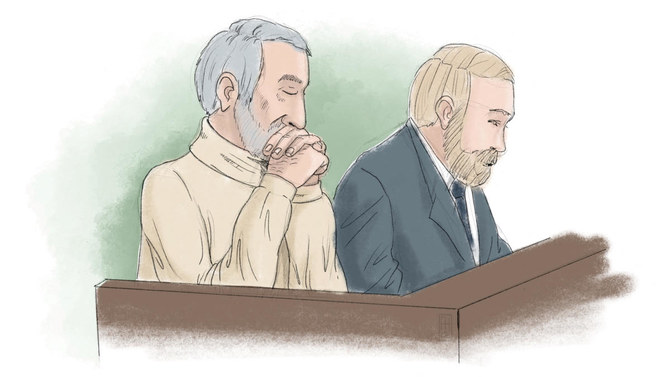
In 2022, the Stockholm District Court sentenced Nouri to life in prison over his role in the executions. It identified him as an assistant to the deputy prosecutor at the Gohardasht prison outside the Iranian city of Karaj.
The 1988 mass executions came at the end of Iran’s long war with Iraq. After Iran’s then-Supreme Leader Ruhollah Khomeini accepted a United Nations-brokered ceasefire, members of the Iranian opposition group Mujahedeen-e-Khalq, heavily armed by Saddam Hussein, stormed across the Iranian border in a surprise attack.
Iran ultimately blunted their assault, but the attack set the stage for the sham retrials of political prisoners, militants and others that would become known as “death commissions.”
International rights groups estimate that as many as 5,000 people were executed. Iran has never fully acknowledged the executions, apparently carried out on Khomeini’s orders, though some argue that other top officials were effectively in charge in the months before his 1989 death.
Late Iranian President Ebrahim Raisi, killed in a helicopter crash in May, also was involved in the mass executions.
Floderus’ family said he was arrested in April 2022 at the Tehran airport while returning from a vacation with friends. His detention represented yet another case of Tehran using foreigners or those with dual nationalities as pawns in negotiations with the West.
Azizi’s case was not as prominent as Floderus’. In February, the group Human Rights Activists in Iran reported that the dual Iranian-Swedish national had been sentenced to five years in prison by Tehran’s Revolutionary Court on charges of “assembly and collusion against national security.” The group said Azizi has cancer.


![]()

Iran and Sweden carry out a prisoner swap, freeing man convicted of war crimes over 1988 executions
Short Url
https://arab.news/ycprc
Iran and Sweden carry out a prisoner swap, freeing man convicted of war crimes over 1988 executions
- Iran released Johan Floderus, a Swede who had been working for the EU’s diplomatic corps, as well as a man identified as Saeed Azizi


Latest updates


Recommended


© 2026 SAUDI RESEARCH & PUBLISHING COMPANY, All Rights Reserved And subject to Terms of Use Agreement.