


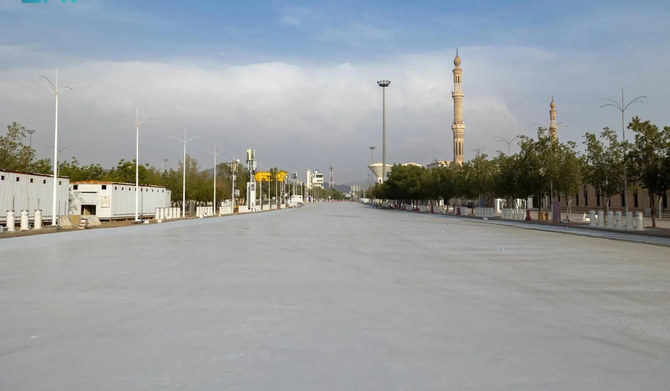




RIYADH: Innovative road-cooling technology is set to make pilgrims’ experience of Hajj safer and more comfortable as temperatures soar to 46 degrees Celsius in the summer heat.
A spokesman for the Roads General Authority, Abdulaziz Al-Otaibi, told Arab News: “When roads are exposed to sunlight, they absorb heat, reaching up to 70 degrees Celsius of temperature retention once the sun sets.”
As a result, he added, the road begins to emit heat — leading to something known as a heat island phenomenon. To counter this, a cooling material that absorbs less solar radiation than traditional substances is being applied to pavements around holy sites.
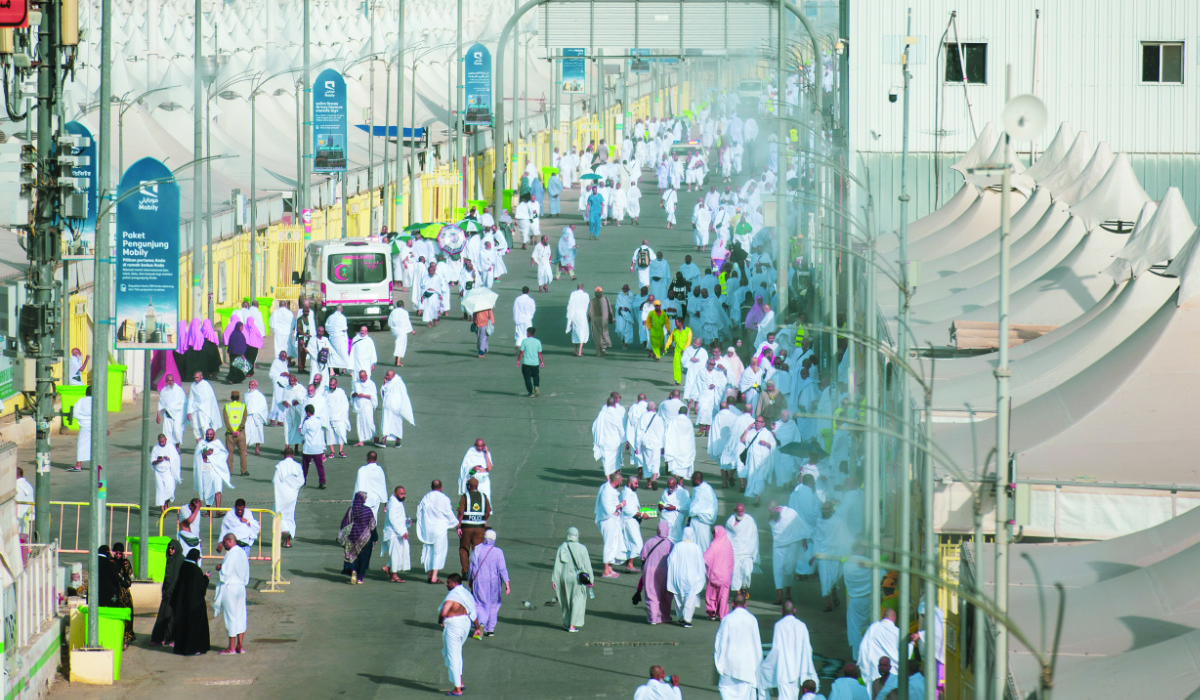
By implementing road-cooling technology in key areas of Makkah, the Saudi government is creating a more hospitable environment for pilgrims to ensure their journey to the holy city is as smooth as possible. (SPA/Supplied)
“The material we have developed is most effective during sunny weather as it reflects the sun’s rays, which helps lower the temperature of the road by reducing heat absorption,” said Al-Otaibi.
This helps reduce heat build-up, keeping the road cooler and making it more pleasant for pedestrians.
HIGHLIGHTS
• The Roads General Authority is now expanding the road-cooling project to areas in Mina, Arafat, and Muzdalifah.
• The material is also being applied to 25,000 square meters near Namira Mosque in Arafat.
• The innovation is setting a precedent for other countries in ensuring the safety and comfort of religious visitors.
The road-cooling technology is part of Saudi Arabia’s ongoing efforts to enhance infrastructure and services for the millions of pilgrims from around the world who visit Makkah for their spiritual Hajj journey.
By implementing road-cooling technology in key areas of Makkah, the Saudi government is creating a more hospitable environment for pilgrims to ensure their journey to the holy city is as smooth as possible. (SPA/Supplied)
Al-Otaibi added: “Data shows that this cooling material helped decrease the temperature of asphalt surfaces by 12 to 15 degrees Celsius, which is equivalent to a 20 percent reduction compared to roads without this material.”
By implementing the technology in key areas of Makkah, the Saudi government aims to create a more hospitable environment for pilgrims and ensure their journey to the holy city is as smooth as possible.
The material we have developed is most effective during sunny weather as it reflects the sun’s rays, which helps lower the temperature of the road by reducing heat absorption.
Abdulaziz Al-Otaibi, Roads General Authority spokesman
“Last year, we tested the application of this road-cooling material for the first time during the Hajj season in the Jamarat corridors and it was a success,” said Al-Otaibi.
The RGA is now expanding the project to areas in Mina, Arafat, and Muzdalifah. The material is also being applied to 25,000 square meters near Namira Mosque in Arafat.
The innovative substance was developed in partnership with organizations including the Ministry of Hajj and Umrah, the Ministry of Municipal and Rural Affairs and Housing, the Pilgrim Experience Program, and the Quality of Life Program. It is made in the Kingdom under the RGA’s research center umbrella.
The road-cooling technology is a testament to Saudi Arabia’s proactive measures to improve the infrastructure and services provided during Hajj, setting a precedent for other countries in ensuring the safety and comfort of religious visitors.


